Which of the following are the most likely places to find the musk deer in its natural habitat? 1. Askot Wildlife Sanctuary 2. Gangotri National Park 3. Kishanpur Wildlife Sanctuary 4. Manas National Park Select the correct answer using the code given below:
Contents18
- A1 and 2 only
- B2 and 3 only
- C3 and 4 only
- D1 and 4 only
Show answer
Answer: (A) 1 and 2 only
Musk deer lives in HIGH-ALTITUDE MOUNTAINOUS regions — from Siberia to the Himalayas. This is the crucial clue for answering this question.
Askot Wildlife Sanctuary — YES: Located near Pithoragarh in Uttarakhand (high altitude, Himalayan region). The sanctuary's full name is actually "Askot MUSK DEER Sanctuary" — it was specifically set up for musk deer conservation.
Gangotri National Park — YES: Located in Uttarkashi district of Uttarakhand (high altitude, Himalayan region). Musk deer is found here along with other Himalayan species like snow leopard, bharal, Himalayan tahr, and brown bear.
Kishanpur Wildlife Sanctuary — NO: This is part of Dudhwa Tiger Reserve in the plains of Uttar Pradesh. It's a lowland area with tigers, chital, and hog deer — not musk deer territory.
Manas National Park — NO: Located in the foothills of Assam at relatively low altitude. It's known for tigers, elephants, and rhinos — not musk deer.
Answer: A (1 and 2 only).
Key Takeaway: Musk deer = HIGH ALTITUDE HIMALAYAN regions. Both Askot and Gangotri are in high-altitude Uttarakhand. Kishanpur (UP plains) and Manas (Assam foothills) are too low in altitude for musk deer.
Musk deer live only in high-altitude Himalayan regions, making habitat altitude the key factor for identifying their natural range.
Askot Wildlife Sanctuary was specifically established for musk deer conservation and is officially called Askot Musk Deer Sanctuary.
UPSC tests whether students can distinguish between high-altitude Himalayan sanctuaries versus plains and foothill protected areas based on species habitat requirements.
Musk Deer - Characteristics & Habitat
Environment musk deer natural habitat
Musk Deer: High-Altitude Himalayan Species
Musk deer inhabits high-altitude mountainous regions from Siberia to Himalayas
Found at 2,500-4,300m elevation in alpine and subalpine zones
Males have prominent canine teeth instead of antlers
Musk pod from males used in perfume industry - major threat
UPSC Connection
Musk deer is a small deer species that lives exclusively in high-altitude mountainous regions. This altitude requirement is the key to solving UPSC questions about musk deer habitat - they are found only in Himalayan regions, not in plains or foothills.
Key Characteristics
No antlers - males have long, protruding canine teeth called tusks
Small size - about 60-80 cm in length, weighs 7-17 kg
Musk gland - males produce musk secretion highly valued in perfume industry
Solitary behavior - unlike other deer species that live in herds
Excellent climber - adapted to steep rocky terrain with strong hindquarters
Habitat Requirements
Parameter | Specification | UPSC Relevance |
|---|---|---|
Altitude Range | 2,500-4,300 meters | Eliminates plains & foothills areas |
Vegetation Type | Alpine & subalpine forests | Rhododendron, birch, fir forests |
Geographic Range | Himalayas, Central Asia | From Kashmir to Arunachal Pradesh |
Terrain | Rocky slopes, dense forests | Steep mountainous areas only |
Climate | Cold temperate | Snow-covered areas in winter |
Musk Deer Range
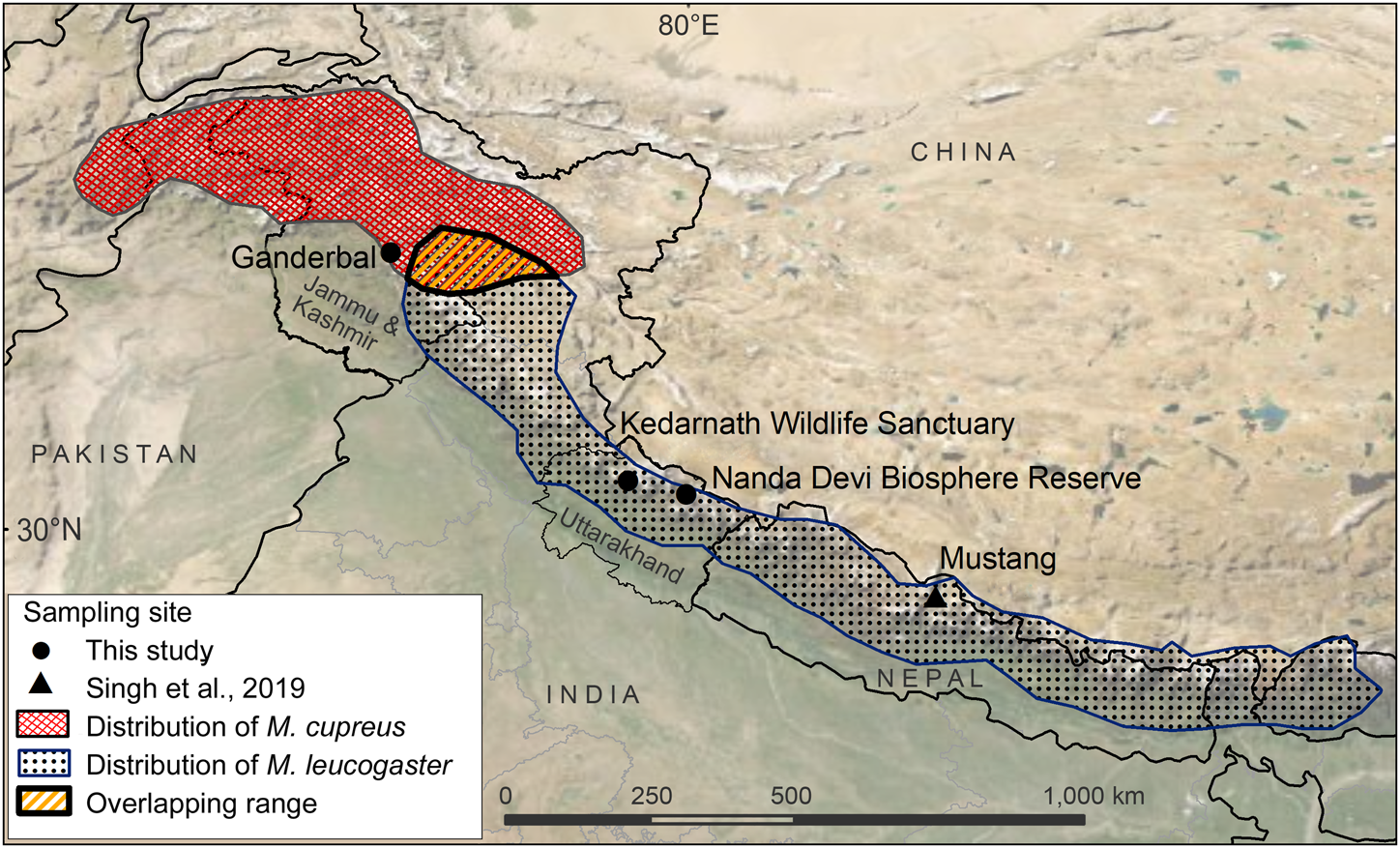
Source: Cambridge University Press — Genetic evidence indicates the occurrence of the Endangered ... · www.cambridge.org
Trap: Plains sanctuaries like Kishanpur (UP) seem plausible but musk deer needs high altitude
Trap: Foothills parks like Manas (Assam) are too low in elevation for musk deer
Confusion: Name similarity - Kashmiri stag vs musk deer - both Himalayan but different species
Memory aid: Askot = Musk Deer Sanctuary - directly named after the species
Askot Wildlife Sanctuary
Environment Askot Wildlife Sanctuary
Askot Wildlife Sanctuary - Musk Deer Conservation Hub
Located in Pithoragarh district, Uttarakhand at high altitude
Official name: Askot Musk Deer Sanctuary - established for musk deer conservation
Part of Western Himalayas ecosystem with alpine vegetation
Conservation Focus
Askot Wildlife Sanctuary was specifically established for musk deer conservation in the high-altitude regions of Uttarakhand. Its full official name includes 'Musk Deer' - making it a direct answer for questions about musk deer habitat.
Sanctuary Details
Aspect | Details |
|---|---|
Location | Pithoragarh district, Uttarakhand |
Altitude Range | 2,400-3,600 meters |
Area | Approximately 600 sq km |
Established | 1986 for musk deer protection |
Key Species | Musk deer, snow leopard, bharal, Himalayan tahr |
Vegetation | Alpine scrub, rhododendron, oak forests |
Gangotri National Park
Environment Gangotri National Park
Gangotri National Park - High Altitude Himalayan Ecosystem
Located in Uttarkashi district, Uttarakhand in high Himalayas
Habitat for musk deer, snow leopard, bharal and other alpine species
Part of Gangotri Glacier region with extreme high altitude terrain
Alpine Ecosystem
Gangotri National Park encompasses the high-altitude regions around the Gangotri Glacier in Uttarakhand. The park's extreme altitude and alpine conditions make it suitable habitat for musk deer and other cold-adapted Himalayan species.
Park Characteristics
Feature | Details |
|---|---|
Location | Uttarkashi district, Uttarakhand |
Altitude Range | 1,800-7,083 meters |
Area | 2,390 sq km |
Established | 1989 |
Key Wildlife | Musk deer, snow leopard, bharal, brown bear, Himalayan tahr |
Landscape | Glaciers, alpine meadows, high peaks |
Kishanpur Wildlife Sanctuary
Environment Kishanpur Wildlife Sanctuary
Kishanpur Wildlife Sanctuary - Terai Plains Ecosystem
Located in Lakhimpur Kheri district, UP - part of Dudhwa Tiger Reserve
Low altitude plains ecosystem - unsuitable for musk deer
Habitat for tigers, elephants, swamp deer and other plains species
Plains Habitat
Kishanpur Wildlife Sanctuary is part of the Dudhwa Tiger Reserve complex in the terai plains of Uttar Pradesh. Being a low-altitude plains ecosystem, it cannot support musk deer which require high-altitude mountainous habitat.
Sanctuary Profile
Aspect | Details |
|---|---|
Location | Lakhimpur Kheri, Uttar Pradesh |
Altitude | Low altitude plains (150-200m) |
Ecosystem Type | Terai grasslands and sal forests |
Part of | Dudhwa Tiger Reserve complex |
Key Species | Tiger, elephant, swamp deer, hog deer |
Landscape | Grasslands, wetlands, riverine forests |
Manas National Park
Environment Manas National Park
Manas National Park - Himalayan Foothills Ecosystem
Located in Assam foothills - UNESCO World Heritage Site
Low to moderate altitude - unsuitable for musk deer habitat
Famous for tigers, elephants, rhinos and golden langur
Foothills Ecosystem
Manas National Park lies in the foothills of Bhutan Himalayas in Assam. Despite being near mountains, its relatively low altitude and tropical climate make it unsuitable for musk deer, which need high-altitude alpine conditions.
Park Details
Feature | Specification |
|---|---|
Location | Chirang & Baksa districts, Assam |
Altitude Range | 60-110 meters (foothills) |
Area | 500 sq km |
Status | UNESCO World Heritage Site, Biosphere Reserve |
Key Wildlife | Tiger, elephant, rhino, wild buffalo, golden langur |
Habitat Type | Tropical forests, grasslands, riverine areas |
Altitude Comparison
Elevation profile map comparing altitudes of the four sanctuaries showing why only Askot and Gangotri support musk deer
Altitude is key: Only Askot & Gangotri have the high elevation musk deer requires