Which one of the following protected areas is well-known for the conservation of a sub-species of the Indian swamp deer (Barasingha) that thrives well on hard ground and is exclusively graminivorous?
Contents14
- AKanha National Park
- BManas National Park
- CMudumalai Wildlife Sanctuary
- DTal Chhapar Wildlife Sanctuary
Show answer
Answer: (A) Kanha National Park
The Indian Swamp Deer (Barasingha) has three subspecies:
- Western swamp deer — found in Nepal
- Southern swamp deer (Rucervus duvaucelii branderi) — found in central/north India
- Eastern swamp deer — found in Kaziranga and Dudhwa National Parks
The question specifically asks about the subspecies that:
- Thrives on HARD GROUND (not swamps)
- Is exclusively GRAMINIVOROUS (eats only grass)
This is the SOUTHERN swamp deer, which has hard hooves adapted for hard ground (unlike the other two subspecies which prefer swampy areas). This subspecies is found in Kanha National Park, Madhya Pradesh.
Kanha Tiger Reserve played a crucial role in saving the Barasingha from extinction. It was the first tiger reserve in India to adopt Barasingha as its official mascot, and it's the reintroduction site for this deer.
Why not the others?
- Manas National Park (Assam): Has eastern swamp deer, which prefers swampy ground.
- Mudumalai Wildlife Sanctuary (Tamil Nadu): Not known for Barasingha.
- Tal Chhapar (Rajasthan): Known for blackbuck, not Barasingha.
Answer: A (Kanha National Park).
Key Takeaway: Hard-ground Barasingha = southern subspecies = Kanha National Park, MP. Remember: "Kanha = Hard-ground Barasingha."
Kanha National Park in Madhya Pradesh is the only place where the hard-ground adapted southern subspecies of Barasingha (swamp deer) survived, making it critical for the species' conservation.
The question tests knowledge of subspecies differentiation - the southern Barasingha has hard hooves for dry ground unlike other subspecies that prefer swampy terrain.
UPSC is checking if students can connect specific habitat adaptations (hard ground, graminivorous diet) with the correct protected area and subspecies.
Indian Swamp Deer (Barasingha)
Environment Barasingha Indian swamp deer graminivorous hard ground
Barasingha: Subspecies, Habitats & Conservation
Barasingha has three subspecies - western (Nepal), southern (hard ground), and eastern (swamps)
Southern subspecies thrives on hard ground and is exclusively graminivorous (grass-eating)
Kanha National Park is the key conservation site for hard-ground Barasingha
Kanha was the first tiger reserve to adopt Barasingha as official mascot
What is Barasingha
Barasingha (Rucervus duvaucelii) is also called the Indian Swamp Deer. The name means twelve-pointed in Hindi, referring to its antlers. Despite being called 'swamp deer', not all subspecies live in swampy areas.
Three Subspecies of Barasingha
Subspecies | Scientific Name | Habitat Preference | Key Locations | Hoof Adaptation |
|---|---|---|---|---|
Western | R. d. duvaucelii | Grasslands | Nepal (Sukla Phanta) | Splayed hooves |
Southern | R. d. branderi | Hard ground | Kanha National Park | Hard hooves |
Eastern | R. d. ranjitsinhi | Swampy areas | Kaziranga, Dudhwa | Splayed hooves |
Southern Barasingha Characteristics
Exclusively graminivorous - feeds only on grass, unlike other deer species
Hard hooves adapted for firm ground, not soft swampy terrain
Found in sal forests and grasslands of central India
Smaller population but stable due to conservation efforts at Kanha
Males have 12-pointed antlers during breeding season
Conservation Success at Kanha
Kanha Tiger Reserve in Madhya Pradesh saved the southern Barasingha from near extinction. In the 1970s, only about 66 individuals remained. Through habitat management and protection, the population has recovered to over 800 individuals today.
Kanha National Park Location
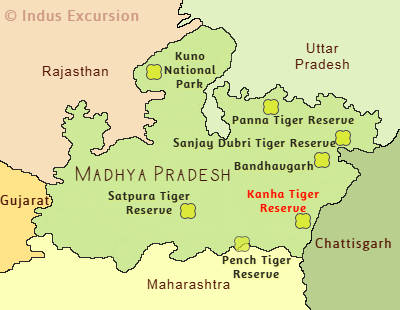
Source: Madhya Pradesh Tourism — Travel guide for Kanha National Park in Madhya Pradesh. Read about ... · www.madhya-pradesh-tourism.com
Trap: Don't assume all swamp deer live in swamps - southern subspecies prefers hard ground
Trap: Kaziranga has eastern Barasingha (swamp-loving), not the hard-ground southern subspecies
Trap: Graminivorous means grass-only diet - don't confuse with general herbivorous
Trap: Manas is in Assam and has eastern subspecies, not the Kanha variety
Kanha National Park
Environment Kanha National Park
Kanha National Park: Tiger Reserve & Barasingha Sanctuary
Located in Madhya Pradesh, one of India's most famous tiger reserves
First tiger reserve to adopt Barasingha as official mascot
Famous for sal forests and meadows supporting diverse wildlife
Inspired Rudyard Kipling's Jungle Book setting
Park Overview
Kanha National Park covers 940 sq km in the Maikal hills of Madhya Pradesh. It became a Project Tiger reserve in 1974 and is divided into Kanha and Kisli zones for tourism.
Key Wildlife at Kanha
Species | Status | Population (Approx) | Significance |
|---|---|---|---|
Bengal Tiger | Healthy population | 100+ | Main predator, tourism draw |
Barasingha (Southern) | Conservation success | 800+ | Saved from extinction |
Indian Wild Dog (Dhole) | Stable | 40-50 | Pack hunters |
Leopard | Good numbers | 60+ | Adaptable predator |
Sloth Bear | Present | 50+ | Forest omnivore |
Conservation Achievements
Barasingha recovery from 66 individuals (1970s) to 800+ today
Habitat management through controlled burning and grassland maintenance
Anti-poaching measures with dedicated forest guards
Community involvement in buffer zone conservation
Research initiatives on tiger ecology and prey species
Don't confuse with Bandhavgarh - also MP tiger reserve but different from Kanha
Remember: Kanha = Barasingha; Kaziranga = One-horned Rhino
Sal forests are characteristic - not deciduous or evergreen forests
Other Protected Areas in Options
Environment Manas National Park Mudumalai Wildlife Sanctuary Tal Chhapar Wildlife Sanctuary
Manas, Mudumalai & Tal Chhapar: Key Species & Locations
Manas (Assam) - UNESCO site famous for eastern Barasingha in swampy areas
Mudumalai (Tamil Nadu) - Elephant reserve, not known for Barasingha
Tal Chhapar (Rajasthan) - Blackbuck sanctuary in semi-arid grasslands
Comparison of Protected Areas
Protected Area | State | Key Species | Habitat Type | Special Status |
|---|---|---|---|---|
Manas National Park | Assam | Eastern Barasingha, Tiger, Rhino | Swampy grasslands | UNESCO World Heritage |
Mudumalai Wildlife Sanctuary | Tamil Nadu | Asian Elephant, Tiger | Deciduous forests | Elephant Reserve |
Tal Chhapar Wildlife Sanctuary | Rajasthan | Blackbuck, Desert Fox | Semi-arid grasslands | Blackbuck habitat |
Why These Don't Have Hard-Ground Barasingha
Manas has eastern Barasingha which prefers swampy terrain, not hard ground
Mudumalai focuses on elephant conservation - no Barasingha population
Tal Chhapar is in Rajasthan's arid zone - unsuitable for any Barasingha subspecies
Only Kanha has the specific southern subspecies adapted to hard ground
Geographic Distribution
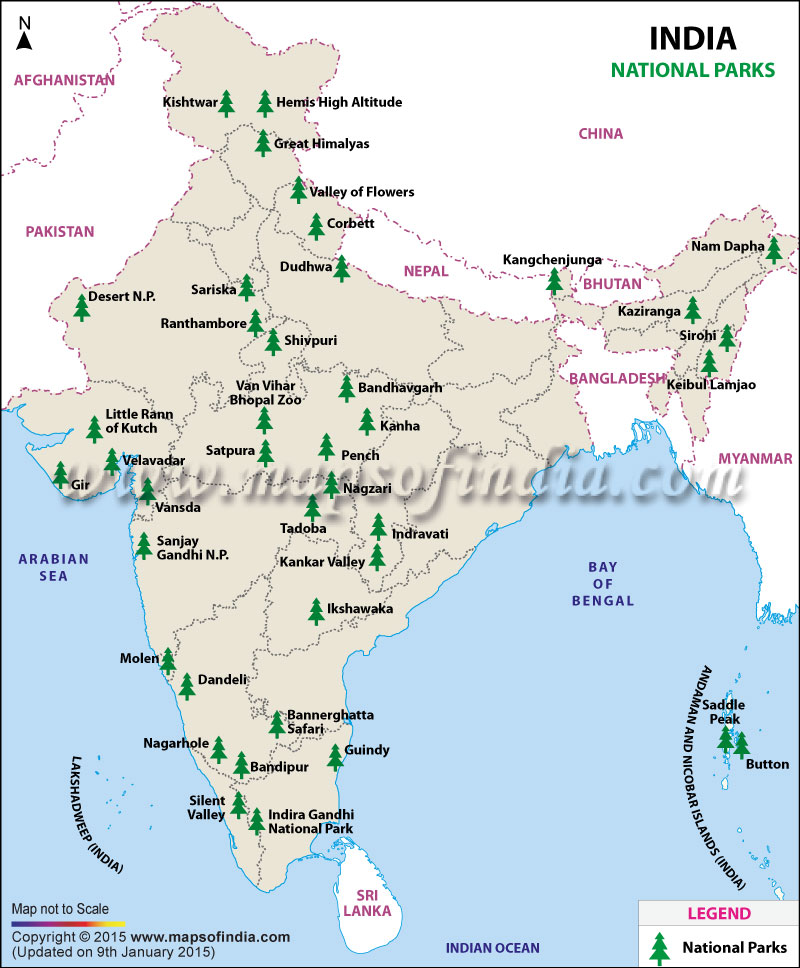
Source: India Map — List of National Parks in India , Map of National Parks in India · www.mapsofindia.com
Don't pick Manas thinking all Barasingha are the same - it has swamp-loving eastern subspecies
Mudumalai sounds similar to other South Indian parks but has no Barasingha
Tal Chhapar is famous for Blackbuck, not any deer species with antlers