"The crop is subtropical in nature. A hard frost is injurious to it. It requires at least 210 frost-free days and 50 to 100 centimeters of rainfall for its growth. A light well-drained soil capable of retaining moisture is ideally suited for the cultivation of the crop." Which one of the following is that crop?
Contents10
- ACotton
- BJute
- CSugarcane
- DTea
Show answer
Answer: (A) Cotton
The crop described is COTTON.
Let's match the clues:
- "Subtropical in nature" — Cotton grows in subtropical/tropical climates.
- "Hard frost is injurious" — Cotton cannot survive frost.
- "At least 210 frost-free days" — Cotton needs a long growing season (180-200+ frost-free days).
- "50-100 cm rainfall" — Cotton needs moderate rainfall (300-700 mm range).
- "Light, well-drained soil retaining moisture" — Cotton grows best in deep, fertile, well-drained soil with good water-holding capacity.
Why not the others?
- Jute: Requires heavy rainfall (150-250 cm) and alluvial soil — much more water than described.
- Sugarcane: Needs tropical climate with higher rainfall (100-150 cm).
- Tea: Grows on hill slopes, needs acidic soil, cooler temperatures, and 150-250 cm rainfall.
Answer: A (Cotton).
Key Takeaway: Cotton = subtropical + frost-sensitive + 210 frost-free days + moderate rainfall (50-100 cm) + well-drained soil. The "frost-free days" clue is the strongest identifier.
Cotton requires exactly 210 frost-free days and moderate rainfall of 50-100 cm, which distinguishes it from jute and tea that need much higher rainfall of 150-250 cm.
The question tests whether students can differentiate crops by specific climatic requirements rather than just knowing general growing regions.
Cotton Cultivation Geography
Geography cotton subtropical frost-free days well-drained soil
Cotton: Agro-climatic Requirements & UPSC Identifiers
Cotton = subtropical + 210 frost-free days + moderate rainfall (50-100 cm)
Frost is injurious to cotton - key identifier in UPSC questions
Requires light, well-drained soil with moisture retention capacity
India is world's largest cotton producer - mainly in Maharashtra, Gujarat, Telangana
What Makes Cotton Unique
Cotton is a subtropical cash crop that's extremely frost-sensitive. The key UPSC identifier is the 210 frost-free days requirement - this number appears repeatedly in questions to distinguish cotton from other crops.
Cotton's Agro-climatic Needs
Parameter | Requirement | Why This Matters |
|---|---|---|
Climate | Subtropical/Tropical | Cannot survive in temperate zones |
Temperature | 21-30°C growing season | Hard frost kills the plant |
Frost-free period | At least 210 days | Long growing season essential |
Rainfall | 50-100 cm (500-1000mm) | Moderate water needs |
Soil | Light, well-drained with moisture retention | Prevents waterlogging, retains nutrients |
Cotton Belt in India
# Cotton Growing Regions
## Northern Zone
- Punjab
- Haryana
- Rajasthan
## Central Zone
- Maharashtra
- Madhya Pradesh
- Gujarat
## Southern Zone
- Karnataka
- Andhra Pradesh
- Telangana
- Tamil Nadu
Cotton Growing Regions
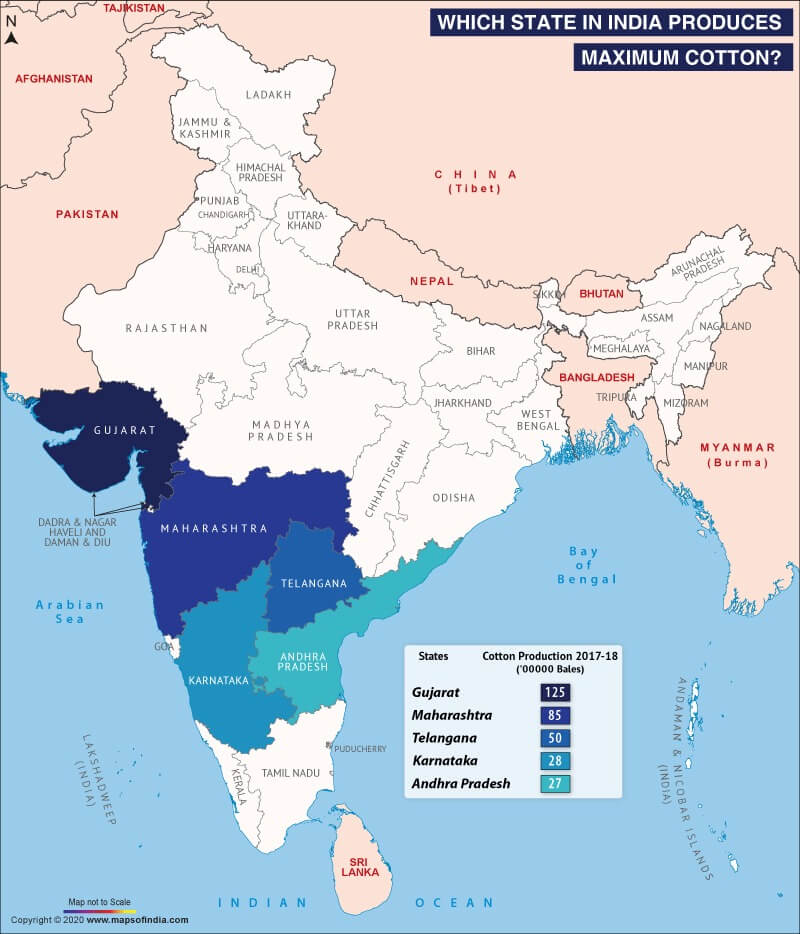
Source: India Map — Which State Produces Maximum Amount of Cotton in India ... · www.mapsofindia.com
Question Connection
This PYQ used cotton's distinctive frost sensitivity and 210 frost-free days as the key identifier. The moderate rainfall requirement (50-100 cm) eliminates jute and tea, which need much higher rainfall.
Trap: Confusing cotton with jute - jute needs 150-250 cm rainfall, cotton needs only 50-100 cm
Trap: Tea also grows in well-drained soil but needs hill slopes and acidic soil unlike cotton
Trap: Sugarcane is also frost-sensitive but needs tropical climate with higher rainfall (100-150 cm)
Memory aid: Cotton = Cold-sensitive, Central India, Cash crop with 210 frost-free days
Major Crop Identification Matrix
Geography jute sugarcane tea
Cotton vs Jute vs Sugarcane vs Tea: UPSC Distinguishing Features
Jute = heavy rainfall (150-250 cm) + alluvial soil + West Bengal dominance
Sugarcane = tropical + high rainfall (100-150 cm) + Uttar Pradesh leader
Tea = hill slopes + acidic soil + high rainfall (150-250 cm) + Assam
Crop Comparison Matrix
Crop | Climate | Rainfall (cm) | Soil Type | Key States | Unique Identifier |
|---|---|---|---|---|---|
Cotton | Subtropical | 50-100 | Well-drained, light | Maharashtra, Gujarat | 210 frost-free days |
Jute | Tropical | 150-250 | Alluvial (river deltas) | West Bengal, Bangladesh | Golden Fiber |
Sugarcane | Tropical | 100-150 | Deep, fertile | UP, Maharashtra | High water needs |
Tea | Cool, humid | 150-250 | Acidic, hill slopes | Assam, West Bengal | Plantation crop |
Quick Elimination Strategy
Rainfall elimination: If rainfall is 50-100 cm → eliminate jute and tea (both need 150-250 cm)
Soil elimination: If alluvial soil mentioned → likely jute; if acidic soil → likely tea
Climate elimination: Tropical eliminates cotton; hill slopes eliminates cotton and jute
Frost sensitivity: Cotton, sugarcane both frost-sensitive, but cotton needs longer frost-free period
Crop Classification System
# Major Crops by Type
## Fiber Crops
- Cotton
- Jute
- Hemp
## Plantation Crops
- Tea
- Coffee
- Rubber
- Spices
## Cash Crops
- Sugarcane
- Cotton
- TobaccoTrap: Both cotton and sugarcane are frost-sensitive - distinguish by frost-free days (cotton = 210, sugarcane = shorter)
Trap: Both jute and tea need high rainfall - distinguish by soil (jute = alluvial, tea = acidic)
Trap: Don't confuse subtropical cotton with tropical sugarcane - temperature range matters
Memory: Jute = Jharkhand/Bengal + Jal (water) = high rainfall