A state in India has the following characteristics: 1. Its northern part is arid and semi-arid. 2. Its central part produces cotton. 3. Cultivation of cash crops is predominant over food crops. Which one of the following states has all of the above characteristics?
Contents16
- AAndhra Pradesh
- BGujarat
- CKarnataka
- DTamil Nadu
Show answer
Answer: (B) Gujarat
Gujarat matches ALL three characteristics:
(1) Northern part is arid/semi-arid: The Kutch and northern Gujarat regions include the Rann of Kutch (salt desert) and Thar Desert extension — clearly arid/semi-arid.
(2) Central part produces cotton: The Saurashtra-central Gujarat region is a major cotton-producing area with suitable black soil (regur).
(3) Cash crops predominate: Gujarat is a leading producer of cotton, groundnut, tobacco, and castor — all cash crops — with relatively less area under food grains.
Why not others?
- Andhra Pradesh — eastern coast, not arid in the north.
- Karnataka — doesn't have an arid north.
- Tamil Nadu — humid throughout, no arid north.
The combination of desert north + cotton center + cash crop dominance = uniquely Gujarat.
Gujarat is India's leading cotton producer and has the highest proportion of area under cash crops compared to food crops among all states.
The question tests whether students can connect physical geography (arid Kutch region, black cotton soils of central Gujarat) with agricultural patterns.
This requires knowing that northern Gujarat extends into the Thar Desert while central Gujarat has the black regur soils ideal for cotton cultivation.
Gujarat Physical Geography
Geography Gujarat northern part is arid and semi-arid central part produces cotton
Gujarat Physical Geography: Climate Zones & Agriculture
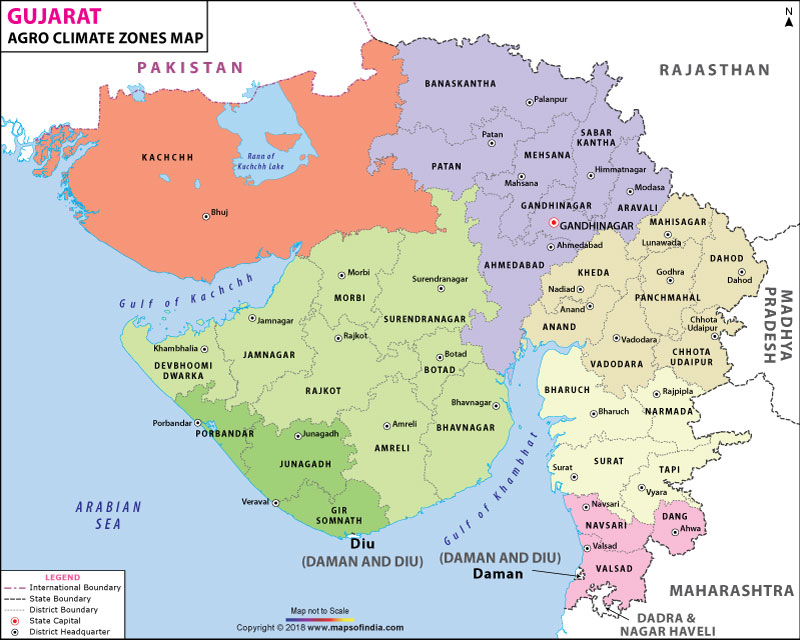
Gujarat has three distinct climate zones: arid north, semi-arid central, humid coastal south
Rann of Kutch and northern Gujarat are part of the Thar Desert extension
Central Gujarat (Saurashtra) has black cotton soil ideal for cotton cultivation
Gujarat leads India in cash crop production: cotton, groundnut, tobacco, castor
Gujarat's unique geography combines desert conditions in the north with fertile agricultural plains in the center. This creates distinct agricultural zones that make Gujarat India's leading cash crop producer.
Gujarat's Regional Characteristics
Region | Climate | Soil Type | Major Crops | Key Features |
|---|---|---|---|---|
Northern Gujarat | Arid to semi-arid | Sandy, saline | Limited cultivation | Rann of Kutch, Thar Desert extension |
Central Gujarat | Semi-arid | Black cotton soil (regur) | Cotton, groundnut | Saurashtra peninsula, optimal for cotton |
Southern Gujarat | Humid | Alluvial | Rice, sugarcane | Coastal plain, higher rainfall |
Gujarat Climate Zones
Source: India Map — Gujarat Agro Climate Zones Map · www.mapsofindia.com
Cash Crop Dominance
Gujarat accounts for 35% of India's total cotton production
Groundnut cultivation covers more area than any food grain in Gujarat
Tobacco and castor oil are other major cash crops with Gujarat leading national production
Food grains occupy less than 50% of Gujarat's cultivated area, unlike most Indian states
Black cotton soil in central Gujarat retains moisture, perfect for cotton's long growing season
Trap: Don't confuse Andhra Pradesh - it has cotton but no arid northern region (eastern coastal state)
Trap: Karnataka has cotton in north but that region is semi-arid plateau, not true arid zone
Trap: Tamil Nadu is humid throughout with no desert/arid regions despite cash crop cultivation
Trap: Only Gujarat combines Thar Desert extension + black cotton soil + cash crop dominance in one state
Cotton Cultivation in India
Geography cotton central part produces cotton
Cotton Cultivation in India: Regions, Soil & Climate Requirements
Black cotton soil (regur) is essential for cotton cultivation due to moisture retention
Cotton requires 200-250 frost-free days and 50-100cm annual rainfall
Gujarat, Maharashtra, Telangana are top cotton-producing states
Cotton is a Kharif crop sown in May-June, harvested October-December
Cotton cultivation in India is concentrated in regions with black cotton soil and semi-arid climate. The soil's ability to retain moisture during dry spells makes it ideal for cotton's long growing season.
Major Cotton-Producing States
State | Key Regions | Soil Type | Share of National Production | Special Features |
|---|---|---|---|---|
Gujarat | Saurashtra, Central Gujarat | Black cotton soil | ~35% | Highest productivity, Bt cotton |
Maharashtra | Vidarbha, Marathwada | Black cotton soil | ~25% | Traditional cotton belt |
Telangana | Warangal, Adilabad | Black cotton soil | ~15% | Improved varieties |
Karnataka | Northern districts | Black cotton soil | ~8% | Hybrid cotton varieties |
Cotton Growing Requirements
Black cotton soil expands when wet, contracts when dry - perfect for cotton root development
Temperature range: 21-30°C during growing season, no frost during flowering
Rainfall: 50-100cm well-distributed, dry weather needed during harvesting
210-250 frost-free days essential for fiber development
Semi-arid climate with bright sunshine during boll formation stage
Cotton Belt Map

Source: PMF IAS — Major Soil Types of India: Alluvial Soils & Black Soils - PMF IAS · www.pmfias.com
Trap: Cotton needs semi-arid climate, not fully arid (too dry) or humid (pest problems)
Trap: Black cotton soil = regur soil - same thing, UPSC uses both terms
Trap: Don't assume all cotton states have arid regions - Maharashtra cotton areas are semi-arid plateau
Trap: Alluvial soil is NOT suitable for cotton despite being fertile - needs black soil's moisture retention
Cash Crops vs Food Crops
Geography cash crops cultivation of cash crops is predominant
Cash Crops vs Food Crops: Classification & India's Leading Producers
Cash crops are grown for commercial sale, food crops for direct consumption
Gujarat, Punjab, Maharashtra have high cash crop to food crop ratios
Cotton, sugarcane, jute, tobacco are major cash crops
Rice, wheat, millets are primary food crops in India
Cash Crops vs Food Crops
Aspect | Cash Crops | Food Crops | Examples |
|---|---|---|---|
Primary Purpose | Commercial sale, export | Direct consumption, food security | Cotton vs Rice |
Market Dependency | High - price fluctuations affect farmers | Lower - can be consumed by grower | Sugarcane vs Wheat |
Processing Required | Usually needs industrial processing | Can be consumed with minimal processing | Jute vs Millets |
Investment | Higher input costs, technology | Lower initial investment | Tobacco vs Bajra |
Risk Factor | Higher market risk | Lower risk - food always needed | Groundnut vs Jowar |
Major Cash Crops in India
Cash Crop | Leading States | Primary Use | Export Potential |
|---|---|---|---|
Cotton | Gujarat, Maharashtra | Textile industry | High |
Sugarcane | Uttar Pradesh, Maharashtra | Sugar, ethanol production | Moderate |
Jute | West Bengal, Assam | Packaging, textiles | High |
Tobacco | Gujarat, Andhra Pradesh | Cigarettes, export | High |
Groundnut | Gujarat, Rajasthan | Oil production | Moderate |
Tea | Assam, West Bengal | Beverage industry | Very High |
Coffee | Karnataka, Kerala | Beverage industry | Very High |
Cash Crop Dominance Indicators
Cropping intensity shifts toward commercial varieties over subsistence crops
Irrigation infrastructure develops to support water-intensive cash crops
Market connectivity improves with processing units and transportation
Farmer income becomes more dependent on market prices rather than food security
Land use shows higher value per hectare but greater economic risk
Trap: Oilseeds like groundnut, mustard are cash crops even though they produce food items
Trap: Pulses are generally food crops despite some commercial cultivation
Trap: Same crop can be both - rice is food crop for consumption, cash crop when grown for export
Trap: Gujarat has cash crop dominance, but Punjab (wheat, rice) has food crop dominance despite high commercialization
Arid and Semi-Arid Regions
Geography arid and semi-arid northern part is arid
Arid and Semi-Arid Regions of India: Characteristics & Distribution
Arid regions receive <25cm annual rainfall, semi-arid get 25-75cm
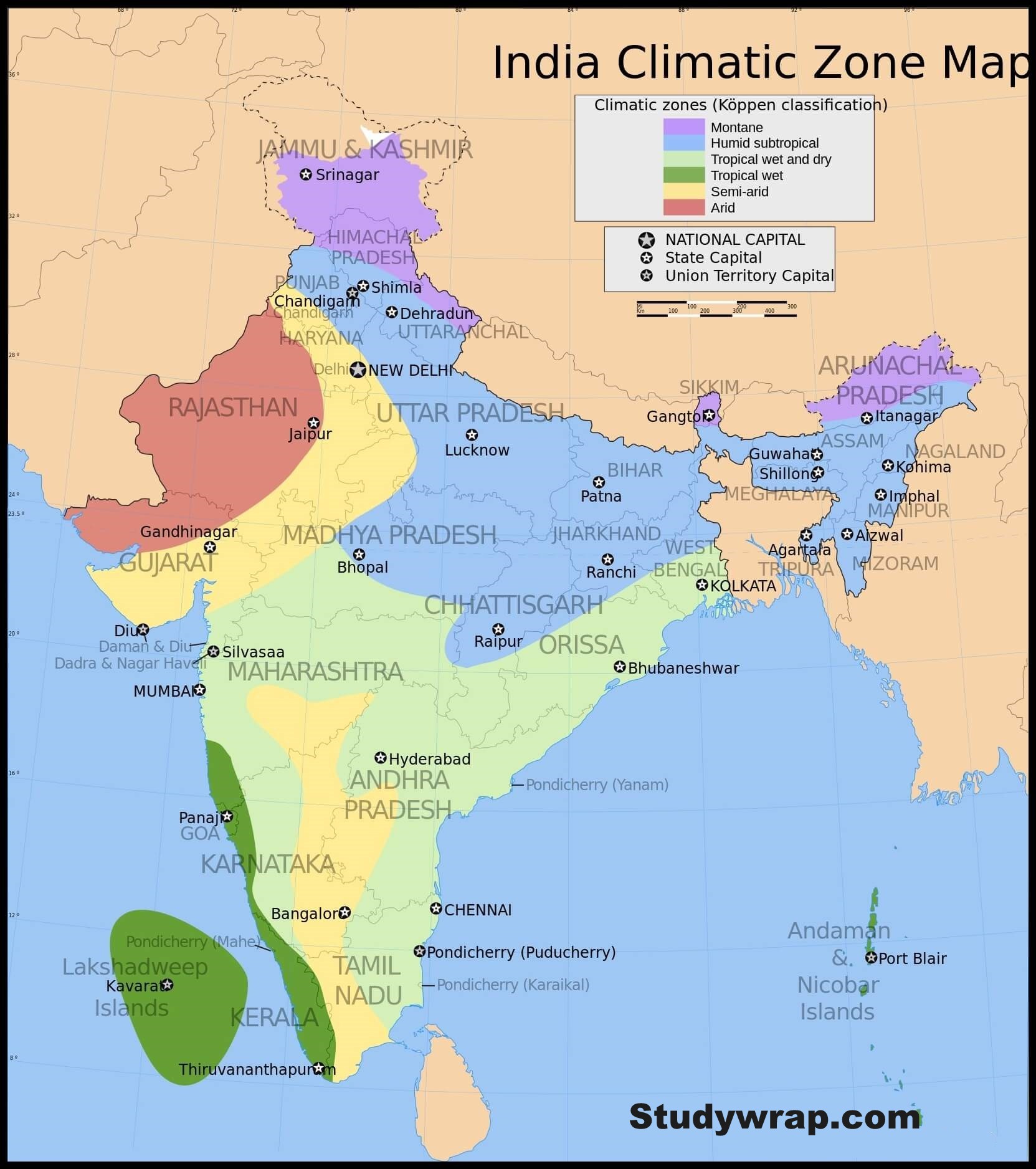
Thar Desert (Rajasthan-Gujarat) is India's largest arid region
Rain shadow areas in Deccan create semi-arid conditions
12% of India's land is arid, 15% is semi-arid
India's arid and semi-arid regions are determined primarily by rainfall patterns. The Thar Desert forms the core arid zone, while semi-arid conditions extend across the rain shadow regions of peninsular India.
Arid vs Semi-Arid Characteristics
Parameter | Arid | Semi-Arid | Examples in India |
|---|---|---|---|
Annual Rainfall | <25cm | 25-75cm | Jaisalmer vs Jodhpur |
Vegetation | Sparse, thorny shrubs | Grasslands, scattered trees | Desert thorn vs scrubland |
Agriculture | Very limited, needs irrigation | Rainfed possible with drought-resistant crops | Barmer vs Nagpur |
Water Sources | Groundwater, canals | Seasonal rivers, tanks | Indira Gandhi Canal vs check dams |
Population Density | Very low | Low to moderate | Western Rajasthan vs Vidarbha |
India's Arid-Semi-Arid Map
Source: Study Wrap — The Indian Climate - Climatic Regions of India - Study Wrap · studywrap.com
Major Arid-Semi-Arid Regions
# Indian Arid & Semi-Arid Zones
## Arid Regions
- Western Rajasthan
- Kutch (Gujarat)
- Parts of Haryana
- Ladakh (cold arid)
## Semi-Arid Regions
- Eastern Rajasthan
- Central Gujarat
- Vidarbha (Maharashtra)
- Northern Karnataka
- Rayalaseema (Andhra Pradesh)
- Interior Tamil NaduTrap: Ladakh is arid but cold arid, not hot arid like Thar Desert
Trap: Tamil Nadu interior is semi-arid due to rain shadow, but coastal Tamil Nadu is humid
Trap: Kutch (Gujarat) is arid, but Saurashtra (central Gujarat) is semi-arid
Trap: Don't confuse low rainfall with desert - semi-arid regions can have significant agriculture