Consider the following pairs:
Contents23
Consider the following pairs:
| Tribe | State | |
|---|---|---|
| 1. | Limboo (Limbu) | Sikkim |
| 2. | Karbi | Himachal Pradesh |
| 3. | Dongaria Kondh | Odisha |
| 4. | Bonda | Tamil Nadu |
Which of the above pairs are correctly matched?
- A1 and 3 only
- B2 and 4 only
- C1, 3 and 4 only
- D1, 2, 3 and 4
Show answer
Answer: (A) 1 and 3 only
Pair 1 is correct — Limboo (Limbu) is a tribe found in Sikkim.
They were included in the Scheduled Tribe list of Sikkim.
Pair 2 is wrong — the Karbi tribe is primarily found in Assam
(Karbi Anglong district is named after them), NOT in Himachal Pradesh.
Pair 3 is correct — the Dongaria Kondh are a particularly vulnerable tribal group (PVTG)
found in the Niyamgiri Hills of Odisha.
They were prominently in the news during the Vedanta mining controversy.
Pair 4 is wrong — the Bonda tribe is also from Odisha
(Malkangiri district), NOT from Tamil Nadu.
They are one of the most primitive tribal groups in India.
So only pairs 1 and 3 are correctly matched.
The Dongaria Kondh tribe gained national attention during the Vedanta bauxite mining controversy in Niyamgiri Hills, Odisha, making tribal geography a current topic.
UPSC uses tribal questions to test knowledge of India's cultural diversity and the geographic distribution of indigenous communities across different states.
The question tests precise state-tribe matching rather than general tribal knowledge - students must know specific locations, not just that these tribes exist.
Limboo Tribe of Sikkim
Geography Limboo Limbu Sikkim
Limboo (Limbu) Tribe: Sikkim's Scheduled Community
Limboo/Limbu tribe is native to Sikkim and included in Scheduled Tribe list
They are also found in Nepal, Bhutan, and West Bengal hills
Speak Limboo language belonging to Sino-Tibetan family
Background
The Limboo (also called Limbu) are an indigenous tribe primarily found in Sikkim. They were officially recognized as a Scheduled Tribe in Sikkim, giving them constitutional protections and reservations.
Key Features
Practice Buddhism and traditional Bon religion with animistic beliefs
Traditional occupation includes agriculture and animal husbandry
Have a rich oral tradition with Mundhum as their religious scripture
Known for their Gorkha military service and martial traditions
Don't confuse Limboo of Sikkim with Lepcha - both are Sikkim tribes but distinct
Limbu/Limboo spelling variations refer to the same tribe - both are correct
Karbi Tribe of Assam
Geography Karbi Himachal Pradesh
Karbi Tribe: Assam's Hill Community, Not Himachal
Karbi tribe is found in Assam, particularly Karbi Anglong district
NOT found in Himachal Pradesh - this is a common UPSC trap
Have Sixth Schedule autonomous district status
Geographic Location
The Karbi are a major tribal community of Assam, concentrated in the Karbi Anglong and West Karbi Anglong districts. The district itself is named after this tribe, indicating their historical dominance in the region.
Tribal Characteristics
Speak Karbi language belonging to Tibeto-Burman family
Practice shifting cultivation (jhum) and settled agriculture
Follow Christianity, Hinduism, and traditional animistic beliefs
Have autonomous governance under Sixth Schedule provisions
Karbi Territory
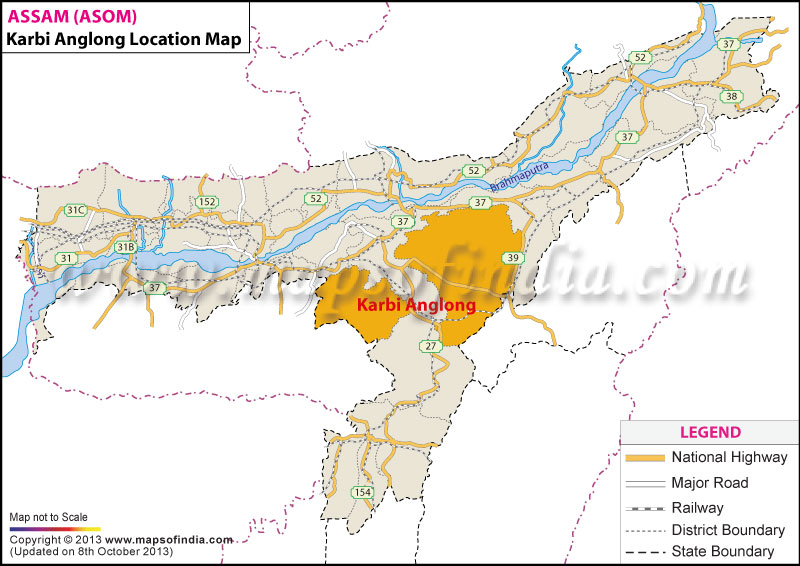
Source: India Map — Where is Karbi Anglong Located in India | Karbi Anglong Location ... · www.mapsofindia.com
Major trap: Karbi tribe is in Assam, NOT Himachal Pradesh
Don't confuse with Gaddi or Kinnaur tribes which are actually from Himachal Pradesh
Dongaria Kondh Tribe
Geography Dongaria Kondh Odisha
Dongaria Kondh: Odisha's PVTG in Niyamgiri Hills
Dongaria Kondh are found in Niyamgiri Hills, Odisha
Classified as Particularly Vulnerable Tribal Group (PVTG)
Famous for Vedanta mining controversy and environmental activism
Background
The Dongaria Kondh are an indigenous tribe living in the Niyamgiri Hills of Rayagada and Kalahandi districts in Odisha. They are classified as a Particularly Vulnerable Tribal Group (PVTG) due to their small population and traditional lifestyle.
Cultural Features
Worship Niyam Raja (mountain deity) and consider Niyamgiri Hills sacred
Practice shifting cultivation and collect forest produce
Known for their traditional ecological knowledge and forest conservation
Speak Kui language and maintain distinct cultural identity
Vedanta Controversy
2013: Supreme Court ruled in favor of Dongaria Kondh against Vedanta bauxite mining
Gram Sabhas rejected mining project citing religious and cultural rights
Case became landmark for tribal rights vs industrial development
Highlighted Forest Rights Act 2006 implementation
Dongaria Kondh are specifically from Niyamgiri Hills, Odisha - not other Kondh groups
Don't confuse with other Kondh sub-groups like Kutia Kondh who live in different areas
Bonda Tribe of Odisha
Geography Bonda Tamil Nadu
Bonda Tribe: Odisha's Primitive Community, Not Tamil Nadu
Bonda tribe lives in Malkangiri district, Odisha - NOT Tamil Nadu
One of India's most primitive tribal groups and classified as PVTG
Known for unique matriarchal customs and traditional lifestyle
Geographic Location
The Bonda are a Particularly Vulnerable Tribal Group (PVTG) found in the remote hills of Malkangiri district in southern Odisha. They are considered one of India's most primitive and isolated tribal communities.
Bonda Tribal Features
Aspect | Details |
|---|---|
Location | Malkangiri district, Odisha (NOT Tamil Nadu) |
Language | Remo language (Austro-Asiatic family) |
Population | Approximately 12,000 people |
Social System | Matriarchal society with women as heads |
Economy | Shifting cultivation, hunting, gathering |
Status | PVTG - Particularly Vulnerable Tribal Group |
Cultural Distinctiveness
Women wear traditional brass ornaments and rings around neck
Practice endogamy and have strict marriage customs
Follow animistic beliefs and worship nature spirits
Maintain isolation from mainstream society
Major trap: Bonda tribe is in Odisha, NOT Tamil Nadu
Don't confuse with Tamil Nadu tribes like Toda, Kurumba, or Irula
Particularly Vulnerable Tribal Groups
Geography
Particularly Vulnerable Tribal Groups (PVTG): India's Most At-Risk Communities
75 tribes classified as PVTG across India for special protection
Previously called Primitive Tribal Groups - renamed in 2006
Get additional support beyond regular Scheduled Tribe benefits
PVTG Concept
Particularly Vulnerable Tribal Groups (PVTG) are the most marginalized among Scheduled Tribes. The Government of India identified 75 such groups that need special attention due to their declining population, low literacy, and primitive technology.
PVTG Criteria & Examples
Criteria | Description | Examples from Question |
|---|---|---|
Population | Small and declining population | Bonda: ~12,000 people |
Technology | Pre-agricultural or primitive technology | Both practice shifting cultivation |
Literacy | Extremely low literacy rates | Both have minimal formal education |
Geography | Remote, isolated habitats | Niyamgiri Hills, Malkangiri hills |
Economy | Hunter-gatherer or primitive agriculture | Forest dependence for survival |
Government Support
Special PVTG development schemes with 100% central funding
Focus on healthcare, education, livelihood without disturbing culture
Conservation-cum-Development approach to preserve traditional lifestyle
Regular surveys to monitor population and socio-economic progress
PVTG ≠ Scheduled Tribes - PVTG are a subset of ST with additional vulnerabilities
Both Dongaria Kondh and Bonda are PVTG, making them exam favorites
Major Tribal Communities by State
Geography
State-wise Major Tribal Communities: UPSC Geography Essential
Northeast India has highest tribal diversity with Sixth Schedule protection
Central India (Odisha, Jharkhand, Chhattisgarh) has largest tribal populations
Each state has distinct tribal communities - memorize major ones
Tribal Distribution Pattern
India's 104 million tribal population is unevenly distributed. The Northeast has the highest tribal percentage, while Central India has the largest absolute numbers. UPSC frequently tests tribe-state matching - a key Geography topic.
Key State-Tribe Combinations
State/Region | Major Tribes | Special Features |
|---|---|---|
Sikkim | Limboo, Lepcha, Bhutia | Himalayan tribes, Buddhist influence |
Assam | Karbi, Bodo, Mising, Rabha | Karbi Anglong autonomous district |
Odisha | Dongaria Kondh, Bonda, Santhal | Highest PVTG concentration |
Jharkhand | Santhal, Munda, Ho, Oraon | Coal belt tribal communities |
Himachal Pradesh | Gaddi, Kinnaur, Lahaula | Hill tribes, NOT Karbi |
Tamil Nadu | Toda, Kurumba, Irula, Kota | Nilgiri hill tribes, NOT Bonda |
Tribal Distribution Map

Source: x.com — ▪️Important Tribes of india 1)Bonda - Orissa. 2)Katkari ... · x.com
Karbi is Assam tribe, Gaddi is Himachal - don't swap northeastern and hill state tribes
Bonda is Odisha tribe, Toda is Tamil Nadu - don't confuse eastern and southern tribes
Many tribes have similar names across states - focus on the dominant/largest populations