Which one of the following countries of South-West Asia does not open out to the Mediterranean Sea?
Contents11
- ASyria
- BJordan
- CLebanon
- DIsrael
Show answer
Answer: (B) Jordan
This is a map-based question that can be answered by visualizing the geography of the eastern Mediterranean coast.
The Mediterranean Sea's eastern coastline (from north to south) is bordered by:
- Turkey
- Syria
- Lebanon
- Israel
- Egypt.
Now let us check each option:
(a) Syria — HAS a Mediterranean coastline.
The port city of Latakia is Syria's major Mediterranean port.
Syria's western border opens to the Mediterranean.
(c) Lebanon — HAS a Mediterranean coastline.
In fact, Lebanon is essentially a narrow strip of land along the Mediterranean coast.
Beirut, its capital, is a Mediterranean port city.
(d) Israel — HAS a Mediterranean coastline.
Cities like Tel Aviv, Haifa, and Ashkelon are on the Mediterranean coast.
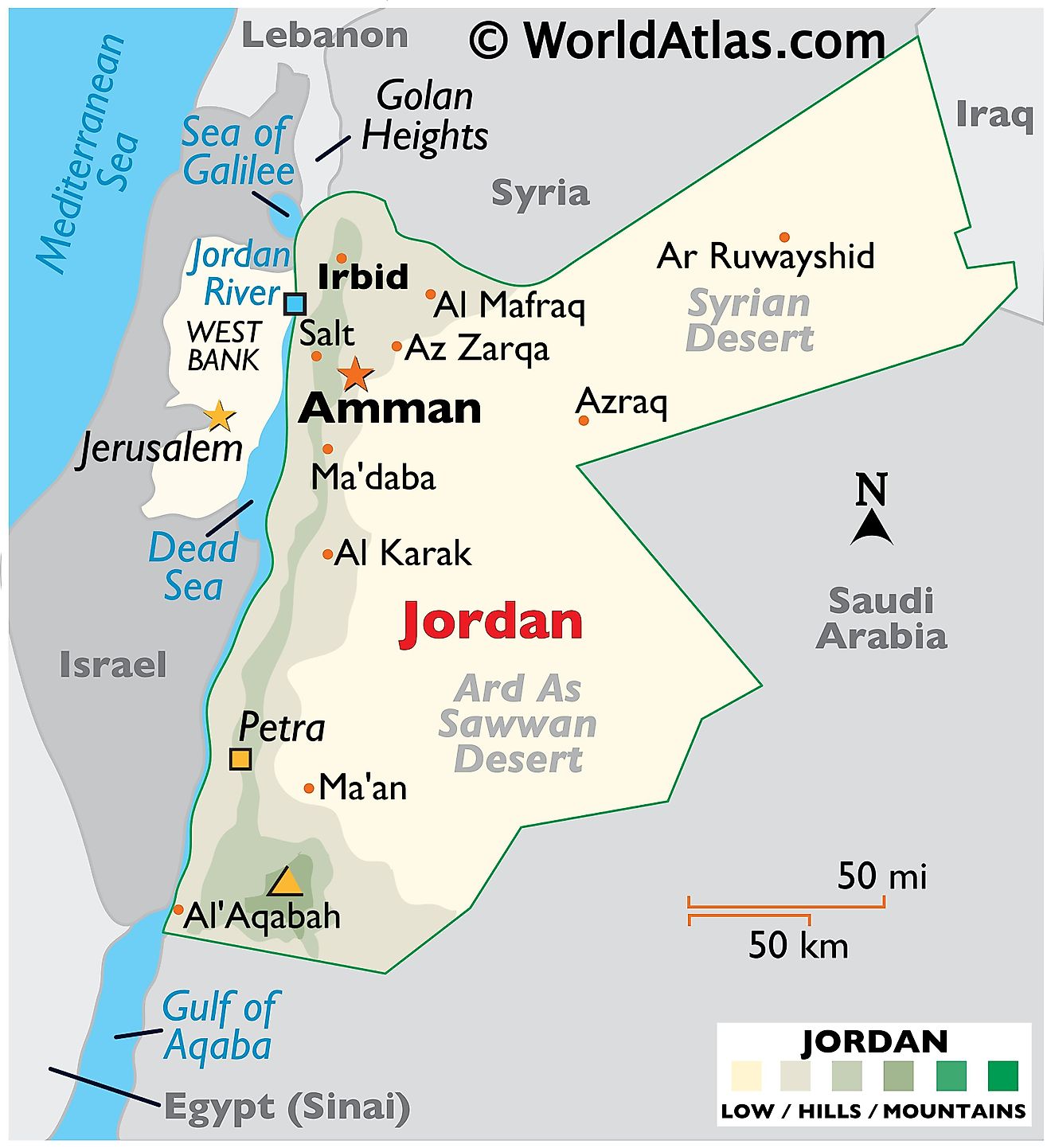
(b) Jordan — does NOT have a Mediterranean coastline.
Jordan is LANDLOCKED with respect to the Mediterranean Sea.
It is surrounded by Syria (north), Iraq (east), Saudi Arabia (south and east), and Israel and Palestine (west).
Jordan's only access to the sea is through the Gulf of Aqaba (a narrow arm of the Red Sea) in its extreme south, where the port city of Aqaba is located.
Jordan comes very close to the Mediterranean (the West Bank/Palestine separates it from the Mediterranean by only about 70-80 km), but it does not touch it.
Answer: Jordan.
Tip: Use a mental map — picture the Mediterranean's eastern shore and note which countries actually touch it.
Jordan is the only country among Syria, Lebanon, and Israel that does not have a Mediterranean coastline, despite being geographically close to it.
Jordan's only sea access is through the narrow Gulf of Aqaba in the south, making it essentially landlocked from the Mediterranean by the West Bank/Palestine buffer.
This tests whether students can mentally map the eastern Mediterranean coastline sequence: Turkey-Syria-Lebanon-Israel-Egypt from north to south.
Eastern Mediterranean Coastline Countries
Geography Mediterranean Sea Syria Lebanon Israel
Eastern Mediterranean Coastline: Countries & Key Ports
Eastern Mediterranean coast (north to south): Turkey → Syria → Lebanon → Israel → Egypt
Jordan is landlocked from Mediterranean Sea - only has Red Sea access via Gulf of Aqaba
Major Mediterranean ports: Latakia (Syria), Beirut (Lebanon), Tel Aviv & Haifa (Israel)
The eastern Mediterranean Sea forms a crucial coastline for several Middle Eastern countries. Understanding this geographic arrangement helps answer questions about regional trade, maritime access, and geopolitical positioning.
Mediterranean Access by Country
Country | Mediterranean Access | Major Ports | Coastline Length |
|---|---|---|---|
Syria | Yes - Western border | Latakia, Tartus | ~180 km |
Lebanon | Yes - Entire western border | Beirut, Tripoli, Sidon | ~210 km |
Israel | Yes - Western border | Tel Aviv, Haifa, Ashkelon | ~170 km |
Jordan | No - Landlocked | Aqaba (Red Sea only) | 0 km |
Regional Map

Source: Shutterstock — Eastern Mediterranean Political Map Capitals National Stock Vector ... · www.shutterstock.com
Jordan's Geographic Position
Jordan is surrounded by: Syria (north), Iraq (east), Saudi Arabia (south & east), Israel/Palestine (west)
Only sea access: Gulf of Aqaba in extreme south - a narrow arm of the Red Sea
Comes within 70-80 km of Mediterranean but never touches it due to Israel/Palestine buffer
Port city Aqaba provides Jordan's sole maritime outlet
Trap: Assuming Jordan has Mediterranean access because it's geographically close - proximity ≠ coastline
Confusion: Jordan has Red Sea access via Aqaba but zero Mediterranean access
Map error: Mixing up Gulf of Aqaba (Red Sea) with Mediterranean ports
Jordan's Landlocked Position
Geography Jordan
Jordan: Landlocked from Mediterranean, Red Sea Access Only
Jordan is landlocked from Mediterranean Sea - separated by Israel/Palestine
Only sea access: Gulf of Aqaba (Red Sea) with port city Aqaba
Bordered by: Syria, Iraq, Saudi Arabia, Israel/Palestine
Jordan's unique geographic position makes it landlocked from the Mediterranean despite being located in the Levant region. This isolation has significant implications for trade and maritime access.
Jordan's Sea Access Challenge
%%{init: {"flowchart": {"wrappingWidth": 460}}}%%
flowchart TD
  s1["`**Mediterranean Coast**
Blocked by **Israel/Palestine** - no direct access`"]
  s2["`**Closest Point**
Only **70-80 km** from Mediterranean but cannot reach`"]
  s3["`**Alternative Route**
Must use **Gulf of Aqaba** in extreme south`"]
  s4["`**Red Sea Access**
Port city **Aqaba** provides maritime outlet`"]
  s1 --> s2
  s2 --> s3
  s3 --> s4
Jordan's Borders
# Jordan
## North
- **Syria**
## East
- **Iraq**
- **Saudi Arabia**
## South
- **Saudi Arabia**
- **Gulf of Aqaba**
## West
- **Israel**
- **Palestine**
Jordan's Position
Source: World Atlas — Jordan Maps & Facts - World Atlas · www.worldatlas.com
Geographic confusion: Jordan is Middle Eastern but has no Mediterranean access
Port mix-up: Aqaba is Red Sea, not Mediterranean - completely different water body
Border assumption: Being next to Israel doesn't give Mediterranean access - Israel blocks it
Middle East Maritime Geography
Geography
Middle East: Sea Access Patterns & Landlocked Countries
Three major water bodies: Mediterranean Sea, Red Sea, Persian Gulf
Landlocked Middle East countries: Jordan, Iraq (limited access), Afghanistan
Most countries have multiple sea access points for strategic trade
The Middle East's strategic location connects three continents, but maritime access varies dramatically. Some countries control multiple coastlines while others remain landlocked or have limited sea access.
Maritime Access by Country
Country | Mediterranean | Red Sea | Persian Gulf | Status |
|---|---|---|---|---|
Syria | Yes | No | No | Single access |
Lebanon | Yes | No | No | Single access |
Israel | Yes | Yes (Eilat) | No | Dual access |
Jordan | No | Yes (Aqaba) | No | Limited |
Saudi Arabia | No | Yes | Yes | Dual access |
Iraq | No | No | Limited (Shatt al-Arab) | Very limited |
Iran | No | No | Yes | Single access |
Strategic Implications
Dual access countries (Israel, Saudi Arabia) have greater trade flexibility
Landlocked/limited access creates dependency on neighbors for maritime trade
Suez Canal makes Mediterranean-Red Sea connection crucial for global trade
Strait of Hormuz controls Persian Gulf access - major oil chokepoint
Don't assume geographic proximity = sea access - political borders matter
Iraq has very limited sea access - almost landlocked despite Persian Gulf connection
Afghanistan is completely landlocked - often forgotten in Middle East discussions