Which of the following characterizes/characterize the people of Indus Civilization? 1. They possessed great palaces and temples. 2. They worshipped both male and female deities. 3. They employed horse-drawn chariots in warfare. Select the correct statement/statements using the codes given below:
Contents16
- A1 and 2 only
- B2 only
- C1, 2 and 3
- DNone of the statements given above is correct
Show answer
Answer: (B) 2 only
Statement 1 is wrong — the Indus Valley Civilization did NOT possess great palaces and temples in the monumental sense seen in later civilizations (like Egyptian pyramids or Mesopotamian ziggurats).
While they had impressive planned cities with the Great Bath (Mohenjo-daro), granaries, and large structures, there is no clear archaeological evidence of grand palaces or temples dedicated to specific deities.
Their architecture was more functional and civic rather than palatial or religious in the later sense.
Statement 2 is correct — archaeological evidence suggests the Indus people worshipped both male and female deities.
- A seal depicting a figure sitting cross-legged in a yogic posture (sometimes identified as 'Proto-Shiva' or 'Pashupati') represents a male deity.
- Numerous terracotta female figurines have been found, suggesting worship of a Mother Goddess (female deity).
Statement 3 is wrong — there is NO established archaeological evidence that the Indus people used horse-drawn chariots in warfare.
Horses were not native to the Indus region, and evidence of horses in Indus sites is extremely rare and debated.
Horse-drawn chariots are associated with the later Vedic/Aryan period, not the Indus Civilization.
The Indus Civilization had no monumental palaces or temples like Egypt or Mesopotamia, only functional civic structures like the Great Bath and granaries.
Archaeological evidence shows both male deities (like the 'Proto-Shiva' seal figure) and female deities (Mother Goddess terracotta figurines), but horses and chariots came later with the Vedic period.
Harappan Architecture & Urban Planning
Ancient And Medieval History palaces temples Great Bath granaries
Harappan Architecture: Civic Excellence, Not Monumental Grandeur
Harappans built planned cities with grid patterns, not grand palaces or temples
Great Bath at Mohenjo-daro was a civic/ritual structure, not a temple
No monumental religious architecture like Egyptian pyramids or Mesopotamian ziggurats
Granaries and dockyards show focus on practical urban planning
Civic vs Monumental
Harappan architecture was functional and civic-focused, not palatial or monumental. Their genius lay in urban planning — sophisticated drainage systems, uniform brick sizes, and grid-pattern streets — rather than creating grand temples or palaces for rulers.
Key Harappan Structures
Structure | Location | Purpose | Significance |
|---|---|---|---|
Great Bath | Mohenjo-daro | Ritual bathing/civic | Well-planned water management |
Granaries | Harappa, Mohenjo-daro | Food storage | Economic planning |
Dockyard | Lothal | Maritime trade | Advanced engineering |
Assembly Hall | Mohenjo-daro | Public meetings | Democratic governance hints |
Great Bath Structure
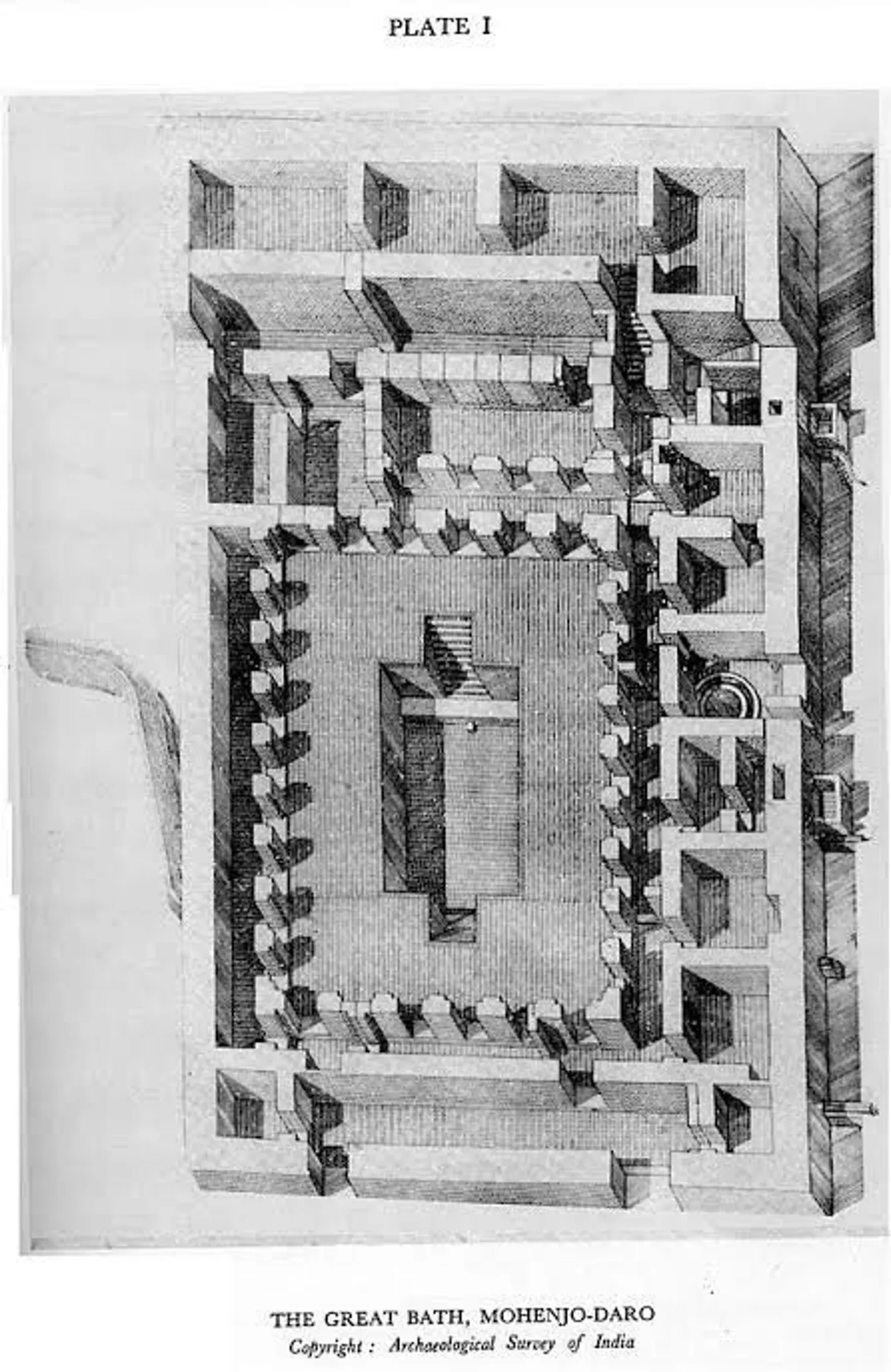
Source: Autumn Sonata — CONTEXTUALIZED CURIOSITY: Mohenjo-daro – Autumn Sonata · autumnsonata.co
Trap: Statement 1 uses 'great palaces and temples' — Harappans had great structures but not palaces/temples in the monumental sense
Great Bath is often confused with a temple — it was a civic/ritual structure, not a deity temple
Don't confuse Harappan urban planning excellence with monumental religious architecture of Egypt/Mesopotamia
Harappan Religious Beliefs & Deities
Ancient And Medieval History male and female deities worshipped Proto-Shiva Mother Goddess
Harappan Religion: Male & Female Deities from Archaeological Evidence
Harappans worshipped both male and female deities based on archaeological finds
Pashupati seal shows male deity in yogic posture surrounded by animals
Terracotta female figurines suggest Mother Goddess worship
Nature worship and fertility cult were prominent religious themes
Archaeological Evidence
Harappan religious beliefs are reconstructed from seals, figurines, and symbols found across Indus sites. The evidence clearly points to worship of both masculine and feminine divine principles, suggesting a balanced spiritual worldview.
Male vs Female Deities Evidence
Deity Type | Key Evidence | Interpretation | Sites Found |
|---|---|---|---|
Male Deity | Pashupati seal | Proto-Shiva in yogic posture | Mohenjo-daro |
Female Deity | Terracotta figurines | Mother Goddess/fertility | Multiple sites |
Nature Spirits | Tree worship seals | Sacred trees/plants | Harappa, Mohenjo-daro |
Animal Worship | Unicorn seals | Sacred animals | Widespread |
Religious Features
Pashupati seal: Male figure with horned headdress, sitting cross-legged, surrounded by elephant, tiger, rhinoceros, and buffalo
Mother Goddess: Numerous female terracotta figurines with elaborate headdresses, possibly fertility symbols
Fire altars: Found at Kalibangan, suggesting fire worship rituals
Sacred symbols: Swastika, trefoil, and other geometric patterns on seals
Pashupati Seal
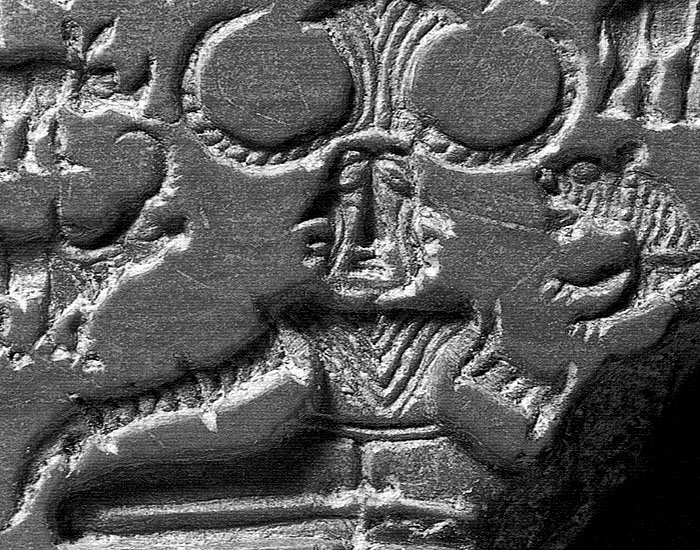
Source: Impart — Pashupati Seal | Archaeology & Prehistory, Premodern Culture | Impart · imp-art.org
Statement 2 is correct — this is the only true statement about Harappan religion
Don't assume Harappans had organized temples — their worship was likely more naturalistic and home-based
Pashupati is called 'Proto-Shiva' but avoid direct equation with later Hindu Shiva
Harappan Warfare & Military Technology
Ancient And Medieval History horse-drawn chariots warfare employed
Harappan Military: Bronze Age Warfare Without Horses
Harappans did NOT use horse-drawn chariots — no archaeological evidence of horses
Horse-drawn chariots belong to later Vedic/Aryan period
Bronze weapons included spears, axes, and daggers for warfare
Defensive walls at some cities suggest military awareness
No Horse Evidence
Archaeological excavations have found no reliable evidence of horses at Harappan sites. The few disputed horse remains are either from later periods or misidentified animals. Horse-drawn chariots are a hallmark of the later Vedic period, not the Indus Civilization.
Harappan vs Vedic Military Technology
Aspect | Harappan Period | Vedic Period | Key Difference |
|---|---|---|---|
Primary Animal | Water buffalo, zebu cattle | Horses | Horses came with Aryans |
Chariots | No evidence | Horse-drawn chariots | Chariot warfare = Vedic |
Weapons | Bronze spears, axes | Iron weapons, bows | Technology advancement |
Warfare Style | Defensive, peaceful | Mobile, aggressive | Cultural difference |
Harappan Military Evidence
Bronze weapons: Spears, axes, mace-heads, and daggers found at various sites
Defensive walls: Harappa and Dholavira had fortification walls
No battle scenes: Unlike Mesopotamian art, no depictions of warfare or battles on seals
Peaceful decline: Civilization seems to have declined gradually, not through conquest
Statement 3 is wrong — biggest trap is assuming all ancient civilizations used horses
Horse = Aryan/Vedic, not Harappan — don't mix up the chronology
Bronze Age vs Iron Age distinction: Harappans were Bronze Age people
Indus Valley vs Contemporary Civilizations
Ancient And Medieval History
Indus Civilization: Unique Among Bronze Age Contemporaries
Indus was more egalitarian — no evidence of kings or priest-rulers unlike Egypt/Mesopotamia
Superior urban planning with drainage systems unmatched by contemporaries
Less monumental but more practical architecture than Egypt/Mesopotamia
Peaceful civilization — no war scenes or weapons caches like other Bronze Age cultures
Bronze Age Civilizations Comparison
Feature | Indus Valley | Mesopotamia | Egypt |
|---|---|---|---|
Architecture | Civic planning | Ziggurats/temples | Pyramids/tombs |
Social Structure | Egalitarian | King-priest hierarchy | Pharaoh system |
Writing | Undeciphered script | Cuneiform | Hieroglyphics |
Religion | Nature/fertility worship | Temple complexes | Pharaoh worship |
Military | Peaceful, defensive | Warfare, conquests | Military expeditions |
Urban Planning | Grid system, drainage | Organic growth | Nile-dependent |
Indus Valley Distinctiveness
# Indus Valley Uniqueness
## Urban Excellence
- Grid pattern streets
- Covered drains
- Uniform bricks
- Public baths
## Social Equality
- No palaces
- Similar house sizes
- No royal tombs
- Egalitarian burials
## Peaceful Culture
- No war scenes
- Defensive walls only
- Trade-focused
- No weapon hoardsDon't apply Egyptian/Mesopotamian features to Indus — they were fundamentally different
Palaces and temples were hallmarks of Egypt/Mesopotamia, NOT Indus Valley
Indus = urban planning excellence, Egypt = monumental architecture — know the distinction