Lord Buddha's image is sometimes shown with the hand gesture called 'Bhumisparsha Mudra'. It symbolizes.
Contents21
- ABuddha's calling of the Earth to watch over Mara and to prevent Mara from disturbing his meditation.
- BBuddha's calling of the Earth to witness his purity and chastity despite the temptations of Mara.
- CBuddha's reminder to his followers that they all arise from the Earth and finally dissolve into the Earth, and thus this life is transitory.
- DBoth the statements (a) and (b) are correct in this context.
Show answer
Answer: (B) Buddha's calling of the Earth to witness his purity and chastity despite the temptations of Mara.
Bhumisparsha Mudra ('Earth-Touching Gesture') depicts the moment just before Siddhartha Gautama attained enlightenment.
The demon Mara challenged him, claiming the seat of enlightenment.
When Mara asked who would bear witness to Siddhartha's spiritual merit, Buddha touched the earth with his right hand, calling the Earth goddess to WITNESS his purity and right to enlightenment.
The earth itself testified on his behalf, and Mara fled.
Option (a) is wrong — the Earth wasn't called to 'watch over' or 'prevent' Mara, but to bear witness.
Option (c) is wrong — this mudra is not about life's transience.
Answer: (b).
Bhumisparsha Mudra depicts Buddha calling Earth as witness to his spiritual purity when demon Mara challenged his right to sit under the Bodhi tree for enlightenment.
The question tests precise understanding of Buddhist iconography - Earth was called as witness, not as protector, which is a common confusion in mudra symbolism.
Bhumisparsha Mudra
Art And Culture Bhumisparsha Mudra Earth-Touching Gesture
Bhumisparsha Mudra: Earth-Touching Gesture & Buddha's Enlightenment
Bhumisparsha Mudra means 'Earth-Touching Gesture' — Buddha's right hand touches the ground
Symbolizes Buddha calling Earth goddess as witness to his purity and right to enlightenment
Depicts the moment just before Buddha's enlightenment when Mara challenged him
Earth testified on Buddha's behalf, and Mara fled
The Enlightenment Story
Bhumisparsha Mudra depicts the crucial moment just before Siddhartha Gautama attained enlightenment under the Bodhi tree. When the demon Mara challenged Buddha's right to sit on the seat of enlightenment and asked who would bear witness to his spiritual merit, Buddha touched the earth with his right hand to call the Earth goddess as witness.
The Mara Challenge Sequence
%%{init: {"flowchart": {"wrappingWidth": 460}}}%%
flowchart TD
  s1["`**Mara's Challenge**
Demon **Mara** claims the seat of enlightenment belongs to him`"]
  s2["`**Witness Question**
Mara asks 'Who will bear witness to your spiritual merit?'`"]
  s3["`**Earth-Touching**
Buddha touches earth with **right hand** — the **Bhumisparsha Mudra**`"]
  s4["`**Earth's Testimony**
**Earth goddess** testifies to Buddha's purity and right to enlightenment`"]
  s5["`**Mara's Defeat**
Mara flees, Buddha proceeds to attain **enlightenment**`"]
  s1 --> s2
  s2 --> s3
  s3 --> s4
  s4 --> s5
Key Iconographic Features
Right hand touches the ground, usually with fingertips pointing downward
Left hand typically rests on the lap in meditation pose
Buddha is shown seated in lotus position under the Bodhi tree
Often depicted with Mara's army retreating in the background
Visual Recognition
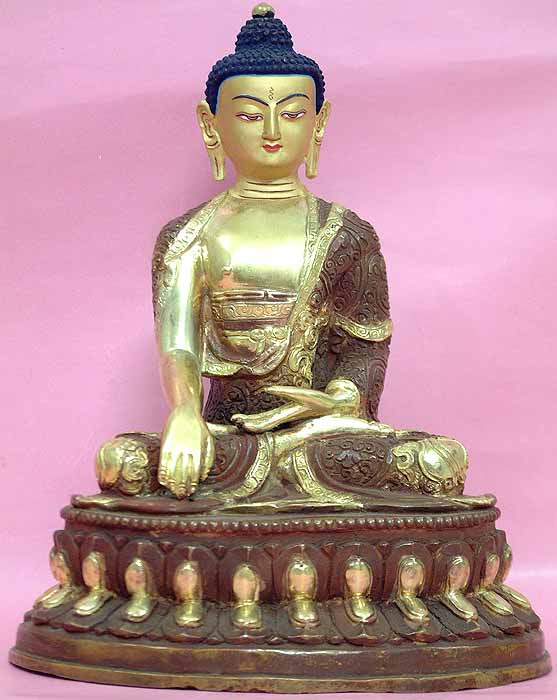
Source: Exotic India Art — Buddha in the Earth-Touching Gesture (bhumi-sparsha mudra ... · www.exoticindiaart.com
Question Connection
This UPSC question tests the precise symbolism of the mudra. The correct answer emphasizes witnessing Buddha's purity against Mara's temptations, not preventing Mara or teaching about life's transience.
Trap: Option A says Earth 'watches over' or 'prevents' Mara — wrong function, Earth witnesses Buddha's merit
Trap: Option C connects the mudra to life's transience — this is a general Buddhist teaching, not this specific mudra's meaning
Trap: 'Bhumisparsha' literally means 'earth-touching' — remember the gesture, not just the philosophy
Buddhist Mudras
Art And Culture
Buddhist Mudras: Sacred Hand Gestures in Buddhist Art
Mudras are sacred hand gestures in Buddhist art representing different aspects of Buddha's life
Each mudra has specific symbolic meaning and iconographic rules
Five main mudras commonly appear in Buddhist sculptures and paintings
What Are Mudras
Mudras are symbolic hand gestures used in Buddhist art to represent different moments in Buddha's life, his teachings, and spiritual states. Each mudra follows strict iconographic conventions and helps devotees identify the specific aspect of Buddha being depicted.
Major Buddhist Mudras
Mudra | Gesture | Symbolism | Life Event |
|---|---|---|---|
Bhumisparsha | Right hand touches earth | Witnessing purity, calling Earth goddess | Just before enlightenment |
Dhyana | Both hands in lap, palms up | Meditation, concentration | Buddha's meditation under Bodhi tree |
Vitarka | Right hand raised, thumb-index circle | Teaching, reasoning, discussion | Buddha's first sermon |
Abhaya | Right palm raised outward | Fearlessness, protection, peace | Calming angry elephant Nalagiri |
Varada | Right hand down, palm out | Charity, compassion, wish-granting | Buddha's compassionate nature |
Iconographic Importance
Mudras help identify which Buddha is depicted (historical Buddha, future Buddhas, Bodhisattvas)
Regional variations exist — same mudra may have slight differences across Buddhist cultures
Often combined with other symbols like lotus, wheel, or specific postures
Essential for art identification questions in UPSC examining Buddhist sculptures
Trap: Don't confuse Vitarka (teaching) with Abhaya (protection) — both involve raised right hand
Trap: Dhyana mudra is meditation, Bhumisparsha is earth-touching — different hand positions
Remember: Each mudra represents a specific life event, not general Buddhist philosophy
Mara's Temptation
Ancient And Medieval History Mara
Mara's Temptation: The Demon's Challenge to Buddha's Enlightenment
Mara is the demon of temptation who tried to prevent Buddha's enlightenment
Buddha's earth-touching defeated Mara and led to enlightenment
Mara used three daughters and army of demons to distract Siddhartha
Who is Mara
Mara (meaning 'death' or 'destroyer') is the demon of temptation, spiritual death, and obstacles in Buddhist tradition. He represents all the negative forces that prevent beings from achieving enlightenment — desire, fear, pride, and doubt.
Mara's Three Attacks on Buddha
%%{init: {"flowchart": {"wrappingWidth": 460}}}%%
flowchart TD
  s1["`**First Attack: Fear**
Mara sends **army of demons** with weapons to frighten Siddhartha`"]
  s2["`**Second Attack: Desire**
Mara's **three daughters** (Tanha, Rati, Raga) try to seduce Buddha with sensual pleasures`"]
  s3["`**Third Attack: Doubt**
Mara **questions Buddha's right** to sit on the seat of enlightenment`"]
  s4["`**Buddha's Response**
Buddha touches earth, calls **Earth goddess as witness** to his merit`"]
  s5["`**Mara's Defeat**
Earth testifies, Mara and his forces **flee in defeat**`"]
  s1 --> s2
  s2 --> s3
  s3 --> s4
  s4 --> s5
Symbolic Significance
Represents the internal battle every spiritual seeker faces before enlightenment
Mara's defeat shows wisdom and purity triumph over temptation and doubt
The Earth as witness concept emphasizes truth will always prevail
This story explains why Bhumisparsha Mudra became one of the most important Buddhist gestures
Question Connection
Understanding Mara's challenge is crucial for the UPSC question because it clarifies that Earth was called as a witness to Buddha's purity, not as a protector against Mara or teacher about transience.
Trap: Mara represents temptation and doubt, not just evil — he tests spiritual readiness
Trap: Earth goddess testifies to Buddha's merit — she doesn't fight Mara or protect Buddha
Remember: This is about witnessing purity, not about life's transience or philosophical teachings
Buddha's Enlightenment
Ancient And Medieval History Buddha enlightenment
Buddha's Enlightenment: The Great Awakening Under the Bodhi Tree
Siddhartha Gautama attained enlightenment at age 35 under the Bodhi tree at Gaya
After enlightenment, he became the Buddha ('the awakened one')
He realized the Four Noble Truths and Eightfold Path during enlightenment
The site is now called Bodh Gaya in Bihar
The Great Awakening
After six years of extreme asceticism, Siddhartha Gautama realized the futility of self-mortification. He sat under a Bodhi tree (Ficus religiosa) at Gaya and vowed not to rise until he attained complete understanding of suffering and its cessation.
The Night of Enlightenment
%%{init: {"flowchart": {"wrappingWidth": 460}}}%%
flowchart TD
  s1["`**First Watch**
Siddhartha gained knowledge of his **previous births** (past lives)`"]
  s2["`**Second Watch**
He understood **karma** and the cycle of birth, death, and rebirth`"]
  s3["`**Third Watch**
He realized the **Four Noble Truths** and path to end suffering`"]
  s4["`**Dawn**
Complete enlightenment achieved — Siddhartha became **Buddha**`"]
  s5["`**Seven Weeks**
Buddha spent **49 days** at Bodh Gaya contemplating whether to teach`"]
  s1 --> s2
  s2 --> s3
  s3 --> s4
  s4 --> s5
Key Realizations During Enlightenment
Truth Realized | Sanskrit Term | Meaning |
|---|---|---|
Life is suffering | Dukkha | All existence involves pain, dissatisfaction, impermanence |
Suffering has a cause | Samudaya | Craving and attachment cause suffering |
Suffering can end | Nirodha | Cessation of craving leads to Nirvana |
Path to end suffering | Magga | The Eightfold Path to liberation |
Historical Context
Buddha was 35 years old when he attained enlightenment (around 528 BCE)
The Bodhi tree still stands at Bodh Gaya — descendants of the original tree
Ashoka built the first temple at Bodh Gaya in 3rd century BCE
The site became a major pilgrimage center for Buddhists worldwide
Sacred Site
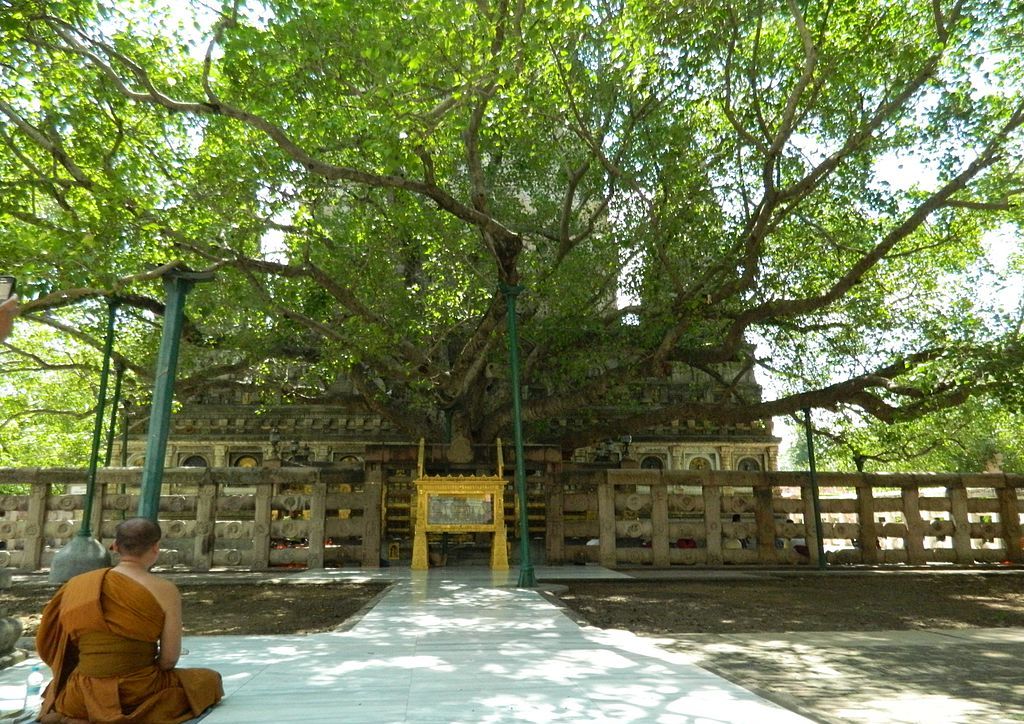
Source: Beyonder Travel — Mahabodhi Temple at Bodh Gaya - Holiest of shrine for the Buddhists · beyonder.travel