Which of the following kingdoms were associated with the life of the Buddha? 1. Avanti 2. Gandhara 3. Kosala 4. Magadha Select the correct answer using the codes given below.
Contents11
- A1, 2 and 3 only
- B2 and 3 only
- C1, 3 and 4
- D3 and 4 only
Show answer
Answer: (D) 3 and 4 only
The question asks which kingdoms were directly associated with the LIFE of the Buddha (563-483 BCE approximately).
Kosala (Statement 3) — CORRECT: The Buddha was born in Lumbini, which was in the territory of the Shakya clan. The Shakyas were a vassal republic under the Kingdom of Kosala (capital: Shravasti). During Buddha's own lifetime, the growing kingdom of Kosala absorbed the Shakya territory. Buddha spent considerable time in Shravasti and gave many sermons there (Jetavana monastery).
Magadha (Statement 4) — CORRECT: Buddha had deep connections with Magadha (capital: Rajagriha/Rajgir). He traveled to Rajagriha early in his career and was patronized by King Bimbisara of Magadha. His first two chief disciples, Sariputta and Maudgalyayana, were from Rajagriha. He attained Mahaparinirvana at Kushinagar, and many key events of his life occurred in Magadha's sphere of influence.
Avanti (Statement 1) — INCORRECT: Avanti (capital: Ujjain) was an important Mahajanapada in western-central India, but it was not directly associated with the Buddha's personal life events. Buddhism spread to Avanti later through his disciples.
Gandhara (Statement 2) — INCORRECT: Gandhara (in present-day Afghanistan/Pakistan, capital: Taxila) became an important Buddhist centre centuries AFTER the Buddha, especially during the Kushan period when the famous Gandhara school of art flourished. But the Buddha himself never visited Gandhara.
Answer: 3 and 4 only.
Kosala and Magadha were the two kingdoms where Buddha's major life events occurred - his birth territory was under Kosala, and he received patronage from Magadha's King Bimbisara.
The trap is confusing later Buddhist centers like Gandhara with places Buddha actually visited during his lifetime - Gandhara's Buddhist prominence came centuries later under the Kushans.
Kosala Mahajanapada & Buddha
Ancient And Medieval History Kosala
Kosala Mahajanapada: Buddha's Birth Territory & Key Events
Kosala was Buddha's birth kingdom — Shakya clan territory was under Kosala rule
Capital: Shravasti — Buddha gave many sermons at Jetavana monastery here
Kosala absorbed Shakya territory during Buddha's lifetime
Kosala was one of the 16 Mahajanapadas and directly connected to Buddha's life story. The Buddha was born in Lumbini in Shakya clan territory, which was a vassal republic under Kosala's rule.
Kosala-Buddha Connections
Event/Location | Significance | Present-day Location |
|---|---|---|
Lumbini (birth) | Buddha born here in Shakya territory | Nepal |
Shravasti (capital) | Major teaching center, Jetavana monastery | Uttar Pradesh |
Kapilavastu | Buddha's childhood home in Shakya territory | Nepal border |
Jetavana monastery | Buddha spent many rainy seasons here | Near Shravasti |
Trap: Don't confuse Kosala with Kalinga — different kingdoms entirely
Trap: Shakya clan was NOT independent — it was under Kosala's suzerainty
Trap: Buddha's birth was in Kosala territory, but he later moved to Magadha for key events
Magadha & Buddha's Career
Ancient And Medieval History Magadha
Magadha Kingdom: Buddha's Spiritual Career & Royal Patronage
King Bimbisara of Magadha was Buddha's key royal patron
Rajagriha (capital) — where Buddha's first chief disciples came from
Buddha attained Mahaparinirvana in Magadha's sphere of influence
Magadha became central to Buddha's spiritual mission. He traveled to Rajagriha early in his career and received patronage from King Bimbisara, establishing deep connections that shaped Buddhism's growth.
Key Magadha-Buddha Events
First chief disciples: Sariputta and Maudgalyayana were from Rajagriha
Royal patronage: Bimbisara provided land for monasteries and protected the Sangha
Teaching center: Rajagriha became a major hub for Buddha's discourses
Final event: Kushinagar (Magadha influence) was site of Mahaparinirvana
Magadha Territory Map
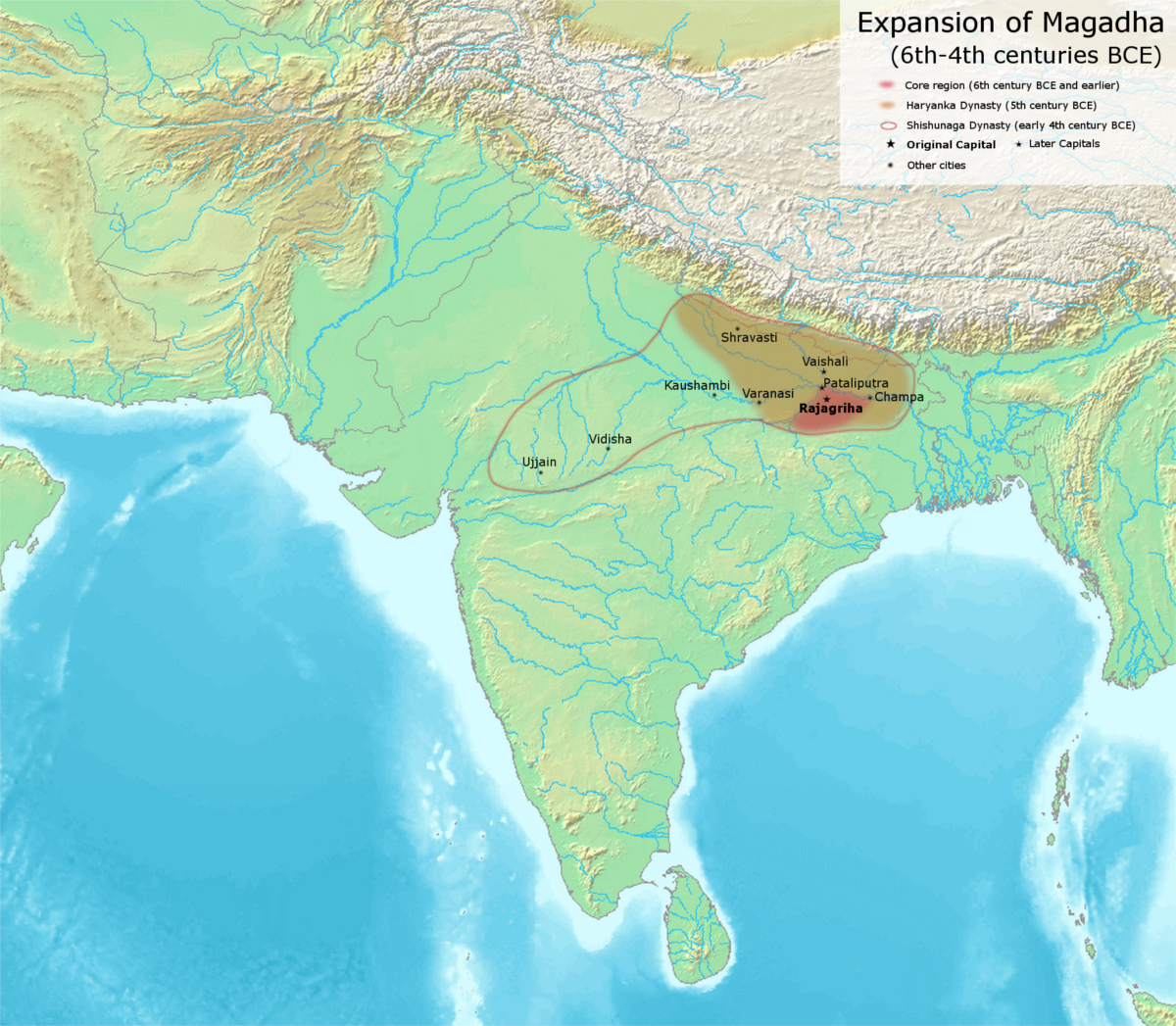
Source: World History Encyclopedia — Magadha Kingdom - World History Encyclopedia · www.worldhistory.org
Trap: Buddha was born in Kosala but built his career in Magadha — don't mix these up
Trap: Bimbisara was Buddha's contemporary — not Ajatashatru initially
Trap: Rajagriha was the old capital — Pataliputra came later under Mauryans
Avanti & Gandhara Buddhist Spread
Ancient And Medieval History Avanti Gandhara
Avanti & Gandhara: Post-Buddha Buddhist Expansion Centers
Avanti (Ujjain) — Buddhism spread here through disciples, NOT during Buddha's life
Gandhara (Taxila) — became Buddhist center centuries later under Kushans
Both were important Mahajanapadas but not connected to Buddha's personal life
Avanti and Gandhara were major Mahajanapadas but became Buddhist centers only after Buddha's death through missionary activity and later royal patronage.
Why These Kingdoms Were NOT Buddha's Life Centers
Kingdom | Capital | Buddhist Connection | Timeline |
|---|---|---|---|
Avanti | Ujjain | Later missionary spread by disciples | Post-Buddha period |
Gandhara | Taxila | Major center under Kushans, Gandhara art school | 2nd-5th century CE |
Later Buddhist Significance
Avanti: Became important trade route center, Buddhism spread via merchant networks
Gandhara: Famous for Greco-Buddhist art synthesis under Kushan patronage
Taxila: Major learning center but centuries after Buddha's Mahaparinirvana
Geographic factor: Both were distant from Buddha's core activity zones
Trap: Don't confuse later Buddhist importance with Buddha's personal life events
Trap: Gandhara art school ≠ Buddha's time — it's Kushan period (1st-3rd century CE)
Trap: Taxila was a learning center but Buddha never visited it personally
Sixteen Mahajanapadas Overview
Ancient And Medieval History
Sixteen Mahajanapadas: Political Landscape of Buddha's Era
16 Mahajanapadas existed during Buddha's lifetime (6th century BCE)
Mix of monarchies and republics — some absorbed others through expansion
Four eventually dominated: Kosala, Magadha, Vatsa, Avanti
The 16 Mahajanapadas formed the political map of northern India during Buddha's era. Understanding their locations and power dynamics explains why Buddha's life centered around Kosala and Magadha — the two most powerful kingdoms of his time.
Key Mahajanapadas & Buddha Connection
Kingdom | Capital | Buddha Connection | Modern Location |
|---|---|---|---|
Kosala | Shravasti | Birth kingdom, major teaching center | UP, Nepal |
Magadha | Rajagriha | Career center, royal patronage | Bihar |
Avanti | Ujjain | Later Buddhist spread only | MP |
Gandhara | Taxila | No connection to Buddha's life | Pakistan |
Vatsa | Kaushambi | Later Buddhist center | UP |
Kuru | Indraprastha | Minor Buddhist activity | Delhi region |
Mahajanapadas Map
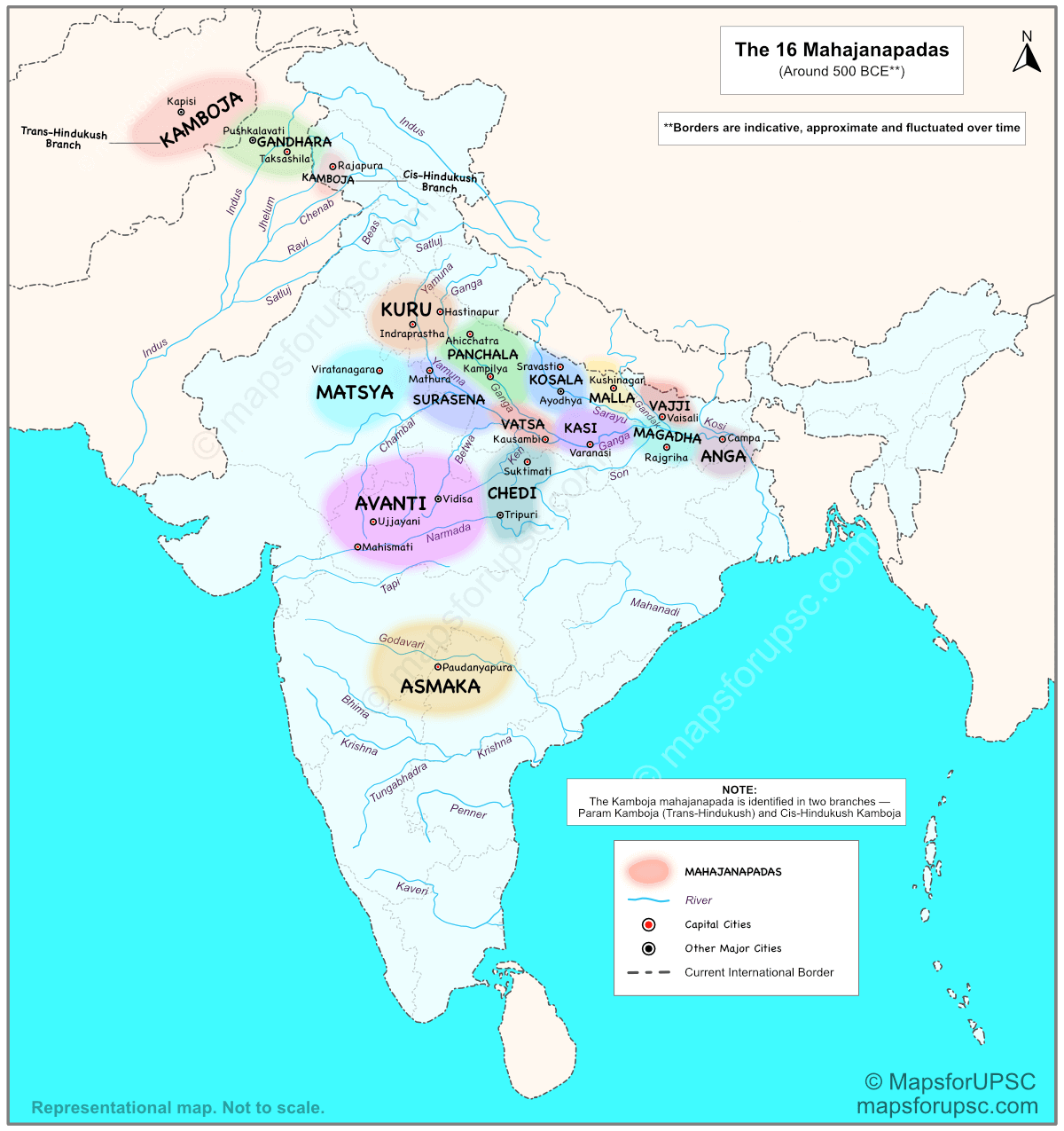
Source: MapsforUPSC — 16 Mahajanapadas: Map, Capitals, Rivers, Locations, & Key Facts · mapsforupsc.com
Trap: Not all Mahajanapadas were connected to Buddha — only Kosala and Magadha directly
Trap: Don't assume geographic importance = Buddha connection (e.g., Gandhara was major but unrelated)
Trap: Some became Buddhist centers centuries later — distinguish Buddha's lifetime from later spread