With reference to the period of Gupta dynasty in ancient India, the towns Ghantasala, Kadura and Chaul were well known as
Contents14
- Aports handling foreign trade
- Bcapitals of powerful kingdoms
- Cplaces of exquisite stone art and architecture
- Dimportant Buddhist pilgrimage centres
Show answer
Answer: (A) ports handling foreign trade
During the Gupta period, India had an active maritime trade network.
Ghantasala, Kadura, and Chaul were all important PORT TOWNS that handled foreign trade.
- Ghantasala: A port on the east coast (Andhra region), used for trade with Southeast Asia and China.
- Kadura: Also a port in the Andhra region on the east coast.
- Chaul: A port on the west coast (Maharashtra), through which the wealth of the Roman Empire reached India. Other western ports included Kalyan, Broach, and Cambay.
India had extensive maritime trade during the Gupta period with Rome, Egypt, China, Sri Lanka, Java, and Sumatra through both its east and west coast ports.
These were NOT capitals, centers of stone art, or Buddhist pilgrimage centers.
Answer: A (Ports handling foreign trade).
Key Takeaway: Ghantasala, Kadura = east coast ports (Andhra). Chaul = west coast port (Maharashtra). All handled foreign trade during the Gupta period.
India had extensive maritime trade networks during the Gupta period, with ports on both east and west coasts facilitating trade with Rome, China, Southeast Asia, and other regions.
The question tests knowledge of specific port towns rather than the more commonly studied Gupta capitals or cultural centers - Ghantasala and Kadura were east coast ports in the Andhra region, while Chaul was a major west coast port in Maharashtra.
Maritime Trade in Gupta Period
Ancient And Medieval History Ghantasala Kadura Chaul ports foreign trade
Maritime Trade During Gupta Period: Ports & Trade Networks
Ghantasala and Kadura were major east coast ports in Andhra region for Southeast Asia-China trade
Chaul was a key west coast port in Maharashtra for Roman trade
Gupta period saw extensive maritime trade with Rome, Egypt, China, Sri Lanka, Java, Sumatra
Other major western ports included Kalyan, Broach, Cambay
Trade Networks
The Gupta period marked a golden age of Indian maritime commerce. Indian merchants established extensive trade networks spanning from the Roman Empire in the west to China and Southeast Asia in the east, using strategically located ports on both coasts.
Major Gupta Period Ports
Port | Coast | Region | Primary Trade Partners | Key Exports/Imports |
|---|---|---|---|---|
Ghantasala | East | Andhra | Southeast Asia, China | Spices, textiles → Silk, precious stones |
Kadura | East | Andhra | Southeast Asia, China | Cotton, pepper → Gold, silver |
Chaul | West | Maharashtra | Roman Empire, Egypt | Spices, gems → Roman gold coins |
Kalyan | West | Maharashtra | Arabian traders | Textiles, spices → Horses, wine |
Broach | West | Gujarat | Roman Empire, Persia | Cotton, indigo → Gold, coral |
Cambay | West | Gujarat | Arabian Peninsula | Precious stones → Pearls, dates |
Trade Route Map
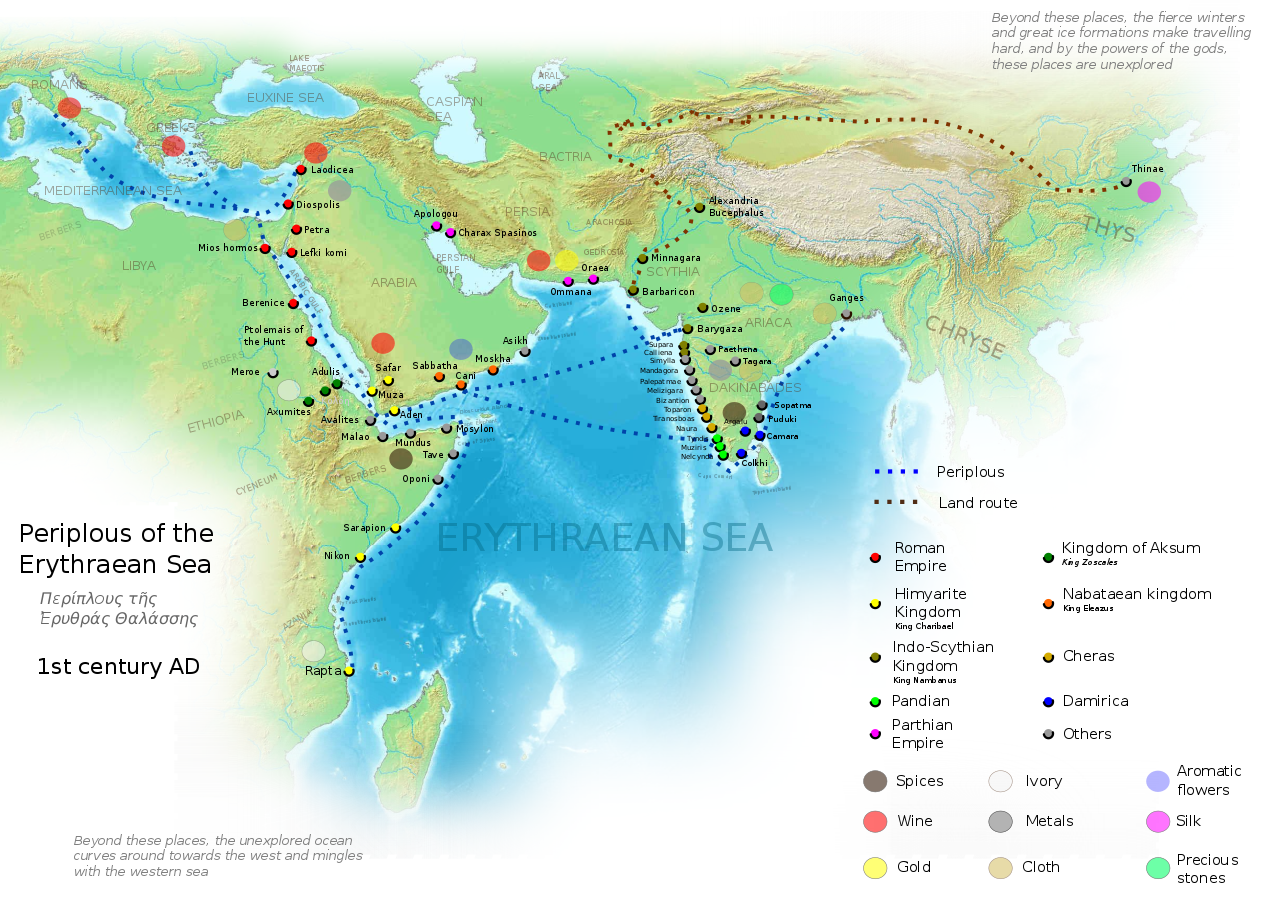
Source: World History Encyclopedia — Ancient Indian Maritime Trade Routes - World History Encyclopedia · www.worldhistory.org
Economic Impact
Roman gold coins found across India show the scale of western trade - Romans paid heavily for Indian spices and textiles
Eastern trade brought Chinese silk, Southeast Asian gold, and precious stones that were re-exported to Rome
Port cities became cosmopolitan centers with foreign merchant communities and warehouses
Maritime trade contributed significantly to Gupta economic prosperity and cultural exchange
Question Context
This UPSC question tests knowledge of specific port names from the Gupta period. The trap was confusing these commercial ports with religious centers, capitals, or art centers - but all three were purely trade hubs.
Trap: Confusing Ghantasala/Kadura (east coast) with Chaul (west coast) - remember geography
Trap: Thinking these were Buddhist centers - they were commercial ports, not pilgrimage sites
Trap: Assuming they were capitals - Gupta capitals were inland (Pataliputra, later Ujjain)
Trap: Mixing up Gupta trade ports with Chola period ports like Puhar or Kaveripattinam
Gupta Economic System & Prosperity
Ancient And Medieval History
Economic Foundations of Gupta Golden Age
Gupta period called Golden Age due to economic prosperity, cultural achievements
Agriculture remained the base, but trade and crafts flourished significantly
Guilds (shrenis) controlled crafts and trade, maintained quality standards
Gold coins issued by Gupta rulers show economic strength and artistic excellence
Economic Structure
# Gupta Economy
## Agriculture
- Rice cultivation
- Land grants to Brahmanas
- Improved irrigation
- New crops from trade
## Trade & Commerce
- Maritime trade
- Overland routes
- Guild system
- Foreign merchants
## Crafts & Industry
- Textiles
- Metalwork
- Jewelry
- Sculpture
## Currency & Banking
- Gold coins
- Silver coins
- Copper coins
- Hundis (bills)
Trade Prosperity Factors
Political stability under strong Gupta rulers encouraged long-distance trade
Standardized coinage facilitated transactions across the empire
Guild system ensured quality control and fair trade practices
Royal patronage to merchants and artisans boosted economic activity
Strategic location of India on trade routes between East and West
Major Trade Goods
Category | Indian Exports | Foreign Imports | Economic Impact |
|---|---|---|---|
Textiles | Cotton, silk fabrics, muslin | Chinese silk, Persian carpets | Major revenue source |
Spices | Black pepper, cardamom, cinnamon | Saffron, dry fruits | High profit margins |
Precious Items | Gems, pearls, ivory | Gold, silver coins | Wealth accumulation |
Raw Materials | Iron, steel products | Horses, coral | Industrial growth |
Luxury Goods | Perfumes, incense | Wine, glassware | Cultural exchange |
Trap: Assuming Gupta economy was purely agricultural - trade and crafts were equally important
Trap: Confusing Gupta guild system with medieval European guilds - Indian shrenis were older
Trap: Thinking all prosperity came from trade - agricultural surplus was the foundation
Ancient Indian Port Cities & Trade Centers
Ancient And Medieval History
Evolution of Indian Port Cities: From Harappa to Medieval Period
Lothal (Harappan) was India's earliest known artificial port with dockyard
Bharuch (Broach) remained important from Mauryan times through Gupta to medieval period
Puhar (Kaveripattinam) was the great Chola port for Southeast Asian trade
Different dynasties developed different coasts - Satavahanas (west), Guptas (both), Cholas (east)
Port Cities Across Periods
Period | Major Western Ports | Major Eastern Ports | Key Features |
|---|---|---|---|
Harappan (2500-1900 BCE) | Lothal (artificial dock) | Dholavira (coastal access) | Planned port infrastructure |
Mauryan (321-185 BCE) | Broach, Sopara | Tamralipti (Bengal) | State-controlled trade |
Satavahana (230 BCE-220 CE) | Kalyan, Chaul, Sopara | Limited eastern presence | Roman trade focus |
Gupta (320-550 CE) | Chaul, Broach, Cambay | Ghantasala, Kadura | Peak maritime trade |
Chola (850-1250 CE) | Quilon (Kerala) | Puhar, Nagapattinam | Naval supremacy, Southeast Asia |
Medieval (1200-1500 CE) | Surat, Calicut | Chittagong, Sonargaon | Arab-Islamic trade networks |
Ancient Port Locations
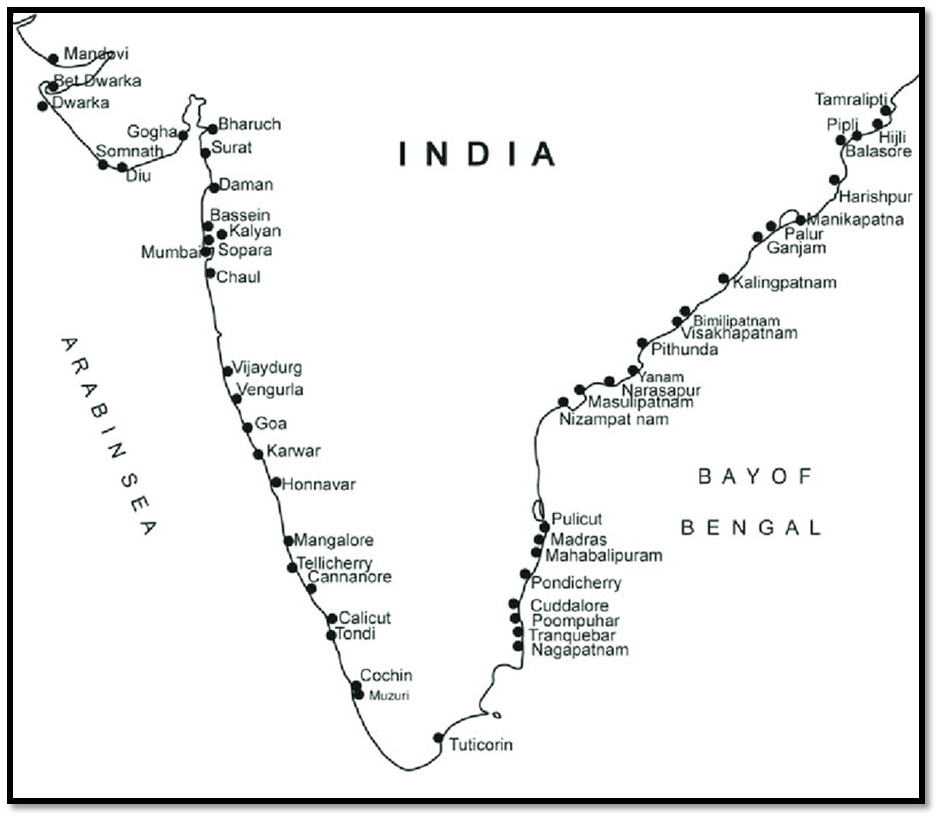
Source: Fotis Edu — Ports of ancient India - FOTIS EDU · fotisedu.com
Port Development Patterns
West coast dominance during Roman trade period (Satavahana-Gupta) due to Mediterranean connections
East coast rise during Chola period with focus on Southeast Asian and Chinese trade
Natural harbors like Broach and Puhar remained important across multiple dynasties
River mouth locations were preferred for inland connectivity (Tamralipti on Ganga, Puhar on Kaveri)
Monsoon patterns determined seasonal trading cycles and port activities
Trap: Mixing Harappan Lothal with later period ports - Lothal was much earlier
Trap: Assuming Puhar = Gupta period - it was the major Chola port
Trap: Confusing Tamralipti (ancient Bengal port) with modern Tamluk
Trap: Thinking all ancient ports were on west coast - eastern ports were equally important