Which one of the following statements is correct?
Contents21
- AAjanta Caves lie in the gorge of Waghora river.
- BSanchi Stupa lies in the gorge of Chambal river.
- CPandu-lena Cave Shrines lie in the gorge of Narmada river.
- DAmaravati Stupa lies in the gorge of Godavari river.
Show answer
Answer: (A) Ajanta Caves lie in the gorge of Waghora river.
The Ajanta Caves are a UNESCO World Heritage Site in Maharashtra — about 30 rock-cut Buddhist caves nestled in a horseshoe-shaped gorge of the Waghora River in the Sahyadri (Western Ghats) hills.
They date from the 2nd century BCE to the 6th century CE.
Sanchi Stupa is in Madhya Pradesh on a hilltop, not in a river gorge.
Pandu-lena caves are near Nashik, not on the Narmada.
Amaravati Stupa is on the Krishna River, not the Godavari.
Answer: (a).
Ajanta Caves are one of India's most famous UNESCO World Heritage Sites, containing 30 rock-cut Buddhist caves with ancient paintings and sculptures dating from 2nd century BCE to 6th century CE.
The question tests precise geographical knowledge by mixing correct monument names with incorrect river locations - a classic UPSC trap where students might know the monuments but confuse their exact geographical settings.
Ajanta Caves
Art And Culture Ajanta Caves Waghora river
Ajanta Caves: Location, Architecture & Historical Significance
30 rock-cut Buddhist caves in Waghora River gorge, Maharashtra
UNESCO World Heritage Site dating from 2nd century BCE to 6th century CE
Located in Sahyadri (Western Ghats) hills in horseshoe-shaped gorge
Famous for Buddhist paintings and sculptures from Hinayana and Mahayana periods
Geographic Setting
The Ajanta Caves are carved into the Waghora River gorge in Maharashtra's Aurangabad district. This horseshoe-shaped gorge in the Sahyadri hills provided natural protection and isolation ideal for Buddhist monasteries.
Cave Periods & Features
Period | Caves | Buddhist School | Key Features |
|---|---|---|---|
1st Phase | Caves 9, 10, 12, 13, 15A | Hinayana | Simple chaityas and viharas |
2nd Phase | Caves 1-8, 11, 14-29 | Mahayana | Elaborate paintings, Buddha images |
Peak Period | 5th-6th century CE | Gupta era | Finest frescoes and sculptures |
Cave Location
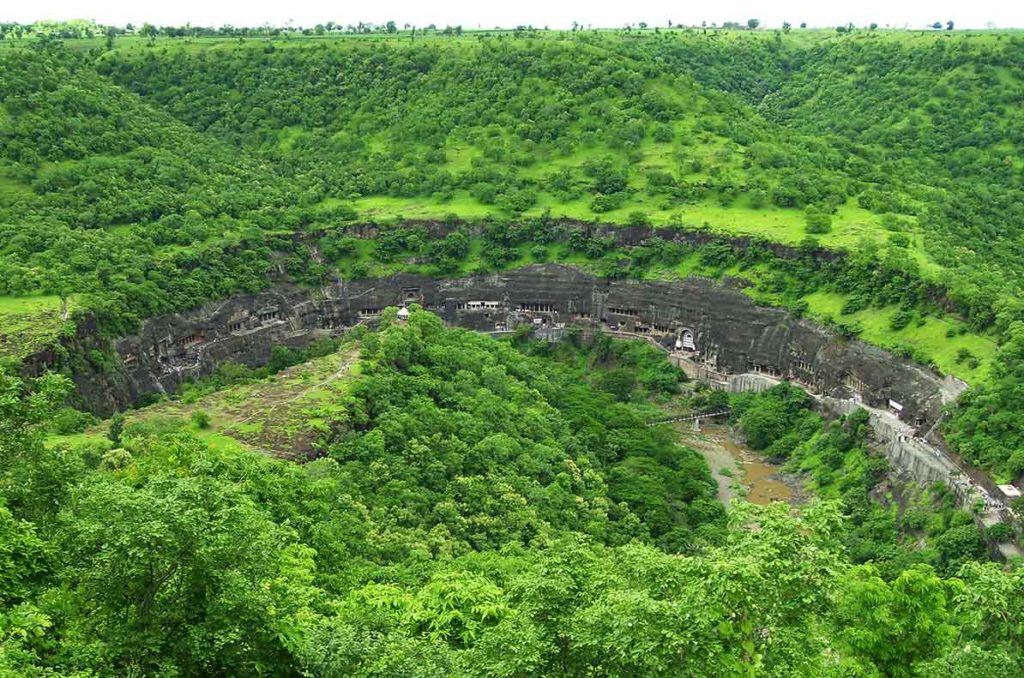
Source: magik india — Ajanta caves, masterpieces of buddhist art - MAGIK INDIA · magikindia.com
Architectural Significance
Chaityas (prayer halls) with ribbed vaulting and stupas
Viharas (monasteries) with residential cells around central hall
World-famous frescoes depicting Jataka tales and Buddha's life
Bodhisattva Padmapani in Cave 1 - masterpiece of Indian painting
Influenced later rock-cut architecture at Ellora and Elephanta
Trap: Confusing Ajanta's Waghora River location with other monument-river combinations
Trap: Mixing up Ajanta (Maharashtra) with Ellora Caves (also Maharashtra but different location)
Trap: Associating Sanchi or Amaravati stupas with river gorges when they're on elevated ground
Sanchi Stupa
Art And Culture Sanchi Stupa
Sanchi Stupa: Location, Construction & Architectural Features
Great Stupa built by Emperor Ashoka in 3rd century BCE
Located on hilltop near Bhopal, Madhya Pradesh - not in any river gorge
UNESCO World Heritage Site with famous toranas (gateways)
Largest stupa in India with diameter of 36.6 meters
Strategic Location
Sanchi Stupa stands on a hilltop in Madhya Pradesh, about 45 km from Bhopal. Unlike cave complexes carved in river gorges, stupas were built on elevated ground for visibility and pilgrimage access.
Construction Phases
Period | Ruler/Dynasty | Addition | Material |
|---|---|---|---|
3rd century BCE | Ashoka | Original brick stupa | Brick and mortar |
2nd century BCE | Shunga | Stone casing, railings | Sandstone |
1st century BCE | Satavahana | Four toranas (gateways) | Carved sandstone |
Gupta period | 4th-5th century CE | Repairs and additions | Stone |
Architectural Elements
Hemispherical dome (anda) representing cosmic egg
Four ornate toranas with Jataka tales and Buddhist symbols
Circumambulatory path (pradakshina patha) for ritual walking
Vedika (stone railing) with lotus and wheel motifs
Harmika (square railing) and chattravali (umbrella) on top
Trap: Placing Sanchi in Chambal River gorge - it's on a hilltop, not near Chambal
Trap: Confusing Sanchi with Amaravati Stupa which is in Andhra Pradesh
Trap: Attributing Sanchi only to Ashoka - multiple dynasties contributed over centuries
Pandu Lena Caves
Art And Culture Pandu-lena Cave Shrines
Pandu Lena Caves: Nashik's Ancient Buddhist Rock-Cut Architecture
24 rock-cut caves near Nashik, Maharashtra from 1st century BCE to 2nd century CE
Hinayana Buddhist caves predating Ajanta's second phase
Not located on Narmada River - built on hillside near Nashik city
Also called Trirashmi Caves or Nashik Caves
Location & Context
Pandu Lena caves are carved into Trirashmi hill near Nashik city in Maharashtra. They are not associated with the Narmada River, which flows through central India, far from Nashik's location in western Maharashtra.
Notable Caves
Cave Number | Type | Period | Special Feature |
|---|---|---|---|
Cave 3 | Chaitya | 1st century BCE | Large prayer hall with stupa |
Cave 10 | Vihara | 2nd century CE | Gautamiputra Satakarni inscription |
Cave 18 | Chaitya | 1st century CE | Well-preserved facade |
Cave 20 | Vihara | 2nd century CE | Elaborate sculptures |
Historical Significance
Satavahana patronage - inscriptions mention royal donations
Early Hinayana phase without Buddha images, only symbols
Trade route connection - Nashik was on ancient Dakshinapatha
Influenced later cave architecture at Karla and Bhaja
Trap: Associating Pandu Lena with Narmada River - they're near Nashik, not on Narmada
Trap: Confusing with Pandav Caves in Pachmarhi (different location)
Trap: Dating them later than Ajanta - Pandu Lena caves are earlier (Hinayana period)
Amaravati Stupa
Art And Culture Amaravati Stupa
Amaravati Stupa: Satavahana Buddhist Monument on Krishna River
Great Stupa built by Satavahanas in 2nd century BCE in Andhra Pradesh
Located on Krishna River banks at Amaravati - not on Godavari
Amaravati School of Art - famous for narrative reliefs and sculptures
Largest stupa in South India with diameter of 50 meters
Geographic Setting
Amaravati Stupa stands on the Krishna River banks in Guntur district, Andhra Pradesh. The Krishna River connection was crucial for trade and pilgrimage routes, not the Godavari which flows through different regions.
Amaravati vs Other Stupas
Stupa | Location | River/Setting | Dynasty | Peak Period |
|---|---|---|---|---|
Amaravati | Andhra Pradesh | Krishna River | Satavahana | 2nd century BCE - 3rd century CE |
Sanchi | Madhya Pradesh | Hilltop (no river) | Maurya-Shunga | 3rd century BCE - 1st century CE |
Nagarjunakonda | Andhra Pradesh | Krishna River | Ikshvaku | 3rd-4th century CE |
Dhanyakataka | Andhra Pradesh | Krishna River | Satavahana | 2nd century BCE |
Amaravati School Features
Narrative sculpture panels depicting Buddha's life in Mahayana style
White marble reliefs with naturalistic human figures
Wheel of Law (dharmachakra) as central motif
Influenced Nagarjunakonda and Southeast Asian Buddhist art
British Museum houses many original sculptures
Krishna River Location
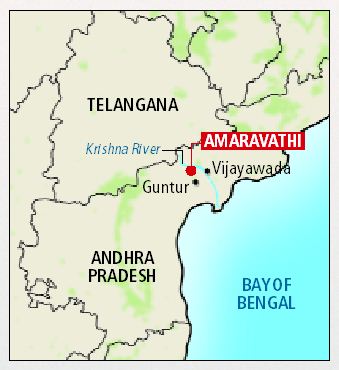
Source: ExamPariksha — Amaravathi / History of Amaravati - General Awareness Study ... · exampariksha.com
Trap: Placing Amaravati on Godavari River - it's on the Krishna River
Trap: Confusing Amaravati (ancient stupa site) with Amaravati (Andhra Pradesh capital city)
Trap: Attributing Amaravati School to Guptas - it's Satavahana patronage
Monument River Associations
Art And Culture gorge river
Monument-River Associations: Key Geographic Facts for UPSC
Only Ajanta Caves are built in a river gorge (Waghora River)
Stupas are typically on hilltops or elevated ground, not in river gorges
River associations help identify correct monument locations in UPSC questions
Correct Monument-River Pairings
Monument | State | River/Geographic Feature | Setting Type |
|---|---|---|---|
Ajanta Caves | Maharashtra | Waghora River gorge | River gorge (carved) |
Ellora Caves | Maharashtra | Near Elyuru village | Hillside (carved) |
Sanchi Stupa | Madhya Pradesh | Hilltop near Bhopal | Elevated ground |
Amaravati Stupa | Andhra Pradesh | Krishna River banks | River bank |
Pandu Lena | Maharashtra | Trirashmi hill, Nashik | Hillside |
Nagarjunakonda | Andhra Pradesh | Krishna River (island) | River valley |
Pattern Recognition
Cave complexes often carved in river gorges or hillsides for natural protection
Stupas built on elevated ground for visibility and circumambulation
Andhra monuments (Amaravati, Nagarjunakonda) cluster around Krishna River
Western Maharashtra has multiple rock-cut sites (Ajanta, Ellora, Pandu Lena)
UPSC trap pattern: Wrong river-monument combinations in options
Trap: Any stupa placed in a river gorge - stupas need flat elevated ground
Trap: Chambal River associations - not linked to major Buddhist monuments
Trap: Narmada River cave associations - major caves are in Maharashtra, not MP/Gujarat
Trap: Swapping Krishna and Godavari for Andhra Pradesh monuments