With reference to Chausath Yogini Temple situated near Morena, consider the following statements: 1. It is a circular temple built during the reign of Kachchhapaghata Dynasty. 2. It is the only circular temple built in India. 3. It was meant to promote the Vaishnava cult in the region. 4. Its design has given rise to a popular belief that it was the inspiration behind the Indian Parliament building. Which of the statements given above are correct?
Contents15
- A1 and 2
- B2 and 3 only
- C1 and 4
- D2, 3 and 4
Show answer
Answer: (C) 1 and 4
Statement 1 is correct:
According to an inscription dated 1323 CE, the temple was built during the reign of Kachchhapaghata king Devapala (1055-1075 CE).
Statement 2 is wrong:
Other circular temples exist in India — this is not the only one.
Statement 3 is wrong:
The original 64 Yogini idols are now missing. Shiva lingas have been placed in each of the 64 cells.
Statement 4 is correct:
The temple's circular layout is widely believed to have inspired the design of the Indian Parliament building.
Statements 1 and 4 are correct.
Answer: (c).
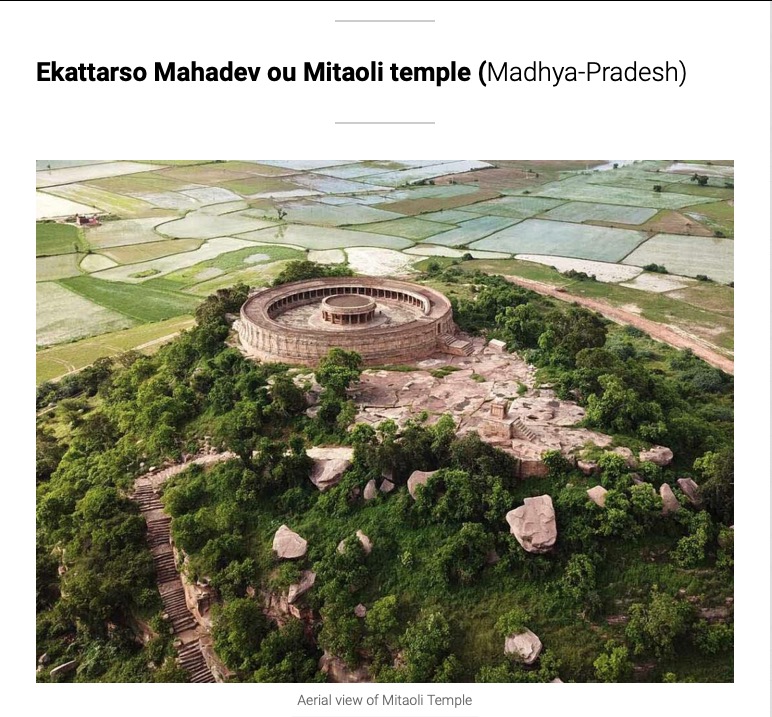
The Chausath Yogini Temple near Morena has a unique circular design with 64 cells, built by the Kachchhapaghata Dynasty in the 11th century.
The temple's circular architecture is widely believed to have inspired the design of India's Parliament building, making it significant beyond just religious history.
UPSC is testing whether students can distinguish between unique architectural features versus claims of being the 'only' example, and between original religious purpose versus later adaptations.
Chausath Yogini Temples
Art And Culture Chausath Yogini Temple circular temple 64 cells
Chausath Yogini Temples: Architecture & UPSC Facts
64 temples dedicated to Yoginis (female attendants of goddess Durga) built across India
Morena temple (Madhya Pradesh) built by Kachchhapaghata Dynasty around 1055-1075 CE
Circular architecture with 64 cells arranged around central courtyard
Not the only circular temple in India - multiple examples exist
What Are Yogini Temples
Chausath Yogini temples are dedicated to 64 female deities called Yoginis, who are attendants of goddess Durga in Tantric traditions. These temples represent a unique architectural style from medieval India, built primarily between 9th-12th centuries CE.
Major Chausath Yogini Temples
Location | State | Dynasty/Period | Key Features |
|---|---|---|---|
Morena | Madhya Pradesh | Kachchhapaghata Dynasty (1055-1075 CE) | Circular, 64 cells, Parliament inspiration |
Hirapur | Odisha | 9th-10th century CE | Circular, open-air design |
Ranipur-Jharial | Odisha | 9th-10th century CE | Rectangular layout |
Khajuraho | Madhya Pradesh | Chandela Dynasty | Rectangular, integrated with other temples |
Morena Temple Specifics
The Morena Chausath Yogini Temple was built during the reign of Kachchhapaghata king Devapala (1055-1075 CE) according to a 1323 CE inscription. Originally housing 64 Yogini idols, the temple now contains Shiva lingas in each cell after the original idols went missing.
Temple Architecture
Source: Viewpoints which Matter - WordPress.com — Chausath (64) Yogini Hindu Temples Architecture – Viewpoints which ... · chaturvedimayank.wordpress.com
Trap: Statement 2 claims it's the only circular temple - wrong, Hirapur (Odisha) is also circular
Trap: Statement 3 mentions Vaishnava cult - wrong, these are Tantric Shakti temples, not Vaishnava
Confusion: Don't mix up Kachchhapaghata (Morena temple) with Chandela (Khajuraho temples)
Parliament connection: The design inspiration claim (Statement 4) is widely accepted, though not officially confirmed
Kachchhapaghata Dynasty
Ancient And Medieval History Kachchhapaghata Dynasty Devapala
Kachchhapaghata Dynasty: Medieval Rulers of Gwalior
Rajput dynasty that ruled parts of Madhya Pradesh from 10th-13th centuries
Capital at Gwalior - controlled strategic trade routes
King Devapala (1055-1075 CE) built the Morena Chausath Yogini Temple
Historical Context
The Kachchhapaghata Dynasty was a medieval Rajput dynasty that emerged in the Gwalior region during the decline of larger empires. They controlled strategic territories in present-day Madhya Pradesh and were known for temple construction and patronage of arts.
Key Contributions
Temple Architecture: Built several temples including the famous Chausath Yogini Temple near Morena
Strategic Location: Controlled Gwalior fort and surrounding trade routes
Religious Patronage: Supported both Shaiva and Tantric traditions
Administrative System: Maintained efficient local governance in their territories
Don't confuse with Chandela Dynasty - both built temples in MP but different regions
Time period: Active during 10th-13th centuries, not earlier Gupta period
Religion: Supported Shaiva/Tantric traditions, not primarily Vaishnava
Circular Temple Architecture
Art And Culture circular temple circular
Circular Temple Architecture in India
Rare architectural form - most Indian temples are rectangular/square
Multiple examples exist - Morena (MP), Hirapur (Odisha), others
Tantric influence - circular form represents cosmic symbolism
Architectural Significance
Circular temple architecture represents a departure from traditional rectangular/square temple layouts. This form is primarily associated with Yogini temples and reflects Tantric cosmological concepts where the circle symbolizes the cosmic cycle and divine energy.
Circular vs Traditional Architecture
Feature | Circular Temples | Traditional Temples |
|---|---|---|
Layout | Circular with central courtyard | Rectangular/square with linear progression |
Cell Arrangement | 64 cells around periphery | Multiple halls in sequence |
Roofing | Often open-air | Elaborate shikhara/tower |
Religious Focus | Tantric/Yogini worship | Brahmanical traditions |
Examples | Morena, Hirapur | Most temples (Khajuraho, Konark) |
Major trap: UPSC tests whether Morena is the only circular temple - it's NOT
Don't assume: Circular = rare doesn't mean unique - several examples exist
Architecture type: These are variations of Nagara style, not separate tradition
Indian Parliament Building Design
Art And Culture Indian Parliament building inspiration
Indian Parliament Building: Design & Cultural Influences
Designed by Herbert Baker and Edwin Lutyens during British colonial period
Popular belief: Chausath Yogini Temple's circular design inspired Parliament's layout
No official confirmation of this inspiration, but architectural similarity exists
Architectural Background
The Indian Parliament House was designed by Herbert Baker as part of New Delhi's construction during the 1920s. While officially following colonial architectural principles, the building's circular central hall has sparked theories about Indian architectural influences.
Design Elements
Circular Central Hall: The most distinctive feature, housing joint sessions
Semicircular Chambers: Lok Sabha and Rajya Sabha halls arranged around the center
Colonial Style: Overall design follows Indo-Saracenic architecture
Indian Motifs: Incorporates traditional Indian decorative elements despite colonial design
Architectural Comparison
Side by side comparison showing aerial view of Parliament House circular design and Chausath Yogini Temple layout
The circular layout similarity that fuels the architectural inspiration theory
UPSC accepts: The inspiration claim as popular belief - Statement 4 is considered correct
Don't overstate: No official documentation proves this inspiration, but it's widely believed
Designer credit: Herbert Baker designed Parliament, not just Lutyens alone