If you walk through countryside, you are likely to see some birds stalking alongside the cattle to seize the insects disturbed by their movement through grasses. Which one of the following is/are such bird/birds? 1. Painted Stork 2. Common Myna 3. Black-necked Crane Select the correct answer using the code given below.
Contents15
- A1 and 2
- B2 only
- C2 and 3
- D3 only
Show answer
Answer: (B) 2 only
Only the Common Myna follows cattle.
The Common Myna (also called the Indian Myna) is a classic example of 'commensalism' — it walks alongside grazing cattle and picks up insects (grasshoppers, beetles) that get disturbed as cattle move through the grass.
The cattle are neither helped nor harmed.
Painted Stork — a large wading bird found near wetlands and marshes, NOT alongside cattle in grasslands. It feeds on fish in shallow water.
Black-necked Crane — a rare, high-altitude bird found in Ladakh and Arunachal Pradesh wetlands. It lives in remote marshes, not in farmland alongside cattle.
The Cattle Egret is another bird famous for this behaviour, but it wasn't in the options.
Common Myna demonstrates commensalism, a key ecological relationship where one species benefits while the other is unaffected.
UPSC tests whether students can distinguish birds by their feeding behavior and habitat, not just by name recognition.
Common Myna & Cattle Association
Environment Common Myna cattle insects
Common Myna: The Cattle-Following Bird
Common Myna is the only bird in options that follows cattle to catch disturbed insects
Shows commensalism - myna benefits, cattle unaffected
Also called Indian Myna - brown bird with yellow patches
Cattle Egret is another famous cattle-following bird (not in options)
The Common Myna demonstrates classic commensalism in agricultural landscapes. As cattle graze and walk through grasslands, they disturb insects like grasshoppers and beetles, which the myna quickly swoops down to catch.
Feeding Behavior
Walks alongside grazing cattle in open grasslands and farmland
Catches grasshoppers, beetles, and other insects disturbed by cattle movement
Often seen in small flocks following livestock herds
Also feeds on fruits, grains, and kitchen scraps - highly adaptable diet
Active during daytime - fits with cattle grazing patterns
Question Connection
This question tested knowledge of bird-cattle associations in countryside settings. The key was recognizing that Common Myna exhibits this specific feeding behavior, while Painted Stork and Black-necked Crane have completely different habitats and feeding patterns.
Trap: Cattle Egret is the most famous cattle-following bird but wasn't in the options
Trap: Painted Stork sounds rural but is a wetland wading bird, not grassland
Trap: Black-necked Crane might seem plausible but lives in high-altitude marshes
Painted Stork Characteristics
Environment Painted Stork
Painted Stork: Wetland Wading Bird
Large wading bird found near wetlands and marshes, NOT grasslands
Feeds on fish in shallow water using tactile feeding method
White and black plumage with pink tertial feathers
The Painted Stork is a large wading bird that inhabits wetlands, not agricultural grasslands. It has no association with cattle as it feeds exclusively in aquatic environments.
Habitat vs Feeding Comparison
Aspect | Painted Stork | Common Myna |
|---|---|---|
Primary Habitat | Wetlands, marshes, rivers | Grasslands, farmland, urban areas |
Feeding Method | Wades in shallow water | Walks on ground, follows cattle |
Main Diet | Fish, frogs, aquatic animals | Insects, fruits, grains |
Association with Cattle | None - different habitat | Strong - follows for insects |
Visual Identification

Source: Roundglass Sustain — Painted Storks: Colouring the Coringa Wetlands · roundglasssustain.com
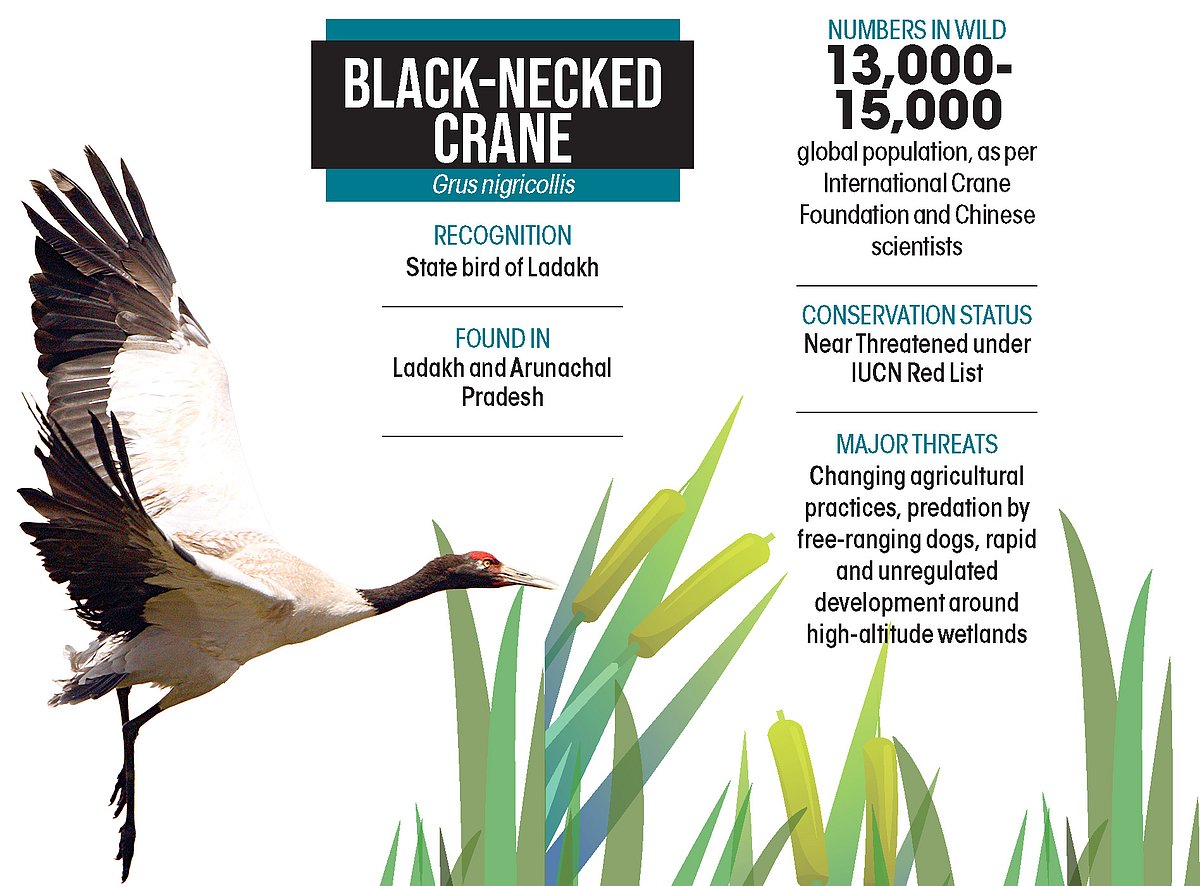
Black-necked Crane Profile
Environment Black-necked Crane
Black-necked Crane: High-Altitude Specialist
Rare high-altitude crane found in Ladakh and Arunachal Pradesh
Lives in remote marshes and wetlands, not farmland with cattle
State bird of Jammu & Kashmir
Migrates between Tibet and Indian Himalayas
The Black-necked Crane is a high-altitude specialist found in remote Himalayan wetlands. It has no connection to agricultural landscapes or cattle-following behavior.
Habitat & Distribution
Found in Ladakh (Changthang plateau) and Tawang, Arunachal Pradesh
Lives in high-altitude marshes and alpine wetlands above 3000m
Migrates from Tibet to winter in Indian Himalayas
Feeds on plant tubers, small fish, insects in marshy areas
Globally vulnerable species - only about 10,000-11,000 individuals remain
Natural Habitat
Source: Down To Earth — Black-necked Crane: Guardians of the Tibetan Plateau's Fragile ... · www.downtoearth.org.in
Trap: Name suggests it could be anywhere, but it's high-altitude specialist only
Trap: Crane might suggest ground-feeding, but this species feeds in remote wetlands
Cattle-Following Bird Species
Environment
Birds That Follow Cattle: Complete Overview
Cattle Egret is the most famous cattle-following bird globally
Common Myna also exhibits this behavior in Indian grasslands
Shows commensalism - birds benefit, cattle unaffected
Several bird species have evolved to follow grazing livestock, taking advantage of the insects disturbed by their movement. This is a classic example of commensalism in agricultural ecosystems.
Cattle-Following Birds Comparison
Bird Species | Global Distribution | Primary Behavior | Conservation Status |
|---|---|---|---|
Cattle Egret | Worldwide - most successful | Walks directly with cattle, eats flies | Least Concern |
Common Myna | South Asia, introduced elsewhere | Follows cattle, catches ground insects | Least Concern |
Yellow-billed Oxpecker | Sub-Saharan Africa only | Feeds on ticks from cattle skin | Least Concern |
Ecological Benefits
Pest control - birds reduce fly and insect populations around livestock
Indicator species - presence suggests healthy grassland ecosystem
Adaptation to agriculture - shows how wildlife adapts to human farming
Low conflict - farmers generally welcome these birds
Trap: Cattle Egret is globally famous but may not appear in Indian bird options
Trap: Don't confuse with parasitism - cattle are not harmed in true cattle-following relationships
Commensalism in Nature
Environment
Commensalism: One-Way Beneficial Relationships
Commensalism - one species benefits, other is unaffected
Different from mutualism (both benefit) and parasitism (one harmed)
Common in agricultural and marine ecosystems
Commensalism is a type of symbiotic relationship where one organism benefits while the other remains unaffected. The cattle-myna relationship exemplifies this perfectly - mynas get food, cattle are neither helped nor harmed.
Types of Symbiotic Relationships
Relationship Type | Species A Effect | Species B Effect | Example |
|---|---|---|---|
Commensalism | Benefits (+) | No effect (0) | Myna following cattle |
Mutualism | Benefits (+) | Benefits (+) | Bee pollinating flower |
Parasitism | Benefits (+) | Harmed (-) | Tick on cattle |
Amensalism | No effect (0) | Harmed (-) | Tree shading smaller plants |
More Commensalism Examples
Remora fish attaching to sharks for transportation and food scraps
Barnacles on whale skin - get nutrients, whale unaffected
Epiphytic orchids on trees - get sunlight, tree not harmed
Cattle Egret following buffalo herds for insects