Which of the following adds/ads carbon dioxide to the carbon cycle on the planet Earth ? 1. Volcanic action 2. Respiration 3. Photosynthesis 4. Decay of organic matter Select the correct answer using the code given below.
Contents16
- A1 and 3 only
- B2 only
- C1, 2 and 4 only
- D1, 2, 3 and 4
Show answer
Answer: (C) 1, 2 and 4 only
The question asks what ADDS CO2 to the atmosphere:
(1) Volcanic action — CORRECT: Volcanoes release massive amounts of CO2 trapped in the Earth's interior.
(2) Respiration — CORRECT: All living organisms (plants, animals, microbes) take in O2 and release CO2 during respiration.
(3) Photosynthesis — WRONG: Photosynthesis does the OPPOSITE — it REMOVES CO2 from the atmosphere and converts it into glucose using sunlight. Plants absorb CO2, not release it.
(4) Decay of organic matter — CORRECT: Decomposition of dead organisms by bacteria and fungi releases CO2 back into the atmosphere.
Memory trick: Photosynthesis is the only process that TAKES CO2 OUT. Volcanoes, respiration, decay, and burning fossil fuels all ADD CO2.
(Ref: NCERT Class 11 Geography, Ch.15)
The carbon cycle involves processes that either add CO2 to the atmosphere (like respiration and volcanic action) or remove it (like photosynthesis).
Students often confuse photosynthesis with respiration - photosynthesis removes CO2 from atmosphere while respiration adds CO2 to it.
The question tests understanding of which direction each process moves carbon - whether it acts as a source or sink for atmospheric CO2.
Carbon Cycle Overview
Environment carbon cycle carbon dioxide
Carbon Cycle: Sources & Sinks of Atmospheric CO₂
Carbon cycle moves carbon between atmosphere, oceans, land, and living organisms
Photosynthesis removes CO₂ from atmosphere, respiration adds CO₂ back
Volcanic action and decay of organic matter are major natural CO₂ sources
Carbon exists in multiple forms: CO₂ gas, dissolved carbonates, organic compounds
What is Carbon Cycle
The carbon cycle is the movement of carbon through Earth's atmosphere, oceans, land, and living organisms. Carbon exists as CO₂ gas in the atmosphere, dissolved carbonates in oceans, and organic compounds in plants and animals.
CO₂ Sources vs Sinks
Process | Effect on Atmospheric CO₂ | Mechanism | Example |
|---|---|---|---|
Photosynthesis | Removes CO₂ (Sink) | Plants convert CO₂ + water → glucose using sunlight | Green plants, algae |
Respiration | Adds CO₂ (Source) | Organisms break down glucose → release CO₂ + energy | All living beings |
Volcanic Action | Adds CO₂ (Source) | Releases CO₂ trapped in Earth's interior | Mount Etna, Kilauea |
Decay of Organic Matter | Adds CO₂ (Source) | Bacteria/fungi decompose dead organisms → release CO₂ | Rotting leaves, dead animals |
Ocean Absorption | Removes CO₂ (Sink) | CO₂ dissolves in seawater forming carbonates | Marine carbon storage |
Fossil Fuel Burning | Adds CO₂ (Source) | Combustion of coal, oil, gas releases stored carbon | Power plants, vehicles |
Carbon Cycle Visualization
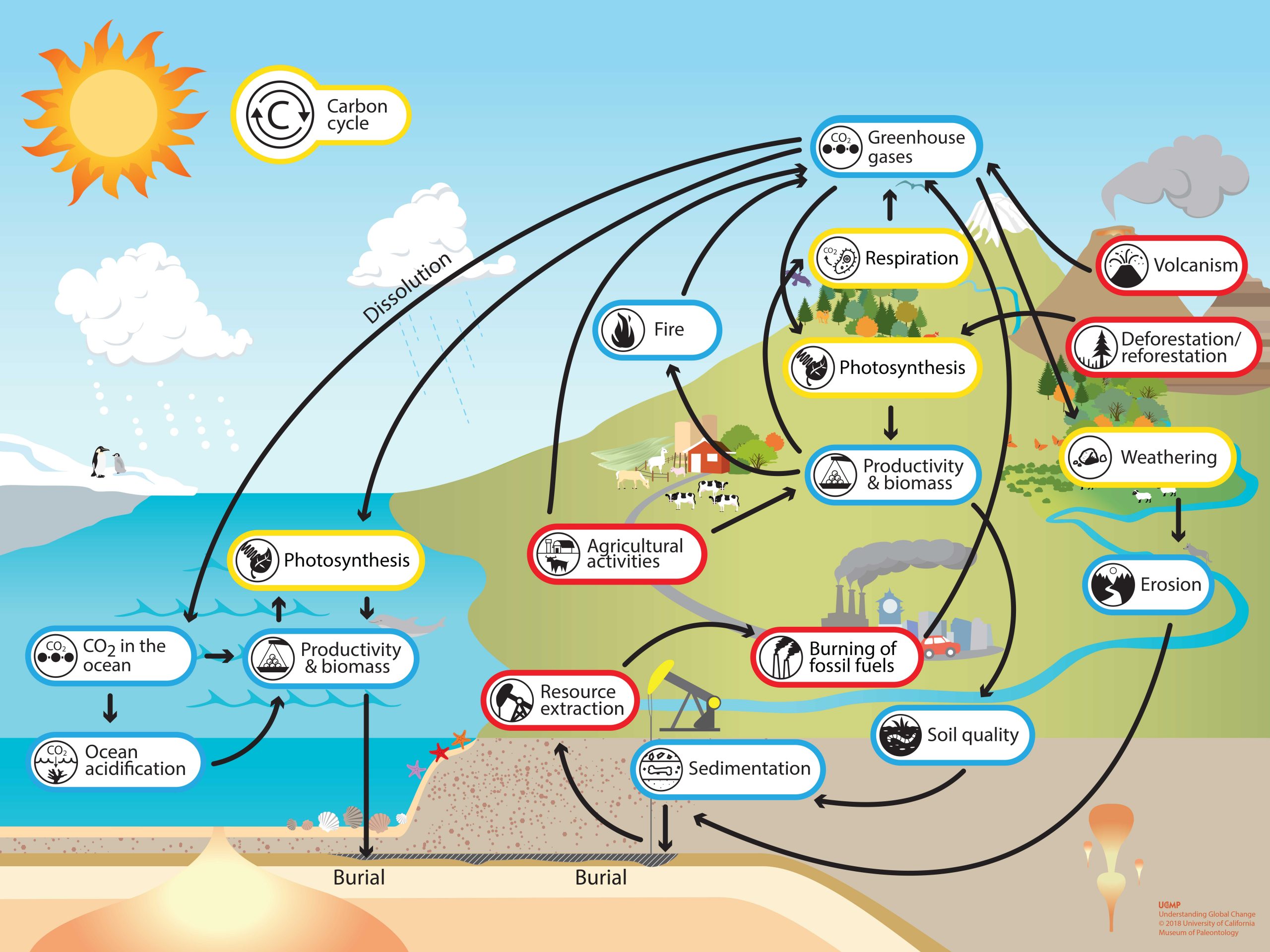
Source: Understanding Global Change — Carbon cycle - Understanding Global Change · ugc.berkeley.edu
Question Analysis
This question tests which processes ADD CO₂ to the atmosphere. Photosynthesis is the trap option — it's the only process that removes CO₂ by converting it to glucose. Volcanic action, respiration, and decay all release CO₂ into the atmosphere.
Trap: Photosynthesis removes CO₂ from atmosphere, doesn't add it — this is the key distinction UPSC tests
Memory trick: Only photosynthesis takes CO₂ OUT — volcanoes, respiration, decay, burning all put CO₂ IN
Common confusion: Students think plants always release CO₂ — but plants absorb CO₂ during day (photosynthesis) and release at night (respiration)
Net effect: Healthy forests are carbon sinks because photosynthesis > respiration over the plant's lifetime
Photosynthesis vs Respiration
Environment Photosynthesis Respiration
Photosynthesis vs Respiration: Opposite CO₂ Effects
Photosynthesis: CO₂ + H₂O + sunlight → glucose + O₂ (removes CO₂)
Respiration: glucose + O₂ → CO₂ + H₂O + energy (adds CO₂)
All organisms respire (plants, animals, microbes) — only green plants photosynthesize
Plants do both: photosynthesize during day, respire 24/7
Key Differences
Aspect | Photosynthesis | Respiration |
|---|---|---|
Purpose | Make food (glucose) | Release energy from food |
CO₂ Effect | Absorbs CO₂ (removes from air) | Releases CO₂ (adds to air) |
O₂ Effect | Releases O₂ as byproduct | Consumes O₂ for breakdown |
Energy | Requires sunlight energy | Releases chemical energy |
Location | Chloroplasts (green parts only) | Mitochondria (all living cells) |
Timing | Daytime only (needs sunlight) | 24/7 (continuous process) |
Organisms | Green plants, algae only | All living organisms |
Equation | 6CO₂ + 6H₂O → C₆H₁₂O₆ + 6O₂ | C₆H₁₂O₆ + 6O₂ → 6CO₂ + 6H₂O + ATP |
Plant CO₂ Balance
During day: Plants photosynthesize (absorb CO₂) AND respire (release CO₂) — net effect is CO₂ absorption
During night: Plants only respire (release CO₂) — no photosynthesis without sunlight
Healthy mature plants: Photosynthesis > Respiration over lifetime — net carbon sinks
Dying/decaying plants: Only respiration and decomposition — become carbon sources
Major trap: Students think plants always absorb CO₂ — but plants release CO₂ at night through respiration
UPSC loves: Photosynthesis removes CO₂, respiration adds CO₂ — they are opposite processes
Don't confuse: Breathing (physical air movement) vs Respiration (cellular CO₂ production)
Net effect matters: Young growing forests are carbon sinks, old dying forests can be carbon sources
Volcanic Action & CO₂
Environment Volcanic action
Volcanic Action: Major Natural CO₂ Source
Volcanoes release massive CO₂ stored in Earth's interior mantle and crust
Volcanic CO₂ comes from magma degassing and limestone decomposition at high temperatures
Annual volcanic CO₂: ~0.3 billion tons (much less than human emissions of ~40 billion tons)
How Volcanoes Add CO₂
Volcanic eruptions release CO₂ trapped deep in Earth's mantle and crust. This happens through two main processes:
Magma degassing: CO₂ dissolved in molten rock escapes as gas when pressure drops
Limestone heating: High temperatures decompose carbonate rocks (CaCO₃) into CO₂ and lime
Volcanic CO₂ Sources
Deep mantle CO₂: Original carbon trapped during Earth's formation — released through volcanic vents
Crustal carbonates: Limestone and marble heated by magma decompose into CO₂ gas
Hydrothermal systems: Underwater volcanic vents release dissolved CO₂ into oceans
Continuous emission: Active volcanoes release CO₂ even between major eruptions
Global Volcanic CO₂ Sources
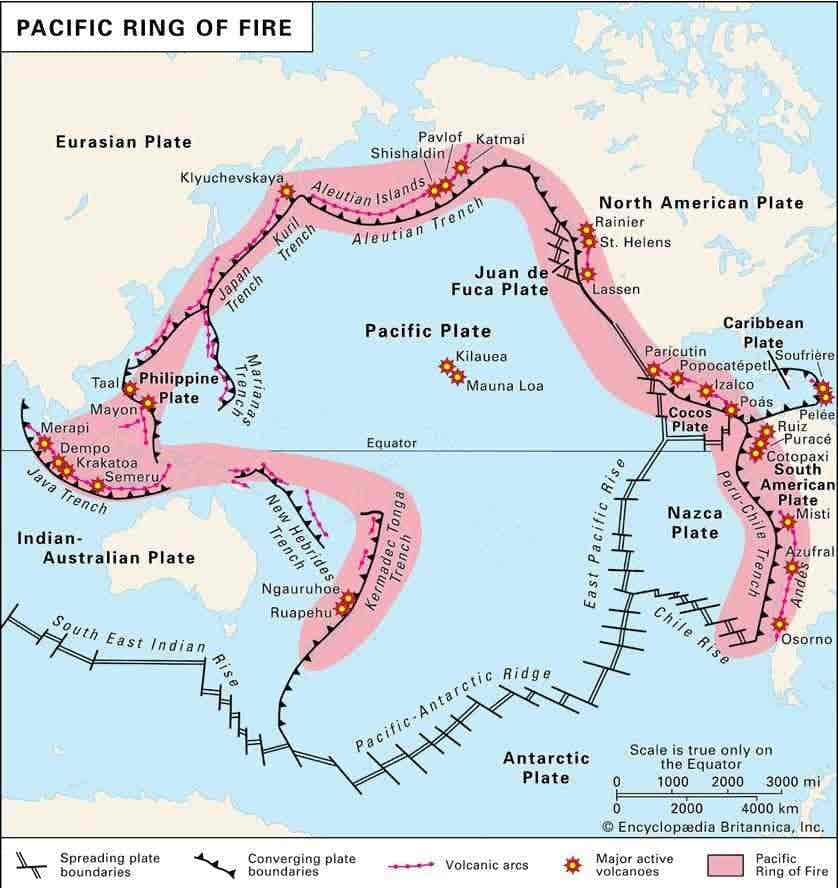
Source: RAJ RAS — Volcanoes: Types, distribution and their effects - Connect Civils · rajras.in
Perspective trap: Volcanic CO₂ is natural but still adds to atmospheric carbon — it's not carbon neutral
Scale comparison: Modern human CO₂ emissions (~40 billion tons/year) are 100+ times larger than volcanic emissions
Don't assume: Volcanoes also release other gases (SO₂, H₂S) but CO₂ is the major greenhouse component
Decay of Organic Matter
Environment Decay of organic matter
Organic Matter Decay: Microbial CO₂ Production
Decomposition by bacteria and fungi breaks down dead organisms into CO₂, water, and nutrients
Soil respiration from microbial decay accounts for ~25% of global CO₂ emissions
Faster decay in warm, moist conditions — slower in cold, dry, or waterlogged soils
Decomposition Process
When plants and animals die, bacteria and fungi break down their organic compounds. This decomposition converts complex organic molecules back into simple compounds, releasing stored carbon as CO₂ into the atmosphere.
Decay Process Steps
%%{init: {"flowchart": {"wrappingWidth": 460}}}%%
flowchart TD
  s1["`****Organism Dies****
Plant or animal stops living, body contains stored carbon in organic compounds`"]
  s2["`****Microbial Attack****
Bacteria and fungi colonize dead tissue, begin breaking down proteins and carbohydrates`"]
  s3["`****Enzymatic Breakdown****
Microbes release enzymes that split complex molecules into simpler compounds`"]
  s4["`****Respiration by Microbes****
Decomposer organisms use organic carbon for energy, releasing CO₂ as waste`"]
  s5["`****CO₂ Release****
Carbon returns to atmosphere as CO₂ gas, completing the carbon cycle`"]
  s1 --> s2
  s2 --> s3
  s3 --> s4
  s4 --> s5
Factors Affecting Decay Rate
Temperature: Higher temperatures speed up microbial activity and CO₂ release
Moisture: Moderate wetness optimal — too dry slows microbes, too wet creates anaerobic conditions
Oxygen availability: Aerobic decay produces CO₂, anaerobic decay produces methane (CH₄)
Organic matter type: Leaves decay faster than wood; soft tissue faster than bones
Key insight: Decay always adds CO₂ to atmosphere — it's the reverse of photosynthesis that stored the carbon originally
Anaerobic vs aerobic: Waterlogged soils produce methane instead of CO₂ during decay
Climate connection: Warmer temperatures increase decay rates, creating positive feedback for climate change
Don't forget: Soil respiration from root + microbial activity is a major CO₂ source often overlooked