Which of the following can be found as pollutants in the drinking water in some parts of India? 1. Arsenic 2. Sorbitol 3. Fluoride 4. Formaldehyde 5. Uranium Select the correct answer using the codes given below.
Contents15
- A1 and 3 only
- B2, 4 and 5 only
- C1, 3 and 5 only
- D1, 2, 3, 4 and 5
Show answer
Answer: (C) 1, 3 and 5 only
Arsenic (1) — Yes, a major drinking water pollutant in India.
Arsenic contamination of groundwater is a serious problem in West Bengal, Bihar, Uttar Pradesh, Jharkhand, and parts of the Gangetic plain.
Sorbitol (2) — No.
Sorbitol is a sugar alcohol used as a sweetener in food products.
It is not a known groundwater pollutant in India.
Fluoride (3) — Yes, a well-known pollutant.
Excess fluoride in drinking water (fluorosis) affects millions in Rajasthan, Andhra Pradesh, Gujarat, Tamil Nadu, and several other states, causing dental and skeletal fluorosis.
Formaldehyde (4) — No.
Formaldehyde is an industrial chemical and preservative.
It is not a standard drinking water contaminant in India's groundwater context.
Uranium (5) — Yes.
Punjab was the first state to report the presence of uranium in rural drinking water, with almost 70% of samples sent to Bhabha Atomic Research Centre (BARC) testing positive.
Uranium contamination has also been reported in parts of Rajasthan and other states.
So 1, 3, and 5 are correct.
Arsenic, fluoride, and uranium are natural groundwater contaminants affecting millions across states like West Bengal, Rajasthan, and Punjab respectively.
The question tests knowledge of actual groundwater pollutants versus industrial chemicals that don't typically contaminate drinking water sources in India.
Arsenic Contamination in India
Environment Arsenic
Arsenic Contamination in Indian Groundwater: Affected States & Health Impact
West Bengal has the worst arsenic contamination in India, affecting millions
Gangetic plain states (Bihar, UP, Jharkhand) are major affected regions
Tube wells in alluvial aquifers are the primary source of contaminated water
Arsenicosis causes skin lesions, cancer, and organ damage
Arsenic is a naturally occurring heavy metal that contaminates groundwater in specific geological conditions. In India, it primarily affects alluvial aquifers where arsenic-bearing sediments release the toxin into groundwater accessed through tube wells.
Major Arsenic-Affected States
State | Affected Districts | Primary Source | Health Impact |
|---|---|---|---|
West Bengal | Malda, Murshidabad, Nadia, North 24 Parganas | Shallow tube wells | Highest arsenicosis cases |
Bihar | Bhojpur, Patna, Vaishali | Hand pumps, tube wells | Skin lesions, cancer |
Uttar Pradesh | Ballia, Ghazipur, Varanasi | Groundwater extraction | Chronic exposure effects |
Jharkhand | Sahebganj, Pakur | Alluvial aquifers | Contaminated drinking water |
Geological & Environmental Factors
Alluvial deposits in Gangetic plain contain arsenic-bearing minerals that leach into groundwater
Reducing conditions in aquifers promote arsenic mobilization from sediments
Excessive groundwater extraction changes aquifer chemistry, releasing more arsenic
Natural occurrence — not industrial pollution, making it harder to control at source
Arsenic Affected Areas Map
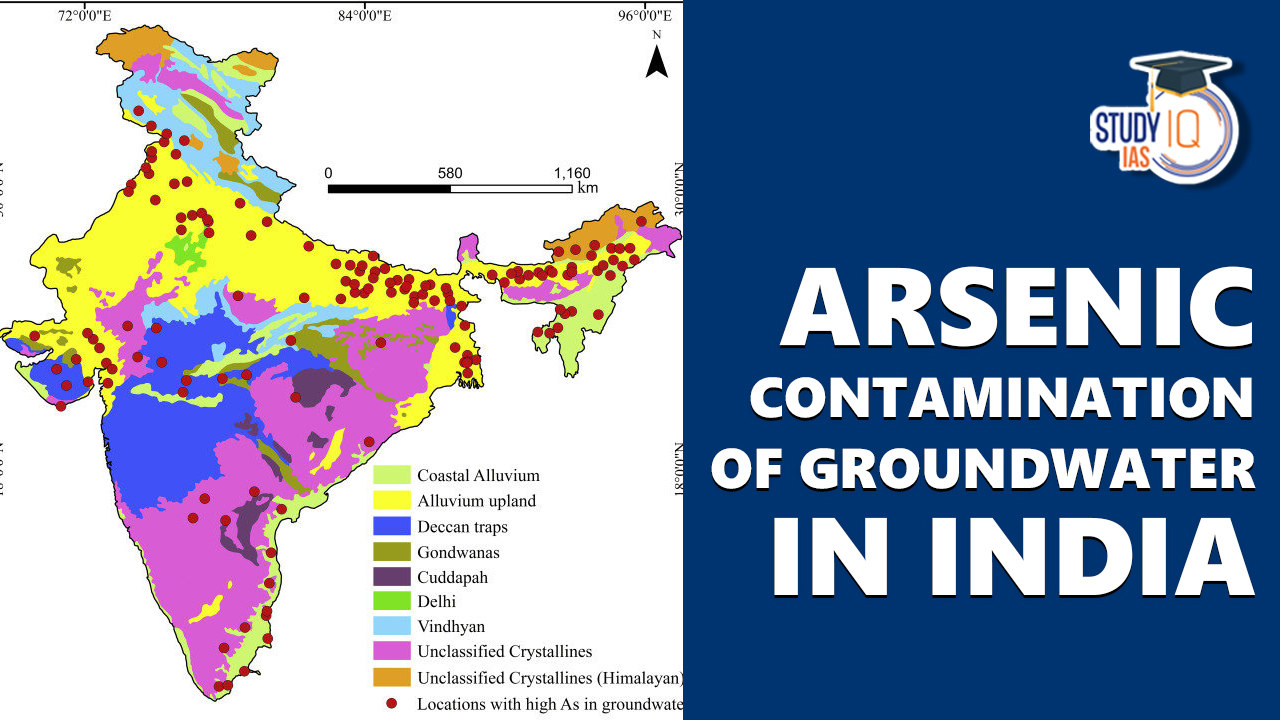
Source: StudyIQ — Arsenic Contamination of Groundwater in India · www.studyiq.com
Trap: Arsenic is natural contamination, not industrial — UPSC may ask about sources
Trap: West Bengal is most affected, not Punjab (Punjab has uranium contamination)
Trap: Arsenic causes arsenicosis (chronic poisoning), not acute fluorosis symptoms
Fluoride Contamination & Fluorosis
Environment Fluoride
Fluoride Contamination in India: Endemic Fluorosis & Affected States
Rajasthan has the highest fluoride contamination affecting millions
Dental fluorosis (teeth discoloration) is the first visible symptom
Skeletal fluorosis causes bone deformities in severe cases
Natural geological occurrence, not industrial pollution
Fluorosis is caused by excess fluoride in drinking water above 1.5 mg/L (WHO limit). India has the largest population affected by endemic fluorosis globally, with natural fluoride leaching from fluoride-bearing rocks into groundwater.
Fluoride-Affected States & Symptoms
State | Affected Population | Primary Symptoms | Geological Source |
|---|---|---|---|
Rajasthan | Highest in India | Dental & skeletal fluorosis | Fluoride-bearing rocks |
Andhra Pradesh | Several districts | Dental discoloration | Crystalline rocks |
Gujarat | North Gujarat worst | Bone deformities | Sedimentary formations |
Tamil Nadu | Salem, Dharmapuri | Teeth mottling | Granitic terrain |
Karnataka | Bijapur, Gulbarga | Skeletal effects | Deccan plateau rocks |
Health Effects by Fluoride Levels
0.5-1.5 mg/L: Safe range, prevents dental caries when optimal
1.5-3 mg/L: Dental fluorosis — teeth discoloration, white/brown spots
3-6 mg/L: Severe dental fluorosis — teeth pitting and staining
Above 6 mg/L: Skeletal fluorosis — joint pain, bone deformities, crippling effects
Fluorosis Symptoms
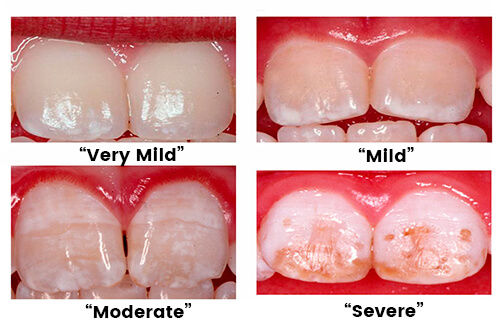
Source: Chisel Dental Clinic — Chisel Dental Clinic | Dental Fluorosis · www.chiseldental.co.in
Trap: Fluoride is beneficial in small amounts but toxic in excess — dual nature
Trap: Rajasthan is most fluoride-affected, not coastal states
Trap: Skeletal fluorosis is severe form — don't confuse with arthritis symptoms
Trap: Natural contamination from rocks, not industrial discharge
Uranium Contamination in India
Environment Uranium
Uranium Contamination: Punjab's Cancer Belt & Radioactive Groundwater
Punjab was first state to report uranium in drinking water (70% samples positive)
BARC (Bhabha Atomic Research Centre) conducted the testing and confirmation
Malwa region of Punjab most affected, linked to cancer cases
Rajasthan also reports uranium contamination in groundwater
Uranium contamination in Indian groundwater was first detected in Punjab's Malwa region, where 70% of samples tested by BARC showed uranium presence. This radioactive heavy metal contamination has raised serious health concerns in affected areas.
Key Facts & Sources
Natural occurrence from uranium-bearing geological formations, not nuclear facilities
WHO limit: 30 μg/L for uranium in drinking water — many Punjab samples exceed this
Cancer belt: Malwa region reports higher cancer incidence, possibly linked to contamination
Detection method: Requires specialized testing by institutions like BARC
Other states: Rajasthan, Haryana also report uranium traces in groundwater
Uranium vs Other Water Pollutants
Pollutant | Primary State | Detection Method | Health Impact | Source |
|---|---|---|---|---|
Uranium | Punjab (Malwa) | BARC testing | Cancer risk, kidney damage | Natural geological |
Arsenic | West Bengal | Chemical analysis | Arsenicosis, cancer | Alluvial deposits |
Fluoride | Rajasthan | Ion testing | Fluorosis, bone effects | Fluoride-bearing rocks |
Punjab Cancer Belt Map

Source: ScienceDirect.com — Meta-analysis of uranium contamination in groundwater of the ... · www.sciencedirect.com
Trap: Punjab for uranium, West Bengal for arsenic — don't mix the states
Trap: BARC did the testing — shows government institutional response to contamination
Trap: Natural geological source, not from nuclear power plants or weapons testing
Trap: 70% samples positive — this high percentage makes Punjab uranium contamination significant
Non-Pollutant Chemicals in Water Context
Environment Sorbitol Formaldehyde
Sorbitol & Formaldehyde: Why They're Not Groundwater Pollutants
Sorbitol is a food sweetener, not a groundwater contaminant
Formaldehyde is industrial chemical, not found in India's drinking water context
Both are human-made chemicals with specific industrial/food uses
Chemical Uses vs Water Pollution Context
Chemical | Primary Use | Why Not Water Pollutant | Where Found |
|---|---|---|---|
Sorbitol | Sugar substitute, food sweetener | Water-soluble, biodegradable, not persistent | Diabetic foods, toothpaste, medicines |
Formaldehyde | Industrial preservative, disinfectant | Volatile, breaks down quickly, not in groundwater | Embalming, wood products, textiles |
Key Distinctions for UPSC
Sorbitol: Sugar alcohol (C₆H₁₄O₆) used as artificial sweetener — safe for consumption
Formaldehyde: Organic compound (CH₂O) used in industry — toxic but not a groundwater issue
Both are manufactured chemicals, unlike arsenic/fluoride/uranium which occur naturally
Water pollutants in India context are typically heavy metals or naturally occurring toxins
Trap: Sorbitol sounds chemical/toxic but it's just an artificial sweetener
Trap: Formaldehyde is toxic but not relevant to India's drinking water contamination
Trap: UPSC mixes real pollutants (arsenic, fluoride, uranium) with non-pollutants as distractors
Trap: Focus on naturally occurring vs industrial chemical sources