Consider the following statements regarding 'Earth Hour' 1. It is an initiative of UNEP and UNESCO 2. It is a movement in which the participants switch off the lights for one hour on a certain day every year 3. It is a movement to raise the awareness about the climate change and the need to save the planet Which of the statements given above is/are correct?
Contents14
- A1 and 3 only
- B2 only
- C2 and 3 only
- D1, 2 and 3
Show answer
Answer: (C) 2 and 3 only
Statement 1 — WRONG:
Earth Hour is an initiative of WWF (World Wildlife Fund / World Wide Fund for Nature), NOT UNEP or UNESCO.
It started in Sydney, Australia in 2007.
Statement 2 — CORRECT:
Participants switch off non-essential lights for one hour (8:30 PM to 9:30 PM local time) on the last Saturday of March every year.
Statement 3 — CORRECT:
The purpose is to raise awareness about climate change and the need for environmental sustainability.
It's a symbolic act — the actual energy saved is minimal, but it sparks conversation.
Common UPSC trap: mixing up which UN/international body runs which initiative.
WWF also runs Earth Overshoot Day and the Living Planet Report.
Earth Hour is organized by WWF, not UN agencies, and happens annually on the last Saturday of March from 8:30-9:30 PM local time.
UPSC frequently tests which organization runs which environmental initiative, mixing up WWF, UNEP, UNESCO, and other bodies to create confusion.
Earth Hour Initiative
Environment Earth Hour
Earth Hour: WWF's Global Climate Awareness Campaign
WWF initiative started in Sydney (2007) — NOT UNEP/UNESCO
Lights switched off for one hour (8:30-9:30 PM) on last Saturday of March
Symbolic campaign to raise climate change awareness globally
Over 180 countries participate with landmarks going dark
What is Earth Hour
Earth Hour is the world's largest grassroots environmental movement organized by WWF (World Wildlife Fund). It began as a lights-off event in Sydney, Australia in 2007 and has grown into a global symbol of unity for the planet.
Key Details
Aspect | Details |
|---|---|
Organizer | WWF (World Wildlife Fund / World Wide Fund for Nature) |
Started | 2007 in Sydney, Australia |
When | Last Saturday of March every year |
Time | 8:30 PM to 9:30 PM local time |
Action | Switch off non-essential lights for one hour |
Purpose | Raise awareness about climate change and environmental sustainability |
Global Impact & Participation
Famous landmarks go dark: Sydney Harbour Bridge, Eiffel Tower, Empire State Building, India Gate
Over 180 countries and territories participate annually
Symbolic action — actual energy savings are minimal, but global conversation impact is significant
Participants also pledge year-round environmental actions beyond the one hour
Social media campaigns amplify the message with hashtags and shared experiences
Visual Impact
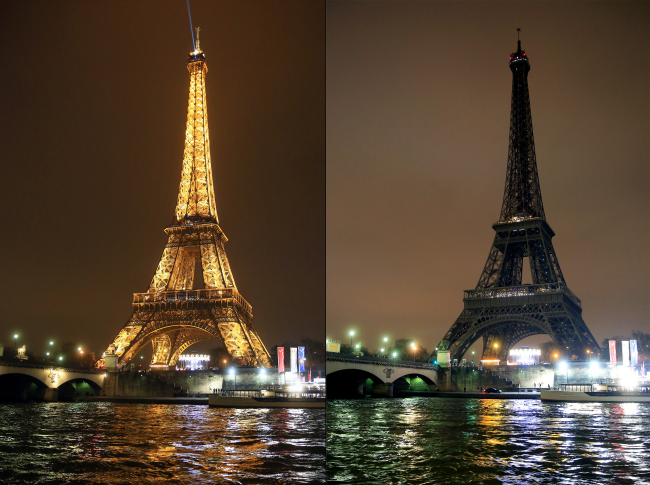
Source: The Korea Herald — Newsmaker] Landmarks go dark for 10th Earth Hour - The Korea ... · www.koreaherald.com
Question Context
This 2014 UPSC question tested Statement 1 as the key discriminator — students who confused WWF with UN agencies like UNEP or UNESCO would pick wrong options. Statements 2 and 3 are straightforward factual descriptions of the event.
Trap: Confusing WWF (correct organizer) with UNEP or UNESCO — common mistake in environmental initiatives
Trap: Mixing up Earth Hour with other environmental days organized by UN bodies
Remember: WWF = Earth Hour, UNEP = World Environment Day (June 5)
Trap: Assuming all major environmental campaigns are UN initiatives — many are NGO-led
WWF Environmental Campaigns
Environment
WWF: Major Environmental Initiatives & Campaigns
WWF is the world's largest independent conservation organization
Runs Earth Hour, Earth Overshoot Day, and Living Planet Report
Founded in 1961, works in 100+ countries
About WWF
WWF (World Wildlife Fund) is an international NGO founded in 1961, working on wilderness preservation and reducing human impact on the environment. It operates in over 100 countries and is funded entirely by donations and partnerships — not by governments or UN bodies.
Major WWF Initiatives
Campaign | What It Is | Key Message |
|---|---|---|
Earth Hour | Annual lights-off event (last Saturday of March) | Climate change awareness through collective action |
Earth Overshoot Day | Date when humanity exhausts Earth's annual resources | Highlights unsustainable resource consumption |
Living Planet Report | Biennial report on global biodiversity trends | Documents wildlife population decline (published every 2 years) |
Panda Logo | Giant panda as global conservation symbol | Represents endangered species protection |
WWF-India | National branch focusing on Indian conservation | Tigers, elephants, marine conservation, climate policy |
WWF vs UN Environmental Bodies
WWF: Independent NGO, donation-funded, focuses on wildlife conservation and public campaigns
UNEP: UN body, government-funded, focuses on environmental policy and international agreements
UNESCO: UN body for education/culture, runs World Heritage Sites and biosphere reserves
WWF initiatives tend to be public awareness campaigns; UN initiatives tend to be policy frameworks
Don't confuse: WWF (NGO) with UN bodies like UNEP or UNESCO
Earth Hour = WWF, World Environment Day (June 5) = UNEP
Living Planet Report = WWF, Global Environment Outlook = UNEP
WWF focuses on conservation & awareness; UNEP focuses on policy & agreements
Global Environmental Days & Campaigns
Environment
Major Environmental Days & Awareness Campaigns
World Environment Day (June 5) is UNEP's flagship campaign
Earth Day (April 22) focuses on environmental protection awareness
Mix of UN-sponsored days and NGO-led campaigns creates exam confusion
Major Environmental Observances
Event | Date | Organizer | Focus Theme |
|---|---|---|---|
World Environment Day | June 5 | UNEP | Environmental protection & sustainability |
Earth Day | April 22 | Earth Day Network (NGO) | Environmental awareness & action |
Earth Hour | Last Saturday of March | WWF | Climate change awareness |
World Wildlife Day | March 3 | UN/CITES | Wildlife conservation |
International Day of Forests | March 21 | UN/FAO | Forest conservation |
World Water Day | March 22 | UN | Water conservation & access |
World Ozone Day | September 16 | UNEP | Ozone layer protection |
Campaign Types & Strategies
Symbolic actions: Earth Hour (lights off), Earth Day (tree planting), create visual impact
Policy focus: UNEP days often tied to international agreements and government commitments
Public participation: NGO campaigns emphasize individual action and social media engagement
Corporate involvement: Many campaigns now include business partnerships and sustainability pledges
Educational component: School programs and awareness materials distributed globally
Environmental Campaign Organizers
# Environmental Campaigns
## **UN Bodies**
- UNEP (World Environment Day)
- UNESCO (Biosphere Reserves)
- FAO (Forest Day)
- UN-Water (World Water Day)
## **International NGOs**
- WWF (Earth Hour)
- Greenpeace (Climate Action)
- Earth Day Network
## **Treaty Organizations**
- CITES (Wildlife Day)
- Montreal Protocol (Ozone Day)
- UNFCCC (Climate Conferences)Trap: All major environmental days seem like they should be UN initiatives — but Earth Hour = WWF
June 5 = UNEP, April 22 = Earth Day Network, March (last Saturday) = WWF
Don't assume: Environmental = UN. Many campaigns are NGO-led with global participation
Pattern: UN days focus on policy/agreements; NGO campaigns focus on public action