With reference to a conservation organization called 'Wetlands International', which of the following statements is/are correct? 1. It is an intergovernmental organizatioin formed by the countries which are signatories to Ramsar Convention 2. It works at the field level to develop and mobilize knowledge, and use the practical experience to advocate for better policies Select the correct answer using the code given below.
Contents17
- A1 only
- B2 only
- CBoth 1 and 2
- DNeither 1 nor 2
Show answer
Answer: (B) 2 only
Statement 1 — WRONG:
Wetlands International is a global NGO (non-governmental organisation),
NOT an intergovernmental organisation.
It was not formed by Ramsar Convention signatories.
It's an independent body headquartered in the Netherlands that works on wetland conservation worldwide.
Don't confuse it with the Ramsar Convention Secretariat (which IS intergovernmental).
Statement 2 — CORRECT:
Wetlands International works at the field level —
conducting on-ground research,
building knowledge,
and using that practical experience to advocate for better wetland policies with governments.
Key distinction for UPSC:
- NGO (non-governmental, civil society)
- IGO (intergovernmental, formed by governments).
Wetlands International = NGO.
Ramsar Convention = international treaty/IGO framework.
Wetlands International is a global NGO based in the Netherlands, not an intergovernmental organization formed by Ramsar Convention countries.
UPSC frequently tests the distinction between NGOs (civil society organizations) and intergovernmental organizations (formed by governments) in environmental governance.
Wetlands International Organization
Environment Wetlands International
Wetlands International: NGO Structure & Functions
Wetlands International is a global NGO, NOT an intergovernmental organization
Headquartered in Netherlands, works on wetland conservation worldwide
Works at field level to develop knowledge and advocate for better policies
Independent civil society organization, not formed by government treaties
What It Is
Wetlands International is a global non-governmental organization focused on wetland conservation. It operates as an independent civil society body, conducting research and advocacy to protect wetland ecosystems worldwide.
Key Facts
Aspect | Details |
|---|---|
Organization Type | Global NGO (Non-Governmental Organization) |
Headquarters | Netherlands |
Primary Focus | Wetland conservation and sustainable use |
Working Method | Field-level research + policy advocacy |
Geographic Scope | Worldwide operations |
Core Functions
Field-level research — conducts on-ground studies of wetland ecosystems
Knowledge mobilization — compiles practical data and scientific evidence
Policy advocacy — uses research findings to influence government wetland policies
Capacity building — supports local communities and organizations in wetland management
Question Connection
This 2014 PYQ tested the distinction between NGOs and intergovernmental organizations. Statement 1 was the trap — confusing Wetlands International (NGO) with Ramsar Convention bodies (intergovernmental). Statement 2 correctly described its field-level approach.
Trap: Wetlands International ≠ intergovernmental body — it's an independent NGO, not formed by treaty signatories
Don't confuse with Ramsar Secretariat — that's the intergovernmental arm of Ramsar Convention
NGO vs IGO distinction — NGOs are civil society, IGOs are formed by governments
NGO vs IGO Classification
World Affairs (International Relations) intergovernmental organization
NGO vs IGO: Key Distinctions for UPSC
NGOs are civil society organizations, IGOs are formed by governments
IGOs created by treaties/agreements between countries
NGOs operate independently, IGOs represent member states
NGO vs IGO Comparison
Aspect | NGO | IGO |
|---|---|---|
Formation | Civil society initiative | Government treaty/agreement |
Membership | Individuals, organizations | Member countries |
Funding | Donations, grants, private | Member state contributions |
Decision-making | Independent governance | Government representatives |
Examples | Wetlands International, WWF, Greenpeace | UN, WHO, UNEP, World Bank |
UPSC Context
Ramsar Convention — international treaty (IGO framework) with secretariat
Conservation NGOs — independent bodies like WWF, Wetlands International work alongside treaties
Policy influence — NGOs advocate, IGOs create binding frameworks
India's approach — participates in IGOs as member, partners with NGOs for implementation
Don't assume conservation = intergovernmental — many key players are NGOs
Treaty bodies vs advocacy groups — Ramsar has both official secretariat (IGO) and supporting NGOs
'International' ≠ intergovernmental — many international NGOs work globally without government formation
Ramsar Convention Framework
Environment Ramsar Convention signatories
Ramsar Convention: Wetlands Treaty & Structure
Ramsar Convention signed in 1971 in Iran, effective from 1975
Treaty on wetlands of international importance especially waterfowl habitat
170+ countries are parties, India joined in 1982
Creates framework for Ramsar Sites designation and protection
Treaty Framework
The Ramsar Convention on Wetlands is an intergovernmental treaty signed in 1971 that provides the framework for national action and international cooperation for conservation and sustainable use of wetlands and their resources.
Ramsar Structure
Component | Type | Role |
|---|---|---|
Conference of Parties (COP) | IGO decision body | Highest decision-making authority |
Ramsar Secretariat | IGO administrative | Treaty implementation support |
Scientific & Technical Panel | IGO advisory | Technical guidance to parties |
Supporting NGOs | Civil society | Advocacy, research, field work |
India & Ramsar
India joined in 1982 — among early adopters in developing countries
75+ Ramsar Sites in India covering diverse wetland types
Recent additions — Wetlands added regularly, including urban wetlands
State-level implementation — states nominate sites, Centre designates them
Global Ramsar Sites
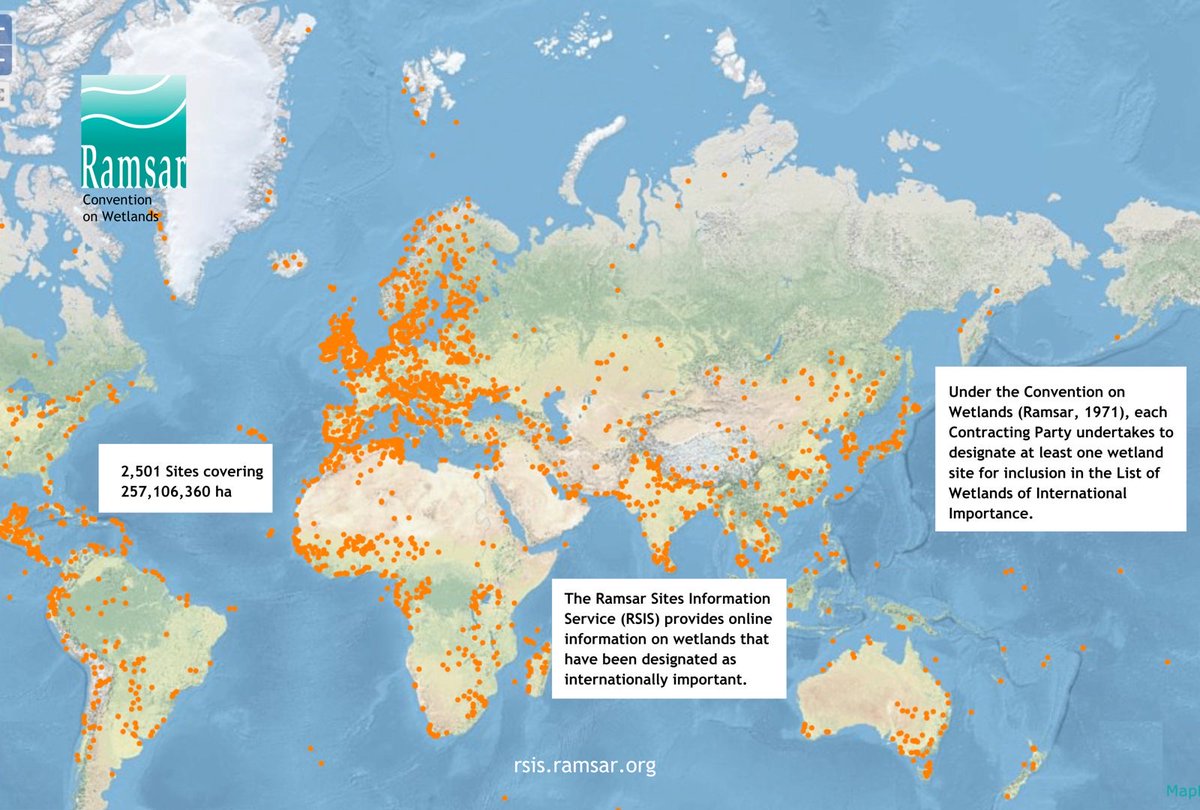
Source: UPSCprep.com — RAMSAR Sites · UPSCprep.com · www.upscprep.com
Ramsar = treaty framework, not an organization — countries are 'parties', not 'members'
Don't confuse Ramsar Secretariat (IGO) with wetland NGOs — different roles in ecosystem
Waterfowl focus — originally for migratory bird habitat, now broader wetland conservation
Field Level Conservation Work
Environment field level practical experience advocate policies
Field Level Conservation: Research to Policy Pipeline
Field-level work involves on-ground research and direct ecosystem engagement
Knowledge mobilization converts field data into policy recommendations
Practical experience provides evidence base for policy advocacy
Research to Policy Pipeline
%%{init: {"flowchart": {"wrappingWidth": 460}}}%%
flowchart TD
  s1["`****Field Research****
On-ground studies, ecosystem monitoring, species surveys`"]
  s2["`****Data Analysis****
Scientific analysis, trend identification, impact assessment`"]
  s3["`****Knowledge Synthesis****
Compile findings, develop recommendations, create evidence base`"]
  s4["`****Policy Advocacy****
Engage governments, present evidence, influence policy decisions`"]
  s5["`****Implementation Support****
Help implement policies, monitor outcomes, provide technical assistance`"]
  s1 --> s2
  s2 --> s3
  s3 --> s4
  s4 --> s5
Field Work Examples
Wetland mapping — using satellite data and ground surveys to map ecosystem changes
Species monitoring — tracking bird migrations, population trends, habitat use patterns
Community engagement — working with local communities on sustainable wetland use
Restoration projects — hands-on ecosystem restoration and monitoring success
Policy case studies — documenting what works in different countries/regions
UPSC Relevance
This approach reflects how modern environmental organizations work — evidence-based advocacy rather than just activism. UPSC tests understanding that effective conservation requires both scientific research and policy influence, not just one or the other.