With reference to Buddhist history, tradition and culture in India, consider the following pairs:
Contents15
With reference to Buddhist history, tradition and culture in India, consider the following pairs:
| Famous Shrine | Location | |
|---|---|---|
| 1. | Tabo monastery and temple complex | Spiti Valley |
| 2. | Lhotsava Lhakhang | Zanskar Valley |
| 3. | Alchi Temple Complex | Ladakh |
Which of the above pairs given is/are correctly matched?
- A1 only
- B2 and 3 only
- C1 and 3 only
- D1, 2 and 3
Show answer
Answer: (C) 1 and 3 only
Pair 1 — CORRECT: Tabo Monastery (founded 996 AD) is in Spiti Valley, Himachal Pradesh.
It's called the 'Ajanta of the Himalayas' for its ancient murals.
Pair 2 — WRONG: Lhotsava Lhakhang is in Nako village, Kinnaur district (Himachal Pradesh), NOT Zanskar Valley.
'Lhotsava' refers to the great translator Rinchen Zangpo who built it.
Pair 3 — CORRECT: Alchi Temple Complex is in Ladakh.
It's famous for its stunning 11th-century Buddhist art and is one of the oldest surviving monastery complexes in Ladakh.
Memory aid:
- Tabo → Spiti
- Alchi → Ladakh
- Lhotsava Lhakhang → Nako/Kinnaur (not Zanskar).
These Buddhist monasteries in Himachal Pradesh and Ladakh are among the oldest surviving monastery complexes in India, with Tabo called the 'Ajanta of the Himalayas' for its ancient murals.
UPSC tests precise geographical knowledge of Buddhist heritage sites to check if students can distinguish between similar-sounding Himalayan valleys and regions.
The question requires memorizing exact locations rather than general Buddhist concepts - students must know Lhotsava Lhakhang is in Kinnaur district, not Zanskar Valley.
Tabo Monastery & Spiti Valley
Art And Culture Tabo monastery Spiti Valley
Tabo Monastery: The Ajanta of the Himalayas
Tabo Monastery is located in Spiti Valley, Himachal Pradesh
Founded in 996 AD, making it over 1000 years old
Called 'Ajanta of the Himalayas' for its ancient murals
One of the oldest functioning Buddhist monasteries in India
Historical Significance
Tabo Monastery stands as one of India's most ancient Buddhist sites, founded in 996 AD by the great translator Rinchen Zangpo. Located in the remote Spiti Valley of Himachal Pradesh, it has earned the title 'Ajanta of the Himalayas' due to its extraordinary collection of ancient murals and artwork that have survived for over a millennium.
Key Features
Houses 9 temples and 23 chortens (stupas) within the complex
Contains rare Thankas (Buddhist paintings) and ancient manuscripts
Features mud-brick construction typical of Trans-Himalayan architecture
Maintains active Gelugpa sect Buddhist practices
UNESCO has recognized it for its outstanding cultural value
Monastery Location
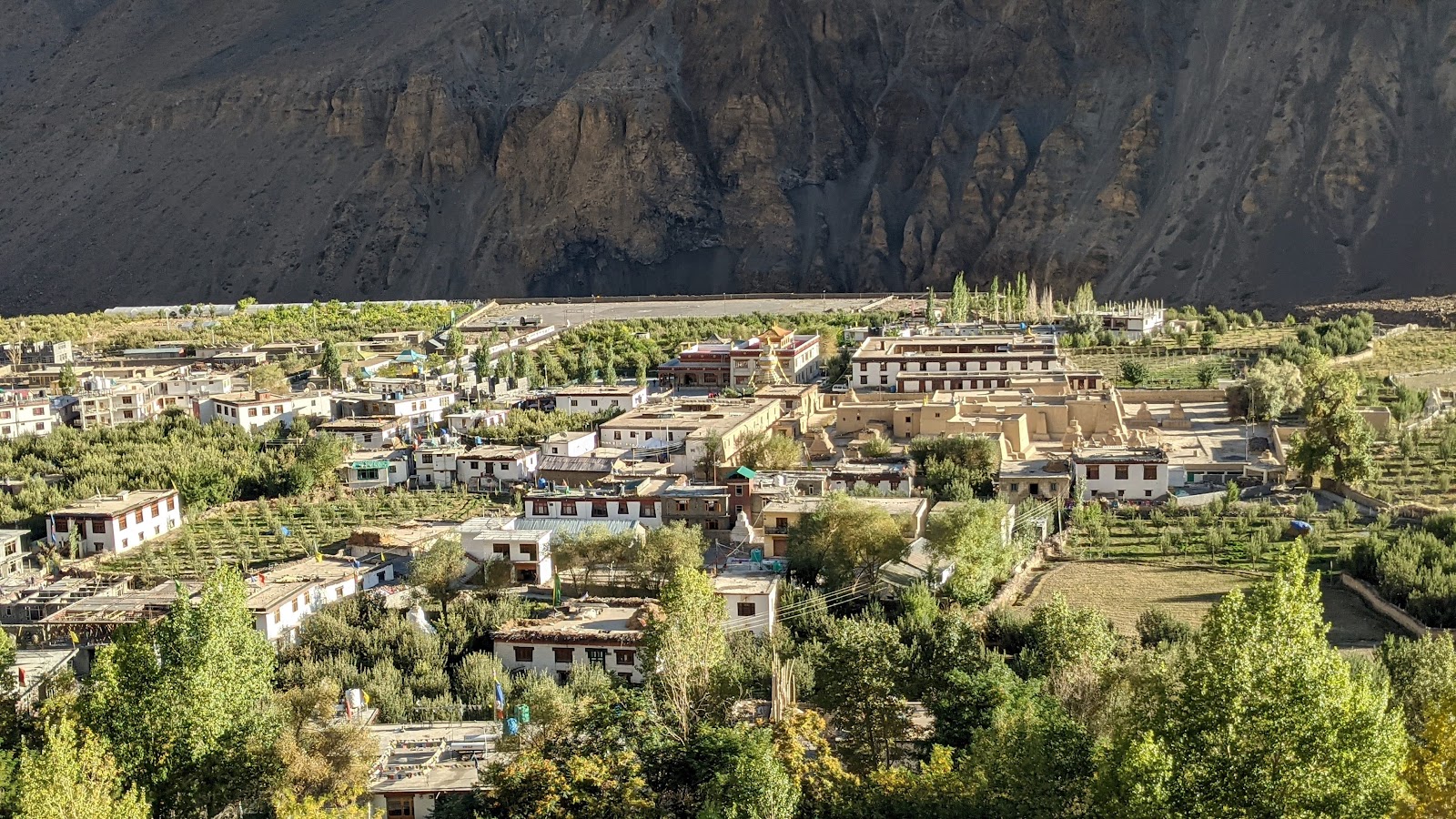
Source: BeyondYatra — Travel Guide | Tabo, Himachal Pradesh, India · www.beyondyatra.com
Don't confuse Spiti Valley with Kinnaur or Zanskar - Tabo is specifically in Spiti
Remember the nickname 'Ajanta of the Himalayas' - connects Buddhist art heritage
996 AD foundation makes it one of the oldest, not just ancient
Lhotsava Lhakhang Temple
Art And Culture Lhotsava Lhakhang
Lhotsava Lhakhang: Rinchen Zangpo's Legacy in Nako
Lhotsava Lhakhang is in Nako village, Kinnaur district, Himachal Pradesh
NOT in Zanskar Valley - this is the UPSC trap in the question
Built by Rinchen Zangpo, the great translator monk
'Lhotsava' refers to Rinchen Zangpo's title as great translator
Location & Builder
Lhotsava Lhakhang temple is located in Nako village in Kinnaur district of Himachal Pradesh. Built by the renowned translator monk Rinchen Zangpo (958-1055 AD), the name 'Lhotsava' literally means 'great translator' - referring to Rinchen Zangpo's title for translating numerous Buddhist texts from Sanskrit to Tibetan.
Historical Context
Rinchen Zangpo established multiple monasteries across the region during 10th-11th centuries
Part of the Buddhist revival in the Trans-Himalayan region after persecution in Tibet
Nako village sits at high altitude near the Indo-Tibet border
Contains ancient Buddhist frescoes and wooden sculptures
Connected to the Tabo Monastery network built by the same patron
MAJOR TRAP: Lhotsava Lhakhang is in Kinnaur (Nako), NOT Zanskar Valley
Don't confuse Kinnaur and Zanskar - both are high-altitude Buddhist regions
Rinchen Zangpo built temples across multiple valleys - know the specific locations
Alchi Temple Complex
Art And Culture Alchi Temple Complex Ladakh
Alchi Temple Complex: Ladakh's Artistic Treasure
Alchi Temple Complex is in Ladakh, Jammu & Kashmir
Famous for 11th-century Buddhist art and murals
One of the oldest surviving monastery complexes in Ladakh
Built during Rinchen Zangpo's monastery-building campaign
Artistic Significance
The Alchi Temple Complex represents one of Ladakh's most important Buddhist heritage sites, renowned for its stunning 11th-century Buddhist art. Located on the banks of the Indus River, it houses some of the finest and oldest surviving monastery complexes in the entire Ladakh region, with artwork that showcases the early Indo-Tibetan Buddhist artistic tradition.
Key Features
Contains three main temples: Dukhang, Sumtseg, and Manjushri Temple
Features Kashmiri-influenced artwork distinct from later Tibetan styles
Houses wooden sculptures and intricate wall paintings
Flat-roofed architecture unlike typical Ladakhi monasteries
Preserves Gandhara and Gupta artistic influences in Buddhist art
Temple Complex
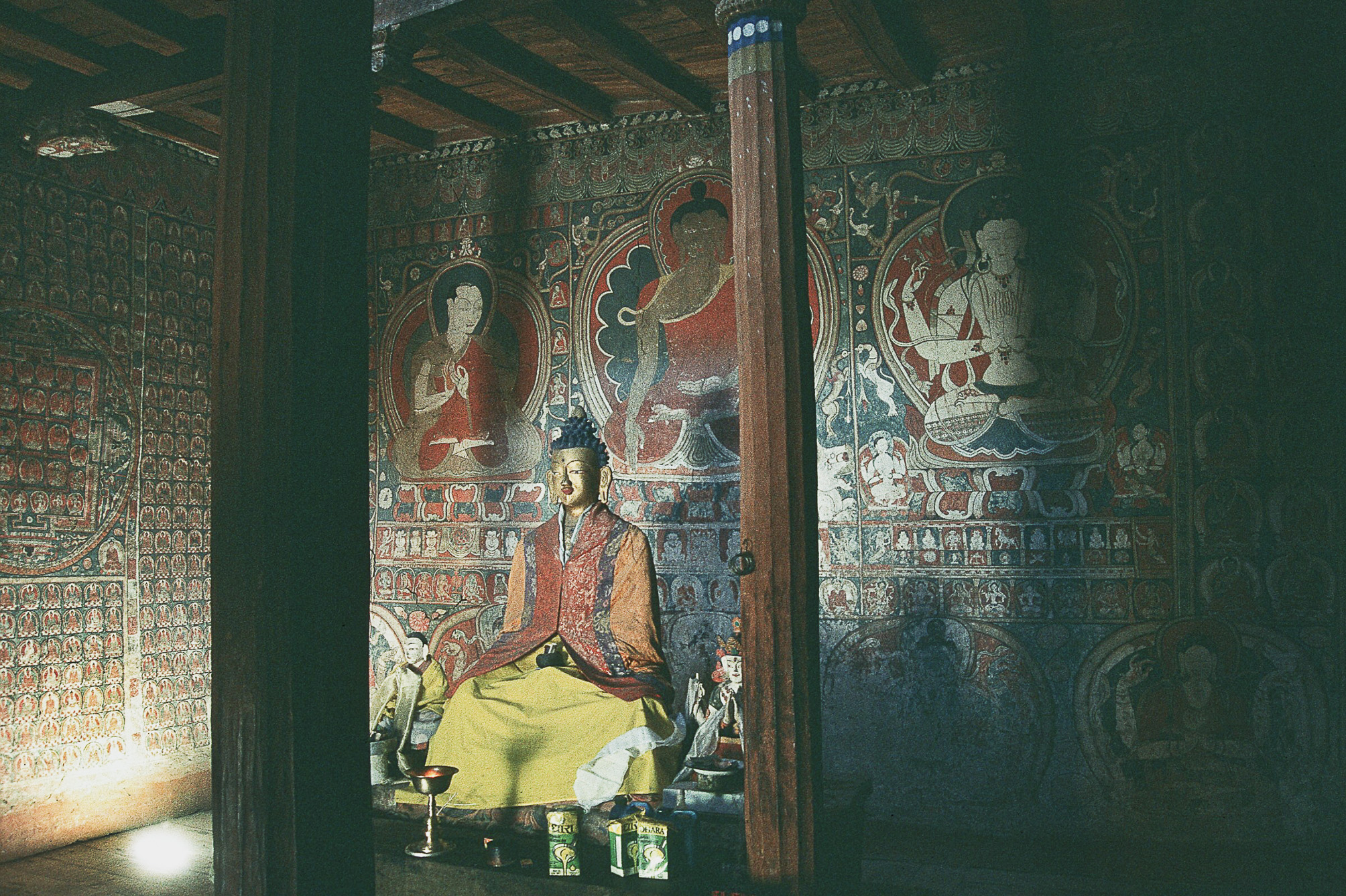
Source: Rubin Museum — Monumental Manjushri with Mahasiddha-Adorned Robe | Project ... · rubinmuseum.org
Alchi is in Ladakh - don't confuse with other Himalayan Buddhist sites
Remember the 11th-century dating - makes it one of the oldest in the region
Flat-roofed architecture distinguishes it from typical Ladakhi monastery design
Trans-Himalayan Buddhist Heritage
Art And Culture
Buddhist Heritage in India's Trans-Himalayan Region
Trans-Himalayan region includes Ladakh, Spiti, Kinnaur, and Zanskar valleys
Rinchen Zangpo (958-1055 AD) established major monastery network
Region preserved Tibetan Buddhism during persecution periods
Geographic Distribution
India's Trans-Himalayan Buddhist heritage spans the high-altitude regions of Ladakh, Spiti Valley, Kinnaur, Lahaul, and Zanskar in Jammu & Kashmir and Himachal Pradesh. These areas became crucial repositories of Tibetan Buddhist culture when Buddhism faced persecution in Tibet, preserving ancient traditions, art, and manuscripts.
Major Buddhist Sites by Region
Region | State | Key Monasteries | Unique Feature |
|---|---|---|---|
Ladakh | J&K | Hemis, Thiksey, Alchi | Oldest monastery complexes |
Spiti Valley | HP | Tabo, Dhankar, Key | 'Ajanta of Himalayas' |
Kinnaur | HP | Nako (Lhotsava), Kalpa | Border region heritage |
Zanskar | J&K | Karsha, Phuktal | Remote valley monasteries |
Lahaul | HP | Guru Ghantal, Tayul | High-altitude Buddhist art |
Rinchen Zangpo's Legacy
# Rinchen Zangpo (958-1055 AD)
## Monasteries Built
- Tabo (Spiti)
- Alchi (Ladakh)
- Nako (Kinnaur)
- 108 monasteries total
## Translation Work
- Sanskrit to Tibetan
- Buddhist texts
- Title: Lhotsava (Great Translator)
## Artistic Legacy
- Indo-Tibetan fusion
- Gandhara influences
- Kashmiri elementsDon't mix up valley locations - Spiti ≠ Zanskar ≠ Kinnaur
Rinchen Zangpo built across regions - memorize specific monastery locations
High-altitude Buddhism is distinct from plains Buddhism in art and practices