The famous female figurine known as 'Dancing Girl', found at Mohenjo-daro, is made of
Contents17
- Acarnelian
- Bclay
- Cbronze
- Dgold
Show answer
Answer: (C) bronze
The 'Dancing Girl' is one of the most iconic artifacts discovered from the Indus Valley Civilization, found at Mohenjo-daro (in present-day Sindh, Pakistan).
Key facts:
Material: It is made of BRONZE, created using the 'lost-wax' (cire perdue) casting technique. This technique involves making a wax model, covering it with clay, heating it to melt the wax out, and then pouring molten bronze into the hollow clay mold.
Age: Approximately 4,500 years old (c. 2500 BCE)
Description: A small statue (about 10.5 cm tall) depicting a young woman in a confident, naturalistic pose with one hand on her hip. She wears bangles on one arm and a necklace.
Significance: It demonstrates the advanced metallurgical skills of the Harappan civilization and their artistic sophistication. The naturalistic pose is remarkable for its age.
It is NOT made of carnelian (a semi-precious stone used for beads), clay (terracotta figurines were separate artifacts), or gold (though gold jewelry has been found at Harappan sites). Answer is (c).
The Dancing Girl demonstrates that Harappans had advanced bronze-working skills using the lost-wax casting technique around 4,500 years ago.
UPSC tests whether students can distinguish between different Harappan artifacts - the Dancing Girl is bronze, while other famous figurines like the Priest-King are steatite, and many common figurines are terracotta.
Dancing Girl Sculpture
Art And Culture Dancing Girl Mohenjo-daro bronze
Dancing Girl of Mohenjo-daro: Bronze Masterpiece of Harappan Art
Made of bronze using lost-wax casting technique
Found at Mohenjo-daro, approximately 4,500 years old
Demonstrates advanced metallurgical skills of Harappans
Height: 10.5 cm, depicts confident pose with hand on hip
Iconic Harappan Artifact
The Dancing Girl is one of the most famous sculptures from the Indus Valley Civilization, discovered at Mohenjo-daro in present-day Pakistan. Despite its name, she is not actually dancing but stands in a confident, naturalistic pose that was remarkable for its time period around 2500 BCE.
Key Specifications
Aspect | Details |
|---|---|
Material | Bronze (copper-tin alloy) |
Technique | Lost-wax casting (cire perdue) |
Dimensions | 10.5 cm tall |
Site | Mohenjo-daro, Sindh, Pakistan |
Age | Approximately 4,500 years (c. 2500 BCE) |
Pose | Hand on hip, wearing bangles and necklace |
Lost-Wax Casting Process
The lost-wax technique involved creating a wax model, covering it with clay, heating to melt out the wax, then pouring molten bronze into the hollow mold. This advanced metallurgical process shows the sophisticated craftsmanship of Harappan artisans.
Visual Reference
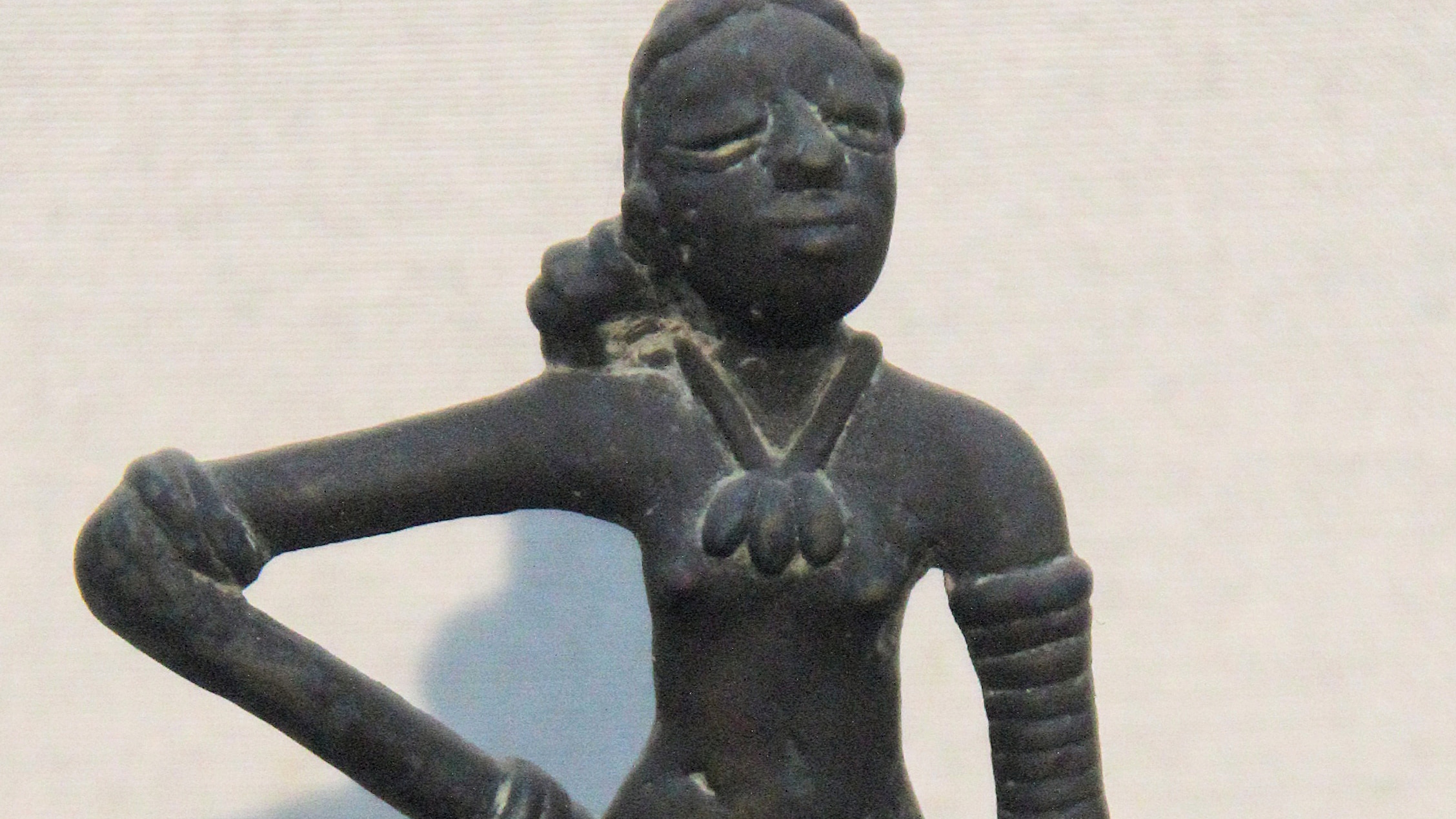
Source: Smarthistory — Smarthistory – Dancing Girl from Mohenjo-daro · smarthistory.org
Trap: Carnelian was used for Harappan beads and seals, not the Dancing Girl
Trap: Clay/terracotta figurines exist separately from this bronze masterpiece
Trap: Gold jewelry was found at Harappan sites but Dancing Girl is bronze
Remember: Bronze = Dancing Girl, Terracotta = Mother Goddess figurines
Harappan Metallurgy & Techniques
Art And Culture bronze lost-wax
Metallurgical Skills of the Indus Valley Civilization
Mastered bronze casting using lost-wax technique
Bronze = copper + tin alloy, harder than pure copper
Used copper, bronze, gold, silver for tools and ornaments
Advanced for 3rd millennium BCE period
Advanced Metal Working
The Harappans demonstrated sophisticated metallurgical knowledge, working with copper, bronze, gold, and silver. Their mastery of the lost-wax casting technique for bronze work was particularly advanced for the 3rd millennium BCE.
Lost-Wax Casting Process
%%{init: {"flowchart": {"wrappingWidth": 460}}}%%
flowchart TD
  s1["`**Wax Model**
Create detailed sculpture in **wax**`"]
  s2["`**Clay Coating**
Cover wax model with **clay mold**`"]
  s3["`**Heating**
Heat mold to **melt out wax**, leaving hollow space`"]
  s4["`**Bronze Pouring**
Pour **molten bronze** into hollow clay mold`"]
  s5["`**Cooling & Breaking**
Cool and **break clay** to reveal bronze sculpture`"]
  s1 --> s2
  s2 --> s3
  s3 --> s4
  s4 --> s5
Harappan Metals & Uses
Metal | Composition | Primary Uses | Examples |
|---|---|---|---|
Copper | Pure metal | Tools, vessels | Axes, spears, pots |
Bronze | Copper + tin | Sculptures, ornaments | Dancing Girl, figurines |
Gold | Pure metal | Jewelry, beads | Necklaces, headbands |
Silver | Pure metal | Vessels, ornaments | Cups, jewelry |
Bronze ≠ brass: Bronze = copper + tin, Brass = copper + zinc
Lost-wax technique was not unique to India but Harappans mastered it early
Iron was NOT used by Harappans - they were Bronze Age civilization
Harappan Art Materials & Forms
Art And Culture carnelian clay
Materials and Art Forms of the Indus Valley Civilization
Terracotta used for Mother Goddess and animal figurines
Carnelian used for beads, seals, and jewelry
Steatite used for seals with script and animals
Bronze reserved for sophisticated sculptures like Dancing Girl
Diverse Artistic Materials
Harappan artisans worked with multiple materials, each suited to specific art forms. The choice of material reflected both availability and the intended purpose of the artwork.
Material-wise Harappan Artifacts
Material | Key Artifacts | Characteristics | Significance |
|---|---|---|---|
Terracotta (Clay) | Mother Goddess figurines, toys, animals | Fired clay, reddish-brown | Mass production, daily use |
Carnelian | Beads, seals, pendants | Semi-precious stone, red-orange | Trade value, status symbol |
Steatite | Seals with Harappan script | Soft stone, easy to carve | Administrative use, identity |
Bronze | Dancing Girl, small figurines | Copper-tin alloy, durable | Artistic sophistication |
Faience | Bangles, beads | Glazed ceramic, blue-green | Decorative items |
Harappan Art Categories
# Harappan Art
## Sculptures
- Bronze Dancing Girl
- Terracotta figurines
- Stone bust (Priest-King)
## Seals & Tokens
- Steatite seals
- Copper tablets
- Script inscriptions
## Jewelry & Beads
- Carnelian beads
- Gold ornaments
- Faience bangles
## Pottery
- Painted ceramics
- Storage jars
- Perforated vesselsMother Goddess = terracotta, Dancing Girl = bronze - don't confuse
Carnelian ≠ terracotta: carnelian is semi-precious stone, not clay
Steatite seals ≠ carnelian seals: steatite was preferred for carving script
Faience is glazed ceramic, not natural stone like carnelian
Mohenjo-daro Archaeological Site
Art And Culture Mohenjo-daro
Mohenjo-daro: Premier Harappan Urban Center
Located in Sindh, Pakistan on Indus River
Found Dancing Girl, Priest-King, Great Bath
Discovered by R.D. Banerji in 1922
Means 'Mound of the Dead' in Sindhi
Major Harappan Center
Mohenjo-daro was one of the largest settlements of the Indus Valley Civilization, located in present-day Sindh, Pakistan. The site has yielded some of the most important artifacts that demonstrate Harappan artistic and technological achievements.
Key Discoveries at Mohenjo-daro
Artifact/Structure | Material/Type | Significance |
|---|---|---|
Dancing Girl | Bronze sculpture | Advanced metallurgy, artistic skill |
Priest-King | Steatite bust | Leadership/religious authority |
Great Bath | Fired brick structure | Public hygiene, ritual bathing |
Granary | Brick platform | Food storage, administration |
Seals | Steatite with script | Trade, identity, writing system |
Painted Pottery | Ceramic with motifs | Artistic tradition, daily life |
Site Layout
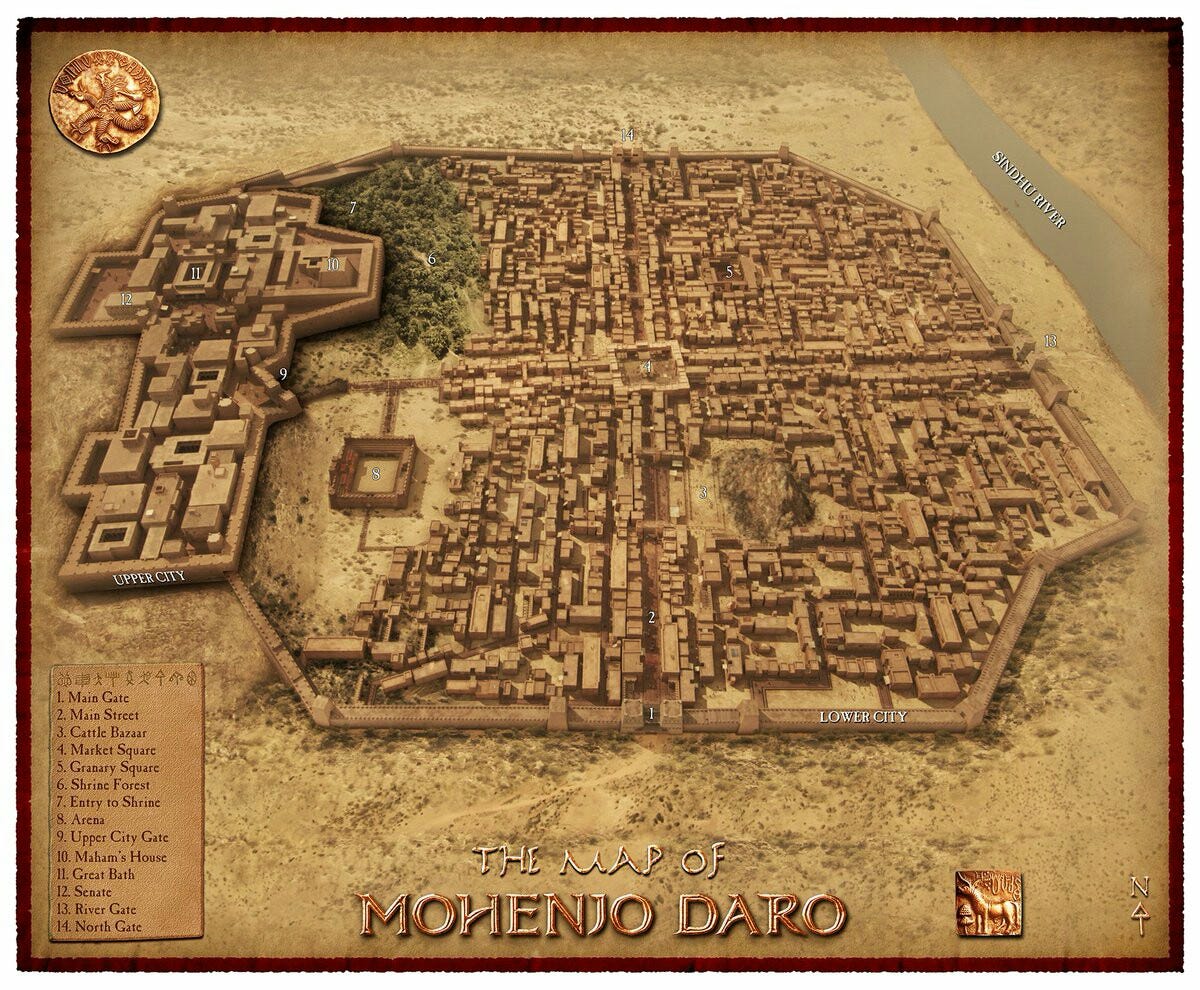
Source: History Time Newsletter - Substack — Mohenjo Daro - by Pete Kelly - History Time Newsletter · historytimewithpete.substack.com
Mohenjo-daro = Pakistan, Dholavira = India - don't mix locations
Dancing Girl found at Mohenjo-daro, NOT at Harappa site
Great Bath is at Mohenjo-daro, NOT at other Harappan sites