Project Loon, sometimes seen in the news, is related to
Contents13
- Awaste management technology
- Bwireless communication technology
- Csolar power production technology
- Dwater conservation technology
Show answer
Answer: (B) wireless communication technology
Answer: (b) Wireless communication technology
Project Loon by Google X aimed to provide internet access to rural/remote areas using high-altitude balloons in the stratosphere (about 18 km altitude).
These balloons carried wireless equipment creating an aerial 4G-LTE network.
People could connect directly from phones.
Why balloons?
- Cheaper than satellites;
- Quick deployment;
- Covers areas where cell towers are impractical.
Why not others?
(a) Waste management - Unrelated.
(c) Solar power - Loon used solar panels for power but the project was about internet.
(d) Water conservation - Unrelated.
Note: Google shut down Project Loon in January 2021.
Don't confuse with Microsoft's 'White Fi' project (using unused TV spectrum for internet).
Project Loon was Google's attempt to provide internet access to remote areas using high-altitude balloons carrying wireless equipment in the stratosphere.
Around 2014-2016, tech giants like Google and Facebook were heavily pursuing alternative internet delivery methods for underserved regions, making this a relevant current affairs topic.
The question tests whether students can distinguish between different emerging technology projects and their core purposes.
Project Loon by Google
Science And Technology Project Loon
Project Loon: High-Altitude Balloon Internet Network
Project Loon was Google's initiative to provide internet using high-altitude balloons at 18 km altitude
Balloons created an aerial 4G-LTE network for rural/remote areas
Google shut down Project Loon in January 2021
Operated in the stratosphere - cheaper than satellites, faster than cell towers
Project Loon was Google X's ambitious plan to bring internet connectivity to underserved areas using technology that sounds like science fiction but was very real.
How It Worked
High-altitude balloons floated in the stratosphere at approximately 18 km altitude
Each balloon carried wireless communication equipment creating aerial cell towers
Formed a 4G-LTE network that people could access directly from their phones
Balloons were solar-powered and could stay aloft for months
Ground-based antennas connected the balloon network to existing internet infrastructure
Why Balloons Over Alternatives
Cheaper than satellites - no expensive rocket launches needed
Faster deployment than building cell towers in difficult terrain
Covers remote areas where traditional infrastructure is impractical
Flexible coverage - balloons could be moved to areas of high demand
This question tested knowledge of Google's innovative connectivity solutions. The solar panels mentioned in option (c) were indeed part of Loon's design, but they powered the communication equipment - the project's purpose was wireless internet access, not solar power production.
Trap: Option C mentions solar power - Loon balloons used solar panels but the project was about internet connectivity, not power generation
Don't confuse with Microsoft's White Fi project (uses unused TV spectrum for internet)
Remember: Project Loon was shut down in 2021 - past tense for recent questions
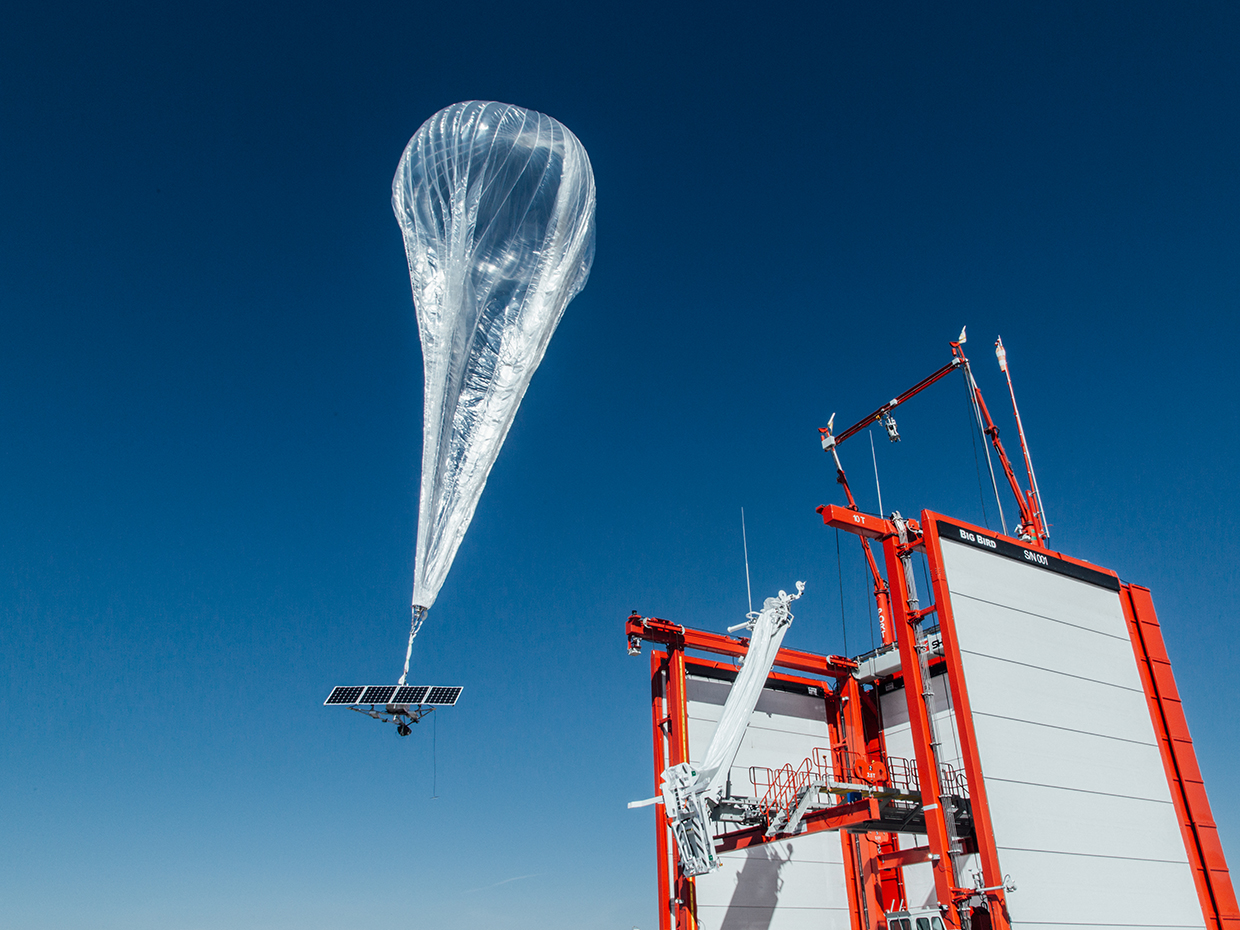
Source: IEEE Spectrum — How Project Loon Built the Navigation System That Kept Its Balloons Over Puerto Rico · spectrum.ieee.org
High-Altitude Internet Technologies
Science And Technology
High-Altitude Platforms for Internet Connectivity
Stratosphere (18-50 km altitude) offers ideal layer for internet balloons and platforms
High-altitude platforms bridge gap between satellites (expensive) and cell towers (limited reach)
Target rural and remote areas where traditional infrastructure is challenging
The stratosphere has emerged as the sweet spot for delivering internet to underserved areas - high enough to cover large areas, low enough to be cost-effective.
Connectivity Solutions Comparison
Technology | Altitude/Location | Coverage Area | Key Advantage | Main Challenge |
|---|---|---|---|---|
Satellites | 36,000 km (geostationary) | Global | Proven technology | High cost & latency |
High-altitude balloons | 18-20 km (stratosphere) | Regional | Cost-effective deployment | Weather dependency |
Cell towers | Ground-based | Local | Reliable connectivity | Infrastructure costs in remote areas |
Drones/UAVs | 0.5-20 km | Local to regional | Flexible positioning | Limited flight time |
Why Stratosphere Works
Above weather systems - avoids storms and turbulence that affect lower altitudes
Below satellite orbit - much cheaper to deploy and maintain than space-based systems
Stable air currents - balloons can maintain position with minimal energy
Large coverage footprint - one platform can serve hundreds of square kilometers
Altitude confusion: Stratosphere is 18-50 km, not the troposphere (0-18 km) where weather occurs
Don't mix up satellite internet (expensive, high latency) with balloon internet (cheaper, lower latency)
Wireless Communication Technologies
Science And Technology wireless communication technology
Wireless Communication: 4G-LTE and Beyond
4G-LTE provides high-speed mobile internet with data rates up to 100 Mbps
LTE stands for Long Term Evolution - the standard for 4G networks
Uses radio spectrum to transmit data between devices and base stations
Can be deployed via cell towers, satellites, or high-altitude platforms
Wireless communication technology encompasses all methods of transmitting data without physical cables - from your mobile phone's 4G connection to Project Loon's balloon-based internet.
Mobile Network Generations
Generation | Technology | Speed | Primary Use | Key Feature |
|---|---|---|---|---|
2G | GSM/CDMA | 64 Kbps | Voice calls, SMS | Digital voice |
3G | UMTS/CDMA2000 | 2 Mbps | Mobile internet, video calls | Mobile broadband |
4G-LTE | Long Term Evolution | 100 Mbps | HD video, cloud services | All-IP network |
5G | New Radio (NR) | 1-10 Gbps | IoT, autonomous vehicles | Ultra-low latency |
4G-LTE Key Features
All-IP architecture - everything transmitted as data packets
OFDMA technology - multiple users share spectrum efficiently
MIMO antennas - multiple antennas improve speed and reliability
Backward compatibility - works with 3G networks for seamless coverage
Global roaming - standardized technology works worldwide
Wireless Deployment Methods
# Wireless Communication
## Terrestrial
- Cell towers
- Small cells
- Wi-Fi hotspots
- Fiber backhaul
## Satellite-based
- Geostationary satellites
- Low Earth Orbit
- Medium Earth Orbit
- Direct-to-device
## High-altitude platforms
- Balloons (Project Loon)
- Solar aircraft
- Tethered platforms
- Pseudo-satellitesLTE confusion: LTE is 4G technology, not a separate generation
Speed trap: 4G theoretical speeds are up to 100 Mbps, real-world speeds vary by location and network load
Google X Moonshot Projects
Science And Technology
Google X: Alphabet's Moonshot Factory
Google X (now just X) is Alphabet's research lab for breakthrough technologies
Focuses on moonshot projects - ambitious ideas that could impact billions
Notable projects include Project Loon, Waymo (self-driving cars), and Wing (drone delivery)
Many projects are shut down after testing - failure is part of the innovation process
Google X represents the experimental arm of Alphabet Inc., tackling problems that seem impossible but could transform entire industries if solved.
Major X Projects Status
Project | Technology Focus | Current Status | Impact/Outcome |
|---|---|---|---|
Project Loon | Balloon internet | Shut down 2021 | Proved stratosphere connectivity viable |
Waymo | Self-driving cars | Active/Commercial | Leading autonomous vehicle company |
Wing | Drone delivery | Active/Testing | Commercial deliveries in select markets |
Project Glass | AR glasses | Shut down 2014 | Pioneered AR wearables concept |
Makani | Airborne wind energy | Shut down 2020 | Advanced wind power research |
X's Moonshot Criteria
Addresses a huge problem affecting millions or billions of people
Proposes a radical solution using breakthrough technology
Has feasible technology within 5-10 years (not pure science fiction)
Can become financially viable if technical challenges are solved
Name change: Originally Google X, now just X (part of Alphabet)
Project status: Many X projects are discontinued - check current status for recent questions
Don't confuse X (research lab) with Google Research (AI and computer science research)