Which of the following statements are correct regarding the general difference between plant and animal cells? 1. Plant cells have cellulose cell walls whilst animal cells do not. 2. Plant cells do not have plasma membrane unlike animal cells which do. 3. Mature plant cell has one large vacuole whilst animal cell has many small vacuoles. Select the correct answer using the code given below:
Contents13
- A1 and 2 only
- B2 and 3 only
- C1 and 3 only
- D1, 2 and 3
Show answer
Answer: (C) 1 and 3 only
This question tests basic biology — differences between plant and animal cells:
Statement 1 (Plant cells have cellulose cell walls, animal cells don't) — CORRECT: This is a fundamental difference.
Plant cells have a rigid cell wall made of cellulose that gives them structure and support.
Animal cells only have a flexible cell membrane, no cell wall.
Statement 2 (Plant cells don't have plasma membrane) — NOT CORRECT: This is a common trick!
Plant cells have BOTH a cell wall AND a plasma membrane (cell membrane).
The cell wall is on the outside, and the plasma membrane is just inside it.
So saying plants don't have a plasma membrane is wrong.
Statement 3 (Plant cell vacuole is larger than animal cell vacuole) — CORRECT:
Plant cells have one large central vacuole that can take up to 90% of the cell.
Animal cells have many small vacuoles that are much smaller in comparison.
Answer: C (1 and 3 only).
Key Takeaway:
Plant cells have cell wall + plasma membrane + large vacuole.
Animal cells have only plasma membrane + many small vacuoles.
Plant cells have both a cell wall made of cellulose AND a plasma membrane inside it, while animal cells have only a plasma membrane.
The question uses a common trap by suggesting plant cells lack plasma membranes, when they actually have both cell walls and plasma membranes.
UPSC tests whether students can distinguish between cell wall and plasma membrane as separate structures in plant cells.
Plant Cell Structure
Science And Technology Plant cells cellulose cell walls plasma membrane vacuole
Plant Cell Structure: Key Components & UPSC Distinctions
Plant cells have cellulose cell wall for structural support
Plant cells have both cell wall AND plasma membrane
Mature plant cells contain one large central vacuole
Chloroplasts enable photosynthesis in plant cells
What Makes Plants Unique
Plant cells are eukaryotic cells with specialized structures that enable them to make their own food and maintain rigid structure. The key is understanding they have BOTH protective layers — never confuse having a cell wall with lacking a plasma membrane.
Major Plant Cell Components
Component | Material/Type | Function | Location |
|---|---|---|---|
Cell Wall | Cellulose fibers | Structural support, protection | Outermost layer |
Plasma Membrane | Lipid bilayer | Controls entry/exit of substances | Just inside cell wall |
Central Vacuole | Water-filled sac | Storage, maintains turgor pressure | Center of mature cell |
Chloroplasts | Contains chlorophyll | Photosynthesis | Throughout cytoplasm |
Nucleus | DNA + proteins | Controls cell activities | Within cytoplasm |
Plant Cell Diagram
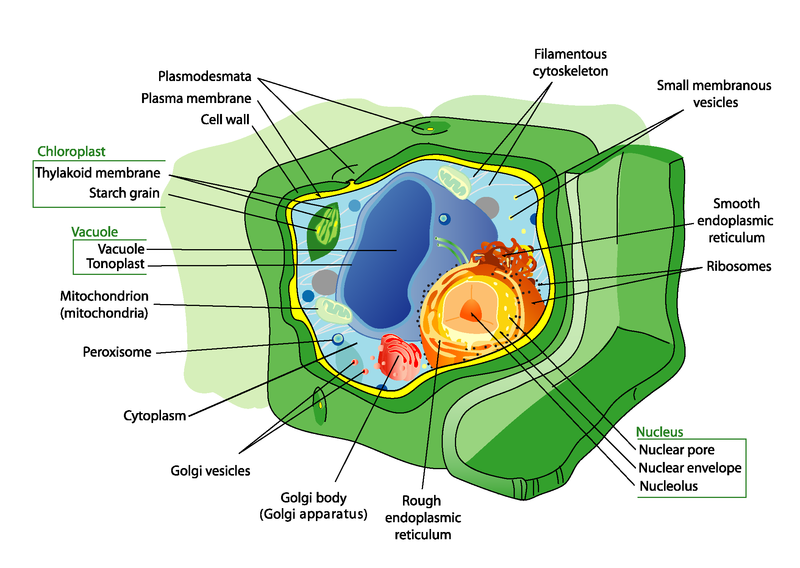
Source: Lumen Learning — Plant Cells | Biology for Majors II · courses.lumenlearning.com
Key Functions
Cell wall provides mechanical strength — prevents over-expansion when water enters
Central vacuole maintains turgor pressure — keeps plant upright and rigid
Chloroplasts contain chlorophyll — capture sunlight for photosynthesis
Plasma membrane is selectively permeable — same function as in animal cells
Trap: Statement 2 claims plants lack plasma membrane — WRONG! Plants have cell wall + plasma membrane
Never confuse cell wall (structural, made of cellulose) with plasma membrane (regulatory, made of lipids)
Turgor pressure comes from water in vacuole pressing against cell wall — both components needed
Animal Cell Structure
Science And Technology animal cells plasma membrane
Animal Cell Structure: Components & Characteristics
Animal cells have only plasma membrane — no cell wall
Animal cells contain many small vacuoles instead of one large
Centrioles present in animal cells — absent in plant cells
More flexible shape due to lack of rigid cell wall
Animal Cell Basics
Animal cells are eukaryotic cells without the rigid structures found in plants. They rely on plasma membrane alone for boundary control and have dispersed vacuoles rather than centralized storage.
Major Animal Cell Components
Component | Material/Type | Function | Unique Feature |
|---|---|---|---|
Plasma Membrane | Lipid bilayer | Cell boundary, transport control | Only protective barrier |
Small Vacuoles | Multiple tiny sacs | Temporary storage, transport | Many instead of one large |
Centrioles | Protein structures | Cell division, organize cytoskeleton | Absent in plants |
Nucleus | DNA + proteins | Controls cell activities | Similar to plants |
Mitochondria | Double membrane organelles | Energy production (ATP) | Similar to plants |
Key Characteristics
Flexible shape — can change form due to absence of rigid cell wall
Active movement — many animal cells can migrate or change position
Specialized functions — nerve cells, muscle cells, blood cells have unique structures
Heterotrophic — must consume other organisms for food (cannot photosynthesize)
Animal Cell Diagram
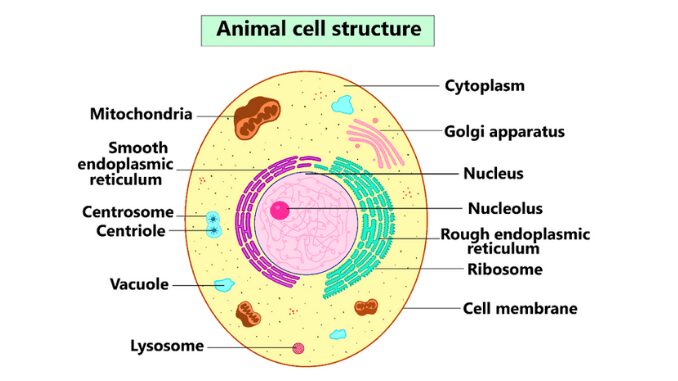
Source: ScienceQuery — Animal cell: Definition, structure, and properties - ScienceQuery · sciencequery.com
Plant vs Animal Cell Differences
Science And Technology general difference between plant and animal cells
Plant vs Animal Cells: Key Differences & UPSC Comparisons
Cell wall: Present in plants (cellulose), absent in animals
Vacuoles: One large in plants, many small in animals
Both have plasma membrane — this is NOT a difference
Chloroplasts: Only in plants for photosynthesis
Major Structural Differences
Feature | Plant Cells | Animal Cells | Why This Difference |
|---|---|---|---|
Cell Wall | Present (cellulose) | Absent | Plants need structural support |
Plasma Membrane | Present | Present | Both need selective permeability |
Vacuoles | One large central | Many small | Plants store more water/materials |
Chloroplasts | Present | Absent | Plants make their own food |
Centrioles | Absent | Present | Different cell division mechanisms |
Shape | Fixed (due to cell wall) | Flexible | Reflects lifestyle needs |
Functional Implications
Autotrophic vs Heterotrophic: Plants make food (chloroplasts), animals consume food
Mobility: Animal cells can move freely, plant cells are anchored by cell walls
Water regulation: Plant vacuoles maintain turgor pressure, animal cells use other mechanisms
Energy storage: Plants store starch in plastids, animals store glycogen in cytoplasm
Major Trap: Both plant AND animal cells have plasma membrane — never say plants lack it
Don't confuse cell wall (only plants) with plasma membrane (both have it)
Vacuole size is key difference: plants have ONE LARGE, animals have MANY SMALL
Chloroplasts are in plants only — but both have mitochondria for energy