With reference to the ‘Trans-Pacific Partnership’, consider the following statements: 1. It is an agreement among all the Pacific Rim countries except China and Russia. 2. It is a strategic alliance for the purpose of maritime security only. Which of the statements given above is/are correct?
Contents17
- A1 only
- B2 only
- CBoth 1 and 2
- DNeither 1 nor 2
Show answer
Answer: (D) Neither 1 nor 2
Answer: (d) Neither 1 nor 2
Statement 1 (✗ WRONG):
TPP was NOT among ALL Pacific Rim countries except China and Russia.
It had only 12 specific members:
- Australia
- Brunei
- Canada
- Chile
- Japan
- Malaysia
- Mexico
- New Zealand
- Peru
- Singapore
- USA
- Vietnam.
Many Pacific Rim countries were excluded.
Statement 2 (✗ WRONG):
TPP was a TRADE agreement, NOT a strategic/maritime security alliance.
It covered trade in goods, services, IP, and labor standards.
Key facts:
Signed February 2016;
US withdrew January 2017 under Trump;
remaining 11 formed CPTPP in 2018.
TPP was signed in February 2016, making it a major current affairs topic for the 2016 UPSC exam.
The question tests whether students can distinguish between trade agreements and security alliances, a common confusion in international relations topics.
Trans-Pacific Partnership (TPP)
Indian Economy Trans-Pacific Partnership
Trans-Pacific Partnership (TPP): Members, Scope & Evolution
TPP was a trade agreement among 12 specific countries, not all Pacific Rim nations
Covered trade, services, IP, labor standards — not maritime security
Signed February 2016, US withdrew January 2017
11 remaining countries formed CPTPP in 2018
What TPP Was
TPP was a comprehensive trade agreement designed to eliminate tariffs and create common standards for trade, investment, and business practices across member countries. It aimed to deepen economic integration in the Asia-Pacific region.
TPP Member Countries
Region | Countries | Key Feature |
|---|---|---|
North America | USA, Canada, Mexico | NAFTA members joined TPP |
Asia-Pacific Developed | Australia, Japan, New Zealand, Singapore | Major economies |
Southeast Asia | Brunei, Malaysia, Vietnam | ASEAN members |
Latin America | Chile, Peru | Pacific Alliance members |
TPP Coverage Areas
# Trans-Pacific Partnership
## Trade in Goods
- Tariff elimination
- Rules of origin
- Agricultural trade
## Services & Investment
- Financial services
- Telecommunications
- Investment protection
## Standards & Rules
- Intellectual property
- Labor standards
- Environmental protection
## Market Access
- Government procurement
- State-owned enterprises
- Competition policy
Question Connection
Statement 1 fails because many Pacific Rim countries were excluded — like Thailand, Philippines, South Korea, Indonesia
Statement 2 fails because TPP was economic/trade-focused, not a security or defense alliance
Trap: Confusing TPP with security alliances like QUAD or ANZUS — TPP was purely economic
Trap: Assuming 'Pacific Rim' means ALL countries around Pacific — TPP had only 12 specific members
Trap: Missing that China and Russia were never part of TPP discussions, not just excluded
Trap: Confusing TPP (dead) with CPTPP (active since 2018)
Pacific Rim Countries
Geography Pacific Rim countries
Pacific Rim Countries: Geography & Economic Significance
Pacific Rim includes 20+ countries bordering Pacific Ocean
Spans Asia, Americas, Oceania — world's largest economic region
Major economies: USA, China, Japan, South Korea, Australia
Pacific Rim Definition
The Pacific Rim refers to countries and regions bordering the Pacific Ocean. It's the world's largest economic zone, accounting for over 60% of global GDP and trade.
Major Pacific Rim Regions
Region | Major Countries | Economic Role |
|---|---|---|
East Asia | China, Japan, South Korea, Taiwan | Manufacturing hub, export economies |
Southeast Asia | Indonesia, Philippines, Thailand, Malaysia, Vietnam, Singapore | Emerging markets, ASEAN members |
North America | USA, Canada, Mexico | Large consumer markets, tech centers |
South America | Chile, Peru, Ecuador, Colombia | Commodity exporters |
Oceania | Australia, New Zealand, Pacific Islands | Resource-rich economies |
Pacific Rim Map
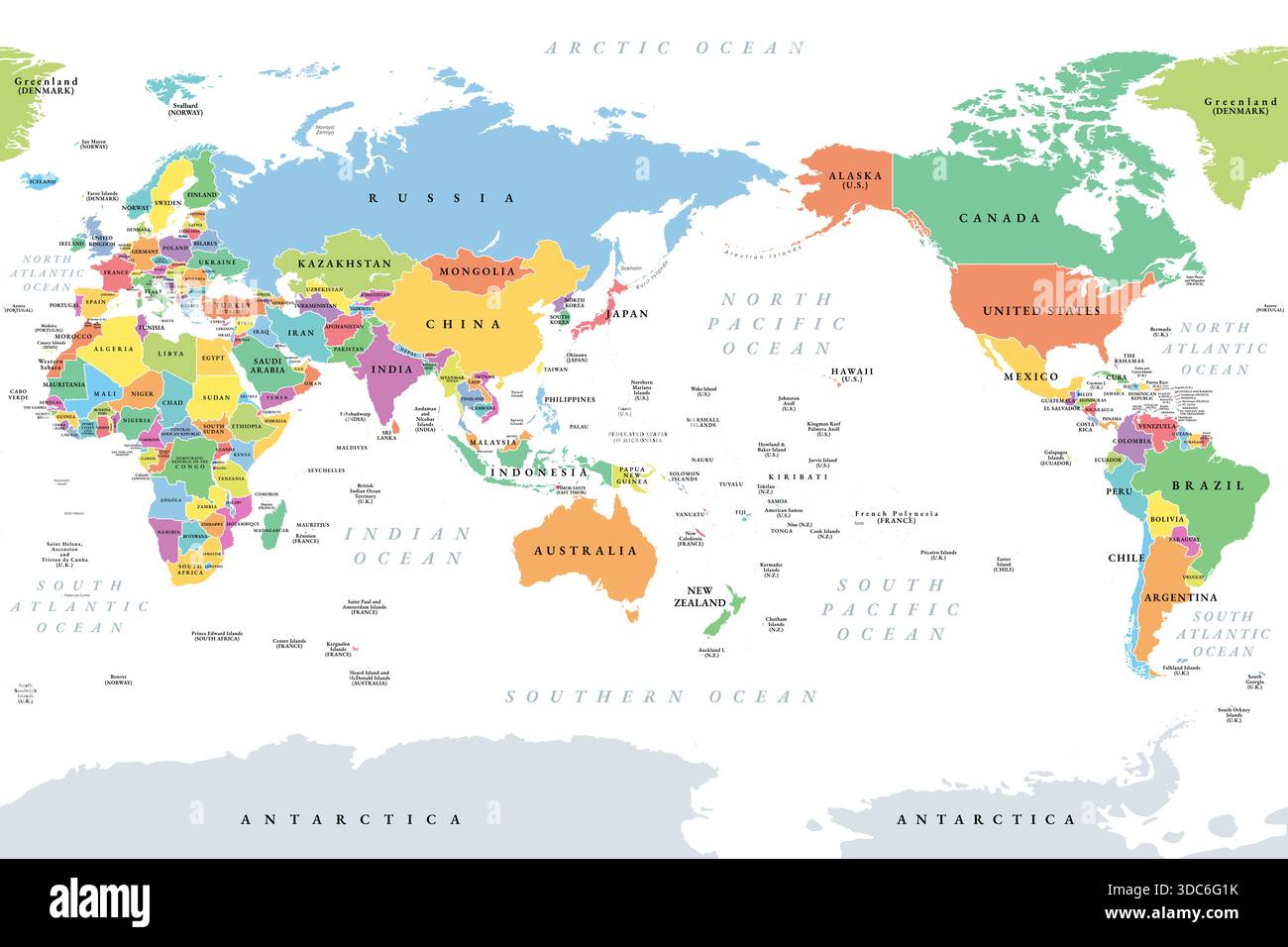
Source: Alamy — Pacific rim map hi-res stock photography and images - Alamy · www.alamy.com
Why TPP Couldn't Include All
Geographic spread — Pacific Rim spans vastly different economies and development levels
Political differences — includes democratic and authoritarian systems
Economic competition — major powers like China and USA have conflicting trade interests
Existing agreements — countries already locked into regional blocs (EU, ASEAN, etc.)
CPTPP (TPP's Successor)
Indian Economy
CPTPP: TPP's Evolution After US Withdrawal
CPTPP = Comprehensive and Progressive TPP, formed by 11 countries after US exit
Entered force December 2018, suspended 22 US-specific provisions
UK joined 2024, making it first non-founding member
TPP to CPTPP Timeline
%%{init: {"flowchart": {"wrappingWidth": 460}}}%%
flowchart TD
  s1["`**February 2016**
**TPP signed** by 12 countries including USA`"]
  s2["`**January 2017**
**Trump withdraws USA** from TPP on first day in office`"]
  s3["`**November 2017**
**11 remaining countries** agree to form CPTPP`"]
  s4["`**March 2018**
**CPTPP signed** in Chile with modified terms`"]
  s5["`**December 2018**
**CPTPP enters force** after 6 countries ratify`"]
  s1 --> s2
  s2 --> s3
  s3 --> s4
  s4 --> s5
TPP vs CPTPP Comparison
Aspect | TPP (2016) | CPTPP (2018) |
|---|---|---|
Members | 12 countries (including USA) | 11 countries (USA withdrew) |
Market Size | 40% of global GDP | 13% of global GDP |
Key Changes | Original agreement | Suspended 22 provisions pushed by USA |
IP Rules | Strict US-style IP protection | Relaxed copyright terms, pharma patents |
Status | Never entered force | Active since December 2018 |
Why This Matters for UPSC
Shows how US trade policy shifts can reshape global agreements
India is watching CPTPP as potential model for Indo-Pacific economic integration
Demonstrates middle power diplomacy — smaller countries proceeding without superpower
Current relevance — CPTPP is active while TPP remains a historical footnote
Trade vs Security Agreements
World Affairs (International Relations) strategic alliance maritime security
Trade Agreements vs Security Alliances: Key Distinctions
Trade agreements focus on economic integration, tariffs, investment rules
Security alliances focus on defense cooperation, military coordination
Some agreements combine both, but most specialize in one area
Trade vs Security Agreements
Type | Primary Focus | Key Provisions | Examples |
|---|---|---|---|
Trade Agreements | Economic integration | Tariff reduction, investment rules, standards harmonization | TPP/CPTPP, USMCA, RCEP |
Security Alliances | Defense cooperation | Mutual defense, intelligence sharing, joint exercises | NATO, ANZUS, US-Japan Security Treaty |
Maritime Security | Naval cooperation | Freedom of navigation, anti-piracy, territorial disputes | QUAD, Malabar Exercise |
Hybrid Agreements | Both economic & security | Trade + defense provisions combined | AUKUS (limited), some bilateral treaties |
Asia-Pacific Agreements by Type
# Asia-Pacific Frameworks
## Trade-Focused
- CPTPP
- RCEP
- ASEAN FTA
- USMCA
## Security-Focused
- QUAD
- AUKUS
- Five Eyes
- ANZUS
## Dialogue Forums
- APEC
- East Asia Summit
- ASEAN+3
- ARFTrap: Assuming TPP had security elements because it's in strategic Asia-Pacific region
Trap: Confusing QUAD (security dialogue) with CPTPP (trade agreement)
Trap: Missing that 'strategic' in trade context means economic strategy, not military
Trap: Assuming Pacific agreements must involve maritime security