Consider the following pairs:
Contents17
Consider the following pairs:
| Historical place | Well-known for |
|---|---|
| 1. Burzahom | Rock-cut shrines |
| 2. Chandraketugarh | Terracotta art |
| 3. Ganeshwar | Copper artefacts |
Which of the pairs given above is/are correctly matched?
- A1 only
- B1 and 2
- C3 only
- D2 and 3
Show answer
Answer: (D) 2 and 3
Pair 1 (Burzahom — Rock-cut shrines) is wrong:
Burzahom is a Neolithic site near Srinagar, Kashmir, famous for pit dwellings (underground living pits) and bone tool industry — not rock-cut shrines.
Pair 2 (Chandraketugarh — Terracotta art) is correct:
Located in the Ganga delta, West Bengal, it was a major centre of terracotta craft with various figurines, coins, pottery, and seals found there.
Pair 3 (Ganeshwar — Copper artefacts) is correct:
Located in north-eastern Rajasthan, hundreds of copper objects suggest it was a significant copper-working centre supplying items across the region.
Pairs 2 and 3 are correct.
Answer: (d).
Burzahom in Kashmir is famous for pit dwellings (underground houses) and bone tools, not rock-cut shrines which are found at much later Buddhist and Hindu sites.
UPSC tests whether students can distinguish between prehistoric archaeological sites and their actual material culture versus confusing them with later period monuments.
Burzahom Neolithic Site
Ancient And Medieval History Burzahom Rock-cut shrines
Burzahom: Kashmir's Famous Neolithic Settlement
Burzahom is a Neolithic site near Srinagar, Kashmir famous for pit dwellings
Known for bone tool industry and underground living pits, not rock-cut shrines
Dates to approximately 3000-1500 BCE with four cultural phases
Discovered by De Terra and Paterson in 1935
Location & Discovery
Burzahom lies on the Karewa deposits of the Jhelum valley, about 10 km northeast of Srinagar. The site represents one of India's most important Neolithic settlements, showcasing the transition from hunting-gathering to agricultural life in the Kashmir valley.
Key Features
Feature | Description | Significance |
|---|---|---|
Pit Dwellings | Underground circular/oval pits 2-4 meters deep | Primary characteristic - protection from cold |
Bone Tools | Needles, awls, harpoons, arrowheads | Advanced bone working technology |
Ground Stone Tools | Axes, adzes, chisels, grinding stones | Neolithic tool tradition |
Pottery | Coarse grey ware, later fine grey ware | Shows technological progression |
Burials | Extended burials with grave goods | Evidence of social practices |
Archaeological Layout

Source: JK Arts Foundation — Burzahom – UNESCO's World Heritage Site · www.jkartsfoundation.in
Trap: Burzahom is NOT known for rock-cut shrines - that's Ajanta/Ellora
Confusion: Don't mix Burzahom's pit dwellings with cave dwellings of other sites
Location error: Burzahom is in Kashmir, not Ladakh or Himachal Pradesh
Chandraketugarh Terracotta Centre
Ancient And Medieval History Chandraketugarh Terracotta art
Chandraketugarh: Bengal's Terracotta Art Capital
Chandraketugarh in West Bengal's Ganga delta - major terracotta art centre
Flourished from 3rd century BCE to 2nd century CE
Famous for terracotta figurines, pottery, coins, and seals
Important trading port connecting inland Bengal with sea routes
Location & Significance
Located in 24 Parganas district, West Bengal, near the confluence of rivers in the Ganga delta. This ancient settlement was a thriving commercial hub that connected the Gangetic plains with maritime trade routes through the Bay of Bengal.
Archaeological Finds
Artefact Type | Examples | Period | Significance |
|---|---|---|---|
Terracotta Figurines | Human figures, animals, deities | 3rd BCE - 2nd CE | Artistic excellence & religious practices |
Pottery | Red ware, black-and-red ware | 3rd BCE - 2nd CE | Daily life & trade connections |
Coins | Punch-marked, cast coins | 3rd BCE - 2nd CE | Economic prosperity & trade |
Seals & Sealings | Terracotta seals with inscriptions | 1st BCE - 2nd CE | Administrative & commercial use |
Ornaments | Beads, bangles, pendants | 3rd BCE - 2nd CE | Craft specialization |
Cultural Importance
Artistic tradition: Shows sophisticated terracotta craftsmanship with detailed human and animal figurines
Trade connections: Archaeological evidence suggests links with Mathura, Taxila, and Southeast Asia
Religious significance: Terracotta plaques depicting Buddhist and Hindu religious themes
Urban planning: Well-planned settlement with drains, roads, and residential areas
Correct match: Chandraketugarh IS famous for terracotta art - this pair is RIGHT
Period confusion: Don't confuse with Harappan period - this is post-Mauryan
Location precision: In West Bengal, not Bangladesh (though delta region spans both)
Ganeshwar Copper Culture
Ancient And Medieval History Ganeshwar Copper artefacts
Ganeshwar: Rajasthan's Ancient Copper-Working Centre
Ganeshwar in north-eastern Rajasthan - major copper artefacts centre
Dates to 2800-2000 BCE, contemporary with early Harappan period
Over 1000 copper objects discovered - arrows, spears, fish-hooks, bangles
Supplied copper items to Harappan sites through trade networks
Geographic Advantage
Located in Sikar district of Rajasthan, near the Khetri copper belt. This strategic location provided easy access to copper ore deposits, making it a natural centre for copper extraction and metalworking during the Chalcolithic period.
Copper Artefacts Found
Category | Specific Items | Quantity | Use |
|---|---|---|---|
Weapons | Arrowheads, spearheads, axes | Most numerous | Hunting & warfare |
Tools | Chisels, awls, knives | Common | Craft activities |
Ornaments | Bangles, rings, beads | Moderate | Personal decoration |
Fishing Equipment | Fish-hooks, harpoons | Significant | Subsistence activity |
Ritual Objects | Anthropomorphic figures | Few | Religious practices |
Cultural Connections
# Ganeshwar Culture
## Technology
- Copper smelting
- Advanced metallurgy
- Mass production
- Specialized crafts
## Trade Links
- Harappan sites
- Ahar culture
- Rajasthan settlements
- Copper supply network
## Material Culture
- Red pottery
- Painted ceramics
- Copper tools
- Stone implements
Copper Technology
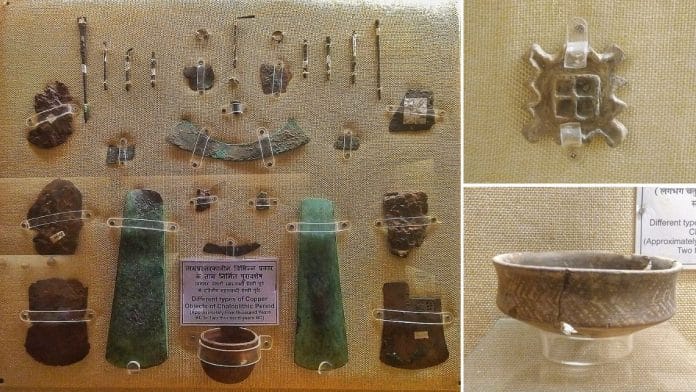
Source: ThePrint — Rajasthan's Ahar culture: Copper masters with ties to Central Asia · theprint.in
Correct match: Ganeshwar IS famous for copper artefacts - this pair is RIGHT
Material confusion: It's copper, not bronze or iron - this is Chalcolithic period
Location: In Rajasthan near Khetri mines, not in Gujarat or Haryana
Rock-Cut Shrines in India
Art And Culture Rock-cut shrines
Rock-Cut Shrines: India's Cave Temple Tradition
Rock-cut shrines are temples carved into solid rock faces or cave walls
Famous examples: Ajanta-Ellora, Elephanta, Karla, Bhaja caves
Span Buddhist, Hindu, and Jain traditions from 3rd century BCE onwards
NOT associated with Neolithic sites like Burzahom
Architectural Tradition
Rock-cut architecture involves carving temples, monasteries, and shrines directly into living rock. This technique allowed architects to create elaborate sculptural facades and interior spaces without using separate building materials.
Major Rock-Cut Sites
Site | Location | Religion | Period | Famous For |
|---|---|---|---|---|
Ajanta | Maharashtra | Buddhist | 2nd BCE - 6th CE | Paintings & sculptures |
Ellora | Maharashtra | Buddhist, Hindu, Jain | 6th - 10th CE | Kailasa temple |
Elephanta | Mumbai | Hindu (Shaiva) | 5th - 8th CE | Trimurti sculpture |
Karla | Maharashtra | Buddhist | 1st BCE - 1st CE | Chaitya hall |
Badami | Karnataka | Hindu, Jain | 6th - 7th CE | Chalukyan style |
Mahabalipuram | Tamil Nadu | Hindu | 7th - 8th CE | Pallavan rathas |
Architectural Marvel
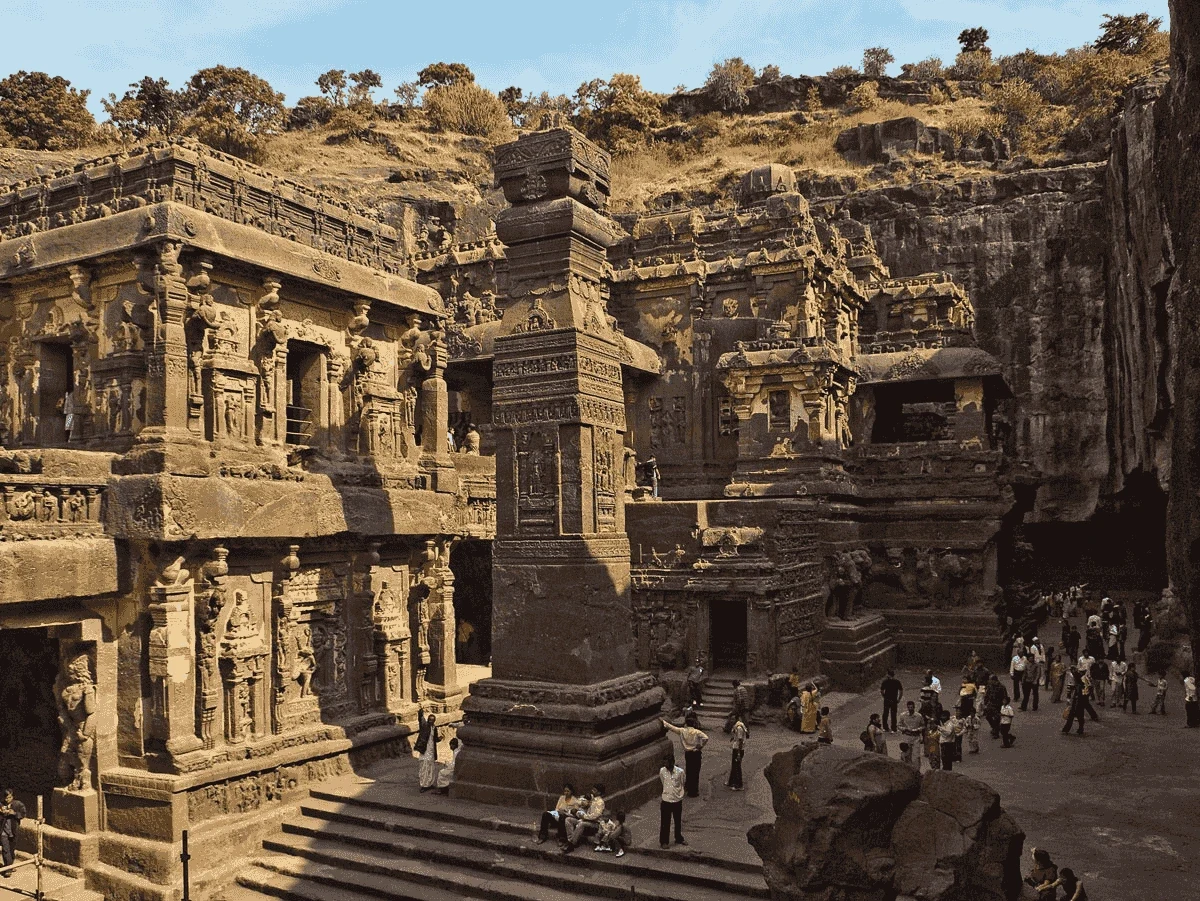
Source: Travassa — Explore Kailasa Temple Ellora - India's Rock‑Cut Wonder · www.travassa.in
Key distinction: Rock-cut shrines are carved temples, not prehistoric pit dwellings
Burzahom confusion: Burzahom has underground pits, NOT rock-cut shrines
Period error: Rock-cut shrines are historical period (post-3rd century BCE), not Neolithic