The vegetation of savannah consists of grassland with scattered small trees, but extensive areas have no trees. The forest development in such areas is generally kept in check by one or more or a combination of some conditions. Which of the following are such conditions? 1. Burrowing animals and termites 2. Fire 3. Grazing herbivores 4. Seasonal rainfall 5. Soil properties Select the correct answer using the code given below.
Contents23
- A1 and 2
- B4 and 5
- C2, 3 and 4
- D1, 3 and 5
Show answer
Answer: (C) 2, 3 and 4
Savannas are grasslands with scattered trees in tropical regions, where forest development is limited by several factors.
Burrowing animals and termites (Option 1) — wrong here: They actually help the ecosystem by improving soil nutrients and water infiltration.
Fire (Option 2) — correct: Regular dry-season fires burn young trees and prevent forest establishment — one of the most important factors maintaining savanna openness.
Grazing herbivores (Option 3) — wrong in this context: While herbivores exist in savannas, grazing alone is not a primary factor preventing forest development.
Seasonal rainfall (Option 4) — correct: Savannas have a distinct dry season with limited rainfall, restricting moisture available for tree growth.
Soil properties (Option 5) — correct: Savanna soils are generally nutrient-poor, limiting tree growth.
Options 2, 4, and 5 are correct.
Answer: (c).
Savannas cover about 20% of Earth's land surface and support nearly one billion people, making their ecosystem dynamics crucial for global food security and climate regulation.
The question tests understanding that savannas are maintained by limiting factors (fire, drought, poor soils) rather than just being a 'transitional' ecosystem between forests and grasslands.
Students must distinguish between factors that maintain savanna structure versus factors that simply exist within savannas.
Savanna Ecosystem Characteristics
Environment savannah grassland with scattered small trees
Savanna Ecosystems: Structure & Global Distribution
Savannas are tropical grasslands with scattered trees, covering about 20% of Earth's land surface
Found between tropical forests and deserts — transition zones with 500-1500mm annual rainfall
Dominated by C4 grasses that are drought-resistant and fire-tolerant
Support large herbivore populations like zebras, wildebeest, and antelopes
Definition & Structure
Savannas are tropical grasslands characterized by a continuous grass layer with scattered trees and shrubs. Tree cover ranges from 10-30% — enough to distinguish savannas from pure grasslands, but not dense enough to form closed forests.
Global Savanna Regions
Region | Country Examples | Local Names | Key Features |
|---|---|---|---|
African Savannas | Kenya, Tanzania, Botswana | Serengeti, Masai Mara | Largest savanna region, Great Migration |
South American Cerrado | Brazil, Venezuela | Llanos, Cerrado | World's most biodiverse savanna |
Australian Savannas | Northern Australia | Tropical Woodlands | Eucalyptus and Acacia trees |
Indian Savannas | Deccan Plateau regions | Tropical Grasslands | Scattered in central and southern India |
Savanna Structure

Source: Geographic Book — Savanna Biome - Geographic Book · geographicbook.com
Factors Limiting Forest Development
Environment forest development kept in check conditions
Why Savannas Don't Become Forests: Key Limiting Factors
Fire is the most important factor — burns young trees and prevents forest establishment
Seasonal rainfall creates dry periods that stress tree seedlings
Poor soil nutrients limit tree growth compared to grasses
Grazing herbivores have minimal direct impact on forest prevention
The Forest Prevention Mechanism
Savannas exist in a dynamic equilibrium where environmental factors prevent the natural succession from grassland to forest. Without these limiting factors, most savannas would eventually develop into tropical dry forests.
Limiting Factors Analysis
Factor | Impact on Trees | UPSC Status | Mechanism |
|---|---|---|---|
Fire | Kills seedlings & saplings | ✓ Correct | Annual dry season fires prevent tree establishment |
Seasonal Rainfall | Water stress during dry season | ✓ Correct | 6-8 month dry period limits tree survival |
Soil Properties | Nutrient-poor, lateritic soils | ✓ Correct | Low phosphorus, nitrogen; high aluminum |
Grazing Herbivores | Minimal direct forest impact | ✗ Incorrect | Graze grass, not tree prevention |
Burrowing Animals | Actually help ecosystem | ✗ Incorrect | Improve soil aeration and nutrients |
How Fire Maintains Savannas
%%{init: {"flowchart": {"wrappingWidth": 460}}}%%
flowchart TD
  s1["`****Dry Season Arrives****
Grasses dry out, become highly flammable`"]
  s2["`****Lightning/Human Fire****
Fires ignite easily in dry grass`"]
  s3["`****Grass Burns Quickly****
Fire moves fast through grass layer`"]
  s4["`****Tree Seedlings Die****
Young trees cannot survive fire`"]
  s5["`****Adult Trees Survive****
Thick bark protects mature trees`"]
  s6["`****Grass Regenerates****
Grass roots survive, regrow rapidly`"]
  s1 --> s2
  s2 --> s3
  s3 --> s4
  s4 --> s5
  s5 --> s6
Question Anchoring
This question tested understanding that fire, seasonal rainfall, and soil properties (options 2, 3, 4) are the primary forest-limiting factors
Trap option: Grazing herbivores — while present in savannas, they don't prevent forest development
Trap option: Burrowing animals — termites actually improve soil conditions, helping the ecosystem
Trap: Confusing grazing with forest prevention — herbivores graze grass, not young trees
Trap: Assuming all animal activities limit forests — burrowing animals actually improve soil health
Trap: Missing fire as the most critical factor — it's the primary mechanism maintaining savanna structure
Trap: Overlooking soil properties — nutrient-poor lateritic soils strongly favor grasses over trees
Fire Ecology in Savannas
Environment Fire
Fire Ecology: The Primary Savanna Maintenance Factor
Natural fires occur every 1-3 years during dry season in most savannas
C4 grasses are fire-adapted with growing points below ground
Tree seedlings cannot survive repeated fires, while mature trees have thick bark protection
Fire removes leaf litter and releases nutrients back to soil
Fire as Ecosystem Engineer
Fire is not destructive in savannas — it's an essential ecological process that maintains the grassland-woodland balance. Without fire, most savannas would transition to closed woodlands within decades.
Fire Effects on Savanna Components
Component | Fire Impact | Adaptation Strategy | Result |
|---|---|---|---|
Grasses | Burns above-ground parts | Growing points below soil surface | Rapid regrowth within weeks |
Tree Seedlings | Killed by heat | No fire adaptations when young | Population controlled |
Mature Trees | Survives fire | Thick bark insulation | Scattered adult trees remain |
Soil Nutrients | Ash adds minerals | Rapid cycling of organic matter | Nutrient pulse for new growth |
Herbivores | Fresh grass growth | Migration to burned areas | Concentrated grazing on new shoots |
Fire Frequency & Intensity
# Savanna Fire Regimes
## **Natural Fires**
- Lightning strikes
- Dry season timing
- 1-3 year cycles
- Low to moderate intensity
## **Human-Managed**
- Prescribed burning
- Early dry season
- Controlled intensity
- Wildlife management
## **Fire Suppression**
- Leads to bush encroachment
- Higher tree density
- Loss of grassland
- Reduced biodiversity
Fire Adaptations
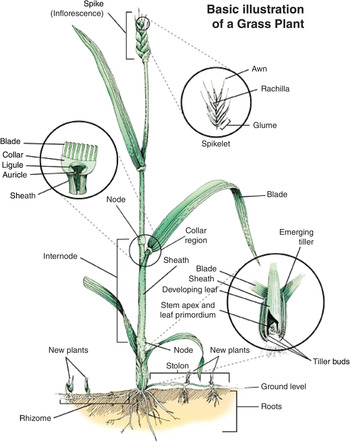
Source: Cambridge University Press & Assessment — How Trees and Grasses Grow and Compete (Chapter 7) - Only in Africa · www.cambridge.org
Seasonal Rainfall Patterns
Environment Seasonal rainfall
Seasonal Rainfall: The Water Limitation Factor
Savannas receive 500-1500mm annual rainfall with distinct wet and dry seasons
Dry season lasts 6-8 months — too long for most tree species to survive
Wet season concentrated in 3-4 months creates flood-drought cycle
Tree seedlings are most vulnerable during first dry season after germination
The Rainfall Limitation
Savanna rainfall is highly seasonal — concentrated in a short wet season followed by a prolonged dry period. This pattern favors drought-tolerant grasses over trees, which need more consistent moisture for establishment and growth.
Savanna vs Forest Rainfall Requirements
Ecosystem | Annual Rainfall | Dry Season | Tree Survival | Dominant Vegetation |
|---|---|---|---|---|
Tropical Forest | 1500mm | <3 months | High | Dense tree canopy |
Savanna | 500-1500mm | 6-8 months | Limited | Grass + scattered trees |
Grassland | <500mm | 8 months | Very low | Pure grassland |
Desert | <250mm | Year-round | None | Sparse shrubs/cacti |
Seasonal Water Stress Cycle
%%{init: {"flowchart": {"wrappingWidth": 460}}}%%
flowchart TD
  s1["`****Wet Season** (3-4 months)**
Heavy rainfall, tree seedlings germinate`"]
  s2["`****Transition Period****
Rainfall decreases, soil moisture drops`"]
  s3["`****Early Dry Season****
Surface water disappears, seedlings stressed`"]
  s4["`****Peak Dry Season****
Severe water stress, most seedlings die`"]
  s5["`****Late Dry Season****
Fire risk highest, remaining vegetation dormant`"]
  s6["`****Return to Wet Season****
Grasses regrow rapidly, few trees survive`"]
  s1 --> s2
  s2 --> s3
  s3 --> s4
  s4 --> s5
  s5 --> s6
India's Savanna Rainfall
Deccan Plateau savannas receive 600-1200mm annual rainfall, mostly during monsoon (June-September)
Dry period extends from October to May — 7-8 months of water stress
Western Ghats shadow creates savanna conditions in rain-shadow areas of Maharashtra and Karnataka
Savanna Soil Properties
Environment Soil properties
Savanna Soils: Nutrient-Poor & Tree-Limiting
Savanna soils are typically lateritic — highly weathered with low fertility
Low phosphorus and nitrogen content limits tree growth more than grass growth
High aluminum content is toxic to many tree species
Seasonal waterlogging followed by drought creates harsh soil conditions
Soil Chemistry Challenge
Savanna soils are heavily leached by seasonal rains and nutrient-poor due to intense tropical weathering. These conditions favor shallow-rooted grasses over deep-rooted trees that require higher nutrient levels.
Savanna Soil Characteristics
Property | Savanna Soils | Impact on Trees | Impact on Grasses |
|---|---|---|---|
pH Level | Acidic (4.5-6.0) | Limits nutrient uptake | Grasses more tolerant |
Phosphorus | Very Low | Essential for root development | Grasses need less P |
Nitrogen | Low to Moderate | Needed for leaf growth | C4 grasses efficient N use |
Aluminum | High (toxic levels) | Prevents root growth | Grasses more Al-tolerant |
Organic Matter | Low (rapid decomposition) | Poor soil structure | Grasses add organic matter |
Water Holding | Poor (sandy/lateritic) | Trees need consistent moisture | Grasses drought-adapted |
Soil Formation Processes
# Savanna Soil Development
## **Weathering**
- Intense tropical heat
- Heavy seasonal rains
- Chemical breakdown
- Mineral leaching
## **Laterization**
- Iron/aluminum accumulation
- Silica removal
- Hardpan formation
- Poor drainage
## **Nutrient Cycling**
- Rapid decomposition
- Quick nutrient loss
- Fire releases minerals
- Grass root turnoverTrap: Assuming savanna soils are fertile because they support grass — they're actually nutrient-poor
Trap: Confusing soil waterlogging with good conditions — seasonal flooding followed by drought stresses trees
Trap: Missing that aluminum toxicity specifically affects trees more than grasses
Trap: Overlooking that fire actually helps by releasing soil nutrients from burned organic matter