Which one of the following National Parks lies completely in the temperate alpine
Contents11
- AManas National Park
- BNamdahpa National Park
- CNeora Valley National Park
- DValley of Flowers National Park
Show answer
Answer: (D) Valley of Flowers National Park
The correct answer is (D) — Valley of Flowers National Park.
Located in the Chamoli district of Uttarakhand at high altitude in the Himalayas, the Valley of Flowers lies completely in the temperate alpine zone.
It is surrounded by snowy peaks of the Zanskar range.
- Manas (Assam) is tropical.
- Namdapha (Arunachal Pradesh) spans multiple zones.
- Neora Valley (West Bengal) is subtropical to temperate but not entirely alpine.
Tip:
Valley of Flowers = high altitude Uttarakhand = fully temperate alpine.
It's a UNESCO World Heritage Site too.
Valley of Flowers is the only national park among the options located entirely at high altitude in the Himalayas, placing it completely in the temperate alpine zone.
UPSC is testing whether students can distinguish between parks that span multiple climate zones versus those in a single zone - most Himalayan parks cover tropical to alpine ranges but Valley of Flowers is exclusively high-altitude alpine.
Valley of Flowers National Park
Environment Valley of Flowers National Park temperate alpine
Valley of Flowers National Park: Temperate Alpine Ecosystem
Located in Chamoli district, Uttarakhand at high altitude in Western Himalayas
Only national park among options that lies completely in temperate alpine zone
UNESCO World Heritage Site since 1988, famous for alpine flowers
Surrounded by snowy peaks of Zanskar range
Key Features
Valley of Flowers is a high-altitude national park in the Western Himalayas, renowned for its meadows of endemic alpine flowers. The park sits at elevations above 3,200 meters, creating a unique temperate alpine ecosystem.
Location: Chamoli district, Uttarakhand
Altitude: 3,200-4,000 meters above sea level
Climate Zone: Completely temperate alpine
Notable Feature: Over 600 species of higher plants
Park Location

Source: BeBanZaras India — Ultimate Guide to Valley of Flowers Trek, Uttarakhand - BeBanZaras ... · banzaras.in
Manas National Park (Assam) is in tropical zone, not alpine
Namdapha National Park spans multiple climate zones from tropical to alpine
Neora Valley National Park is subtropical to temperate but not entirely alpine
Only Valley of Flowers lies completely in temperate alpine zone
Temperate Alpine Ecosystem
Environment temperate alpine
Temperate Alpine Ecosystem: Characteristics & Distribution
Found at high altitudes typically above 3,000 meters in Himalayas
Characterized by low temperatures, strong winds, intense UV radiation
Short growing season with specialized alpine flora and fauna
Treeless landscape dominated by alpine meadows and shrubs
Definition
Temperate alpine ecosystem refers to high-altitude regions above the tree line where temperatures remain low year-round. These areas experience extreme weather conditions with specialized plant and animal communities adapted to harsh mountain environments.
Altitude Zones in Himalayas
Zone | Altitude Range | Temperature | Vegetation |
|---|---|---|---|
Tropical | Up to 1,000m | 20-30°C | Sal, bamboo, deciduous forests |
Subtropical | 1,000-2,000m | 15-25°C | Pine, oak, rhododendron |
Temperate | 2,000-3,000m | 10-20°C | Deodar, fir, spruce forests |
Temperate Alpine | Above 3,000m | Below 10°C | Alpine meadows, shrubs, herbs |
Alpine Adaptations
Cushion plants - grow in compact forms to resist wind
Bright colored flowers - attract pollinators in short growing season
Deep root systems - access water and nutrients in rocky soil
Waxy leaves - reduce water loss in dry mountain air
Climate Zones of National Parks
Environment Manas National Park Namdahpa National Park Neora Valley National Park
National Parks Across Climate Zones: UPSC Options Analysis
Manas (Assam) - tropical grassland and forest ecosystem
Namdapha (Arunachal Pradesh) - spans tropical to alpine zones
Only Valley of Flowers lies entirely in alpine zone
Neora Valley (West Bengal) - subtropical to temperate transition
Parks by Climate Zone
National Park | State | Primary Climate Zone | Key Features |
|---|---|---|---|
Manas | Assam | Tropical | Tiger Reserve, grasslands, Brahmaputra floodplains |
Namdapha | Arunachal Pradesh | Multiple zones | Largest protected area in India, 4 big cats |
Neora Valley | West Bengal | Subtropical-Temperate | Dense forests, red panda habitat |
Valley of Flowers | Uttarakhand | Temperate Alpine | Alpine meadows, endemic flowers, UNESCO site |
Question Context
Manas eliminated - tropical zone with grasslands and sal forests
Namdapha eliminated - spans from tropical lowlands to alpine heights
Neora Valley eliminated - reaches temperate but not entirely alpine
Valley of Flowers correct - completely within temperate alpine zone
Geographic Distribution
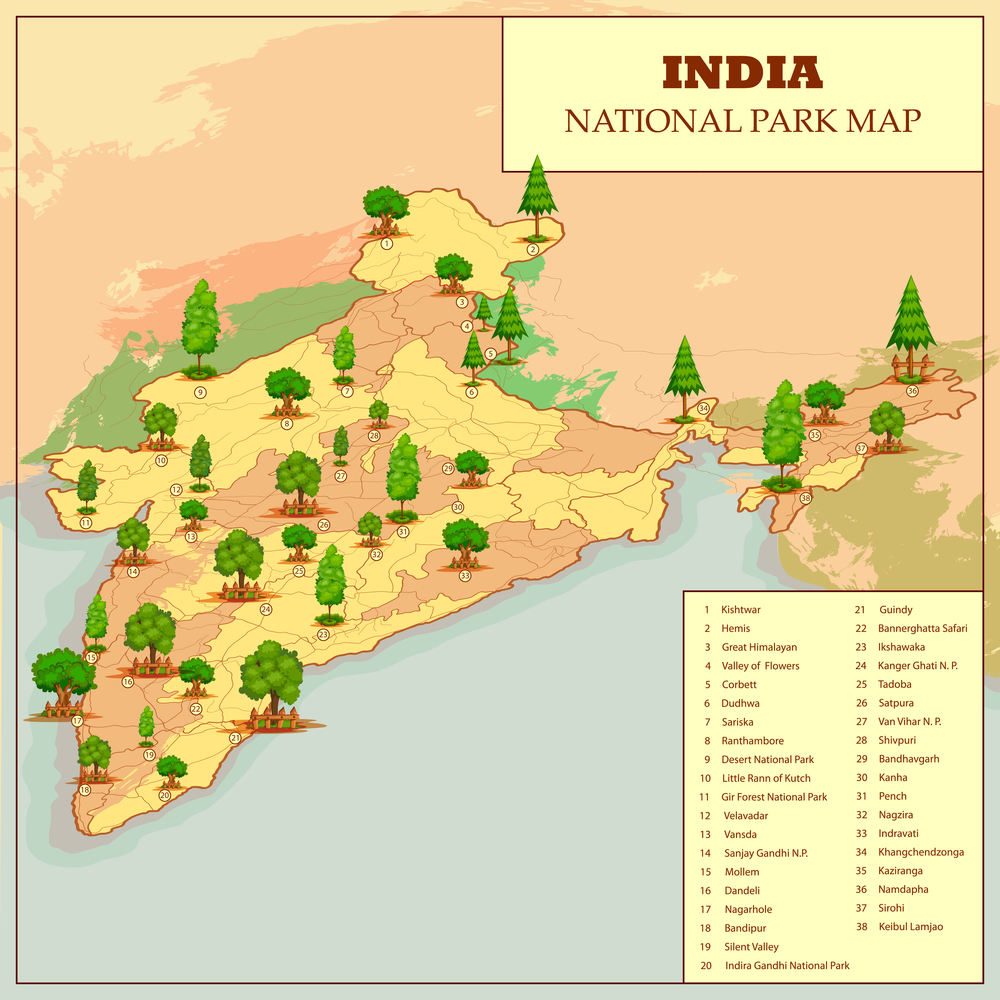
Source: StudyIQ — National Parks in India 2026: State-Wise List, Map and Key Facts · www.studyiq.com
Don't confuse Namdapha's large size with uniform climate - it spans multiple zones
Neora Valley reaches temperate but not entirely alpine - key distinction
High altitude ≠ alpine - some parks have high areas but mixed climate zones
Valley of Flowers is the only completely alpine park among these options