Consider the following information:
Contents27
Consider the following information:
| Archaeological Site | State | Description | |
|---|---|---|---|
| 1. | Chandraketugarh | Odisha | Trading Port town |
| 2. | Inamgaon | Maharashtra | Chalcolithic site |
| 3. | Mangadu | Kerala | Megalithic site |
| 4. | Salihundam | Andhra Pradesh | Rock-cut cave shrines |
In which of the above rows is given information correctly matched?
- A1 and 2
- B2 and 3
- C3 and 4
- D1 and 4
Show answer
Answer: (B) 2 and 3
Correct Answer: (b) Rows 2 and 3 are correct.
Row 1 — Chandraketugarh in Odisha as a trading port: ✗ WRONG.
Chandraketugarh is actually in West Bengal (24 Parganas district), not Odisha.
Row 2 — Inamgaon in Maharashtra as a Chalcolithic site: ✓ CORRECT.
It's in the Bhima river valley, dating to about 3300-1300 BCE.
Row 3 — Mangadu in Kerala as a Megalithic site: ✓ CORRECT.
It has megaliths dating from about 1000 BC to 100 BC.
Row 4 — Salihundam in Andhra Pradesh as rock-cut cave shrines: ✗ WRONG.
Salihundam has Buddhist monuments (stupas, viharas, chaityas), but they are NOT rock-cut caves.
UPSC frequently tests site-state matching to check if students can distinguish between famous archaeological sites that sound similar or are located in neighboring states.
Chandraketugarh in West Bengal and Salihundam in Andhra Pradesh are commonly confused - one for state location, the other for the type of monuments (built structures vs rock-cut caves).
Chandraketugarh Trading Port
Ancient And Medieval History Chandraketugarh Trading Port town
Chandraketugarh: Ancient Trading Port of Bengal
Located in West Bengal (24 Parganas district), not Odisha
Major trading port from 3rd century BCE to 2nd century CE
Famous for terracotta figurines and maritime trade connections
Location & Significance
Chandraketugarh was an important trading port in ancient Bengal, located in the 24 Parganas district of West Bengal. The site flourished as a commercial hub with connections to Southeast Asian trade networks.
Situated near the Bidyadhari river
Active from 3rd century BCE to 2nd century CE
Connected to Roman and Southeast Asian trade routes
Archaeological Findings
Terracotta figurines of exceptional artistic quality depicting daily life scenes
Coins from various periods including punch-marked and Roman coins
Pottery showing influences from multiple cultural traditions
Evidence of bead-making industry and metal crafts
State confusion: Chandraketugarh is in West Bengal, not Odisha - UPSC tested this exact trap
Don't confuse with Kalinga ports like Tamralipti which were in ancient Odisha region
Remember it's a trading port, not just an archaeological site
Inamgaon Chalcolithic Site
Ancient And Medieval History Inamgaon Maharashtra Chalcolithic site
Inamgaon: Key Chalcolithic Settlement in Maharashtra
Located in Maharashtra in the Bhima river valley
Dates to 3300-1300 BCE during Chalcolithic period
Shows agricultural transition from hunting-gathering to farming
Chalcolithic Context
The Chalcolithic period (Copper-Stone Age) marks the transition between Neolithic and Bronze Age. Inamgaon represents this phase perfectly, showing use of both stone tools and copper implements.
Inamgaon Cultural Phases
Phase | Period | Key Features | Economy |
|---|---|---|---|
Early | 3300-2000 BCE | Circular huts, painted pottery | Hunting-gathering dominant |
Middle | 2000-1400 BCE | Rectangular houses, copper tools | Mixed farming & pastoralism |
Late | 1400-1300 BCE | Decline phase, smaller settlement | Reduced agriculture |
Archaeological Evidence
Painted pottery with geometric and animal designs
Copper tools including axes, chisels, and fishhooks
Agricultural implements showing cultivation of wheat, barley, and lentils
Burial practices including both flexed and extended burials
Chalcolithic = Copper-Stone Age, not just stone age - both materials used together
Located in Bhima river valley of Maharashtra, not Deccan plateau generally
Don't confuse with Harappan sites - Inamgaon is post-Harappan Chalcolithic
Mangadu Megalithic Site
Ancient And Medieval History Mangadu Kerala Megalithic site
Mangadu: Megalithic Culture in Kerala
Located in Kerala with megalithic monuments
Dates from 1000 BCE to 100 BCE during Iron Age
Features dolmens and burial chambers typical of South Indian megaliths
Megalithic Tradition
Megalithic culture refers to communities that built large stone monuments, primarily for burial purposes. In South India, this tradition flourished during the Iron Age (1200-300 BCE).
Types of Megalithic Monuments
Type | Structure | Purpose | Found at Mangadu |
|---|---|---|---|
Dolmens | Table-like stone slabs | Burial chambers | Yes |
Cists | Stone box graves | Individual burials | Yes |
Menhirs | Standing stones | Memorial markers | Limited |
Stone circles | Circular arrangements | Burial enclosures | Yes |
Cultural Significance
Iron Age technology - tools and weapons found in burials
Black and Red Ware pottery characteristic of megalithic culture
Burial goods including ornaments, pottery, and iron implements
Evidence of social stratification through varying burial complexities
Megalithic Structures
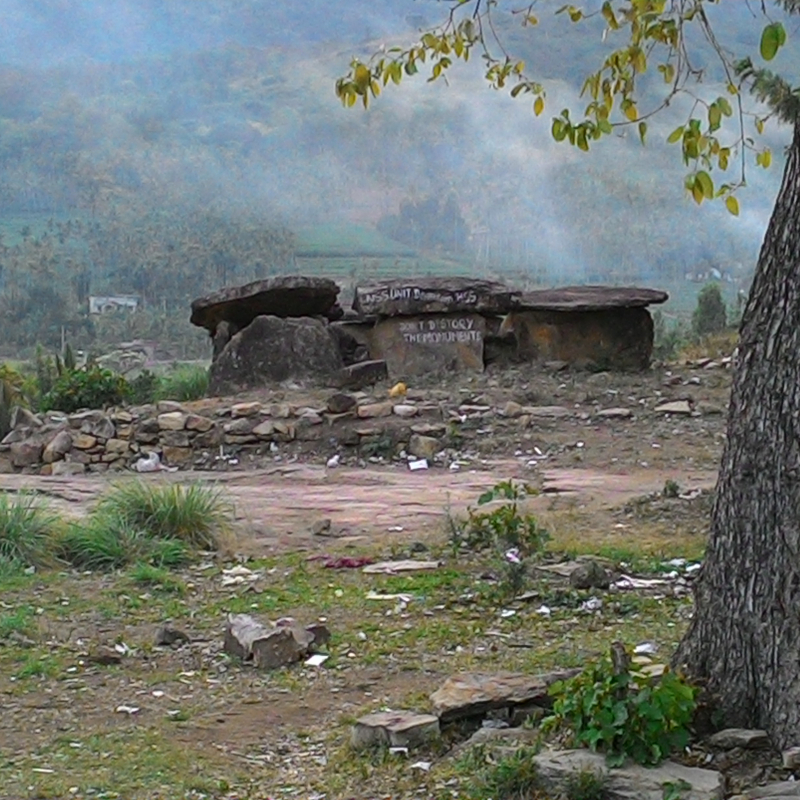
Source: Sahapedia — Megaliths of Kerala: Commemorating Death through Monuments in ... · www.sahapedia.org
Megalithic ≠ Neolithic - megaliths are Iron Age (1000 BCE onwards), not stone age
South Indian phenomenon - don't confuse with North Indian prehistoric cultures
Burial monuments, not habitation sites - primarily funerary in purpose
Salihundam Buddhist Site
Ancient And Medieval History Salihundam Andhra Pradesh Rock-cut cave shrines
Salihundam: Buddhist Monument Complex in Andhra Pradesh
Located in Andhra Pradesh with Buddhist monuments
Features stupas, viharas, and chaityas - NOT rock-cut caves
Active from 2nd century BCE to 2nd century CE
Buddhist Architecture
Salihundam contains structural Buddhist monuments built on a hilltop, not rock-cut architecture. The site represents the early phase of Buddhist expansion in South India.
Buddhist Monument Types at Salihundam
Monument | Purpose | Construction | Key Features |
|---|---|---|---|
Stupas | Worship & relics | Structural masonry | Hemispherical domes |
Viharas | Monastic residence | Built structures | Living quarters for monks |
Chaityas | Prayer halls | Structural | Assembly halls for worship |
Platforms | Ritual activities | Stone construction | Elevated ceremonial spaces |
Archaeological Findings
Inscriptions in Brahmi script mentioning donations and dedications
Sculptural remains showing Buddha and Bodhisattva figures
Coins from Satavahana and Ikshvaku periods
Pottery and other artifacts indicating continuous occupation
NOT rock-cut caves - Salihundam has structural monuments, not excavated caves
Don't confuse with Ajanta-Ellora which have actual rock-cut Buddhist caves
Structural vs Rock-cut - built monuments vs carved into rock face
Chalcolithic Period in India
Ancient And Medieval History Chalcolithic
Chalcolithic Period: India's Copper-Stone Age (3500-1200 BCE)
Chalcolithic = Copper + Stone Age - transition period using both materials
Period: 3500-1200 BCE, overlaps with and follows Harappan civilization
Marks shift from hunting-gathering to agriculture and metal technology
Defining Features
The Chalcolithic period represents the technological transition from pure stone tools to copper implements while stone tools continued in use. This period saw the development of agriculture, pottery, and settled life.
Major Chalcolithic Sites in India
Site | State | River Valley | Key Features |
|---|---|---|---|
Inamgaon | Maharashtra | Bhima | Agricultural settlement, painted pottery |
Ahar | Rajasthan | Banas | Copper implements, Black & Red Ware |
Kayatha | Madhya Pradesh | Chambal | Microliths, copper tools |
Malwa | Madhya Pradesh | Narmada | Wheel-made pottery, agriculture |
Jorwe | Maharashtra | Godavari | Late Chalcolithic, iron transition |
Technological Innovations
Copper metallurgy - axes, chisels, spears, and fishhooks
Wheel-made pottery alongside hand-made ceramics
Agricultural tools for cultivation of wheat, barley, rice
Domestication of cattle, buffalo, sheep, and goats
Cultural Evolution
%%{init: {"flowchart": {"wrappingWidth": 460}}}%%
flowchart TD
  s1["`**Neolithic**
Stone tools, early agriculture`"]
  s2["`**Chalcolithic**
Copper + stone, settled agriculture`"]
  s3["`**Bronze Age**
Bronze technology, urban centers`"]
  s4["`**Iron Age**
Iron tools, megalithic culture`"]
  s1 --> s2
  s2 --> s3
s3 --> s4Chalcolithic ≠ Only copper - both copper AND stone tools used simultaneously
Post-Harappan overlap - some Chalcolithic cultures contemporary with late Harappan
Regional variations - different Chalcolithic cultures had distinct pottery and tools
Megalithic Culture in South India
Ancient And Medieval History Megalithic
Megalithic Culture: South India's Iron Age Burial Tradition
Iron Age culture (1200-300 BCE) in South India and Deccan
Characterized by large stone burial monuments and iron technology
Black and Red Ware pottery is the diagnostic artifact
Geographic Distribution
Megalithic culture flourished across South India and Deccan plateau including modern Karnataka, Tamil Nadu, Kerala, Andhra Pradesh, and parts of Maharashtra. Over 2000 sites have been identified.
Megalithic Monument Types
# Megalithic Monuments
## Burial Chambers
- Dolmens (table stones)
- Cists (stone boxes)
- Rock-cut caves
## Memorial Stones
- Menhirs (standing stones)
- Hero stones
- Sati stones
## Enclosures
- Stone circles
- Alignments
- Avenues
Major Megalithic Sites
Site | State | Monument Type | Period |
|---|---|---|---|
Mangadu | Kerala | Dolmens, cists | 1000-100 BCE |
Brahmagiri | Karnataka | Dolmens, stone circles | 1000-200 BCE |
Adichanallur | Tamil Nadu | Urn burials, iron tools | 1000-600 BCE |
Nagarjunakonda | Andhra Pradesh | Megalithic & Buddhist | 300 BCE-300 CE |
Cultural Characteristics
Iron technology - tools, weapons, and agricultural implements
Black and Red Ware - distinctive pottery with black interior and red exterior
Burial practices - secondary burial with grave goods
Social stratification - varying monument sizes indicate status differences
Megalithic Distribution

Source: LotusArise — Megalithic Sites in India - UPSC Notes » LotusArise IAS · lotusarise.com
Iron Age, not Stone Age - megaliths belong to Iron Age (1200 BCE onwards)
Burial monuments, not habitation - primarily funerary architecture
South Indian phenomenon - rare in North India except parts of Northeast