With reference to the cultural history of India, consider the following statements: 1. White marble was used in making Buland Darwaza and Khankah at Fatehpur Sikri. 2. Red sandstone and marble were used in making Bara Imambara and Rumi Darwaza at Lucknow. Which of the statements given above is/are correct?
Contents15
- A1 only
- B2 only
- CBoth 1 and 2
- DNeither 1 nor 2
Show answer
Answer: (A) 1 only
Correct Answer: (a) 1 only
Statement 1 is CORRECT:
Buland Darwaza and the Khankah (Sufi monastery) at Fatehpur Sikri were built by Emperor Akbar.
Buland Darwaza (1576) commemorates Akbar's victory over Gujarat.
Both structures use a combination of red sandstone with white marble inlay — this is a hallmark of Akbar's architecture.
The white marble provides decorative relief and inscriptions against the red sandstone base.
Statement 2 is WRONG:
The Bara Imambara and Rumi Darwaza at Lucknow were NOT built using red sandstone and marble.
They were built by Nawab Asaf-ud-Daula of Awadh in the late 18th century using brick and lime (not stone and marble).
Instead of expensive marble, the Nawabs used stucco ornamentation (called gajkari) to decorate the buildings, along with shells and mother of pearl to create a shine resembling marble.
The Rumi Darwaza (also called the Turkish Gateway) is the main entrance to the Bara Imambara and is noted for its intricate brickwork, not stone or marble.
REMEMBER:
Fatehpur Sikri (Akbar) = red sandstone + white marble (Statement 1 correct).
Lucknow Nawabi architecture (Bara Imambara, Rumi Darwaza) = brick + lime + stucco, NOT red sandstone and marble (Statement 2 wrong).
The materials are the key difference between Mughal and Nawabi architecture.
The question tests knowledge of building materials used in different periods - Mughal architecture (16th century) versus Nawabi architecture (18th century).
UPSC is checking if students can distinguish between expensive Mughal materials (red sandstone and marble) versus economical Nawabi alternatives (brick, lime, and stucco that mimics marble).
Fatehpur Sikri Architecture
Art And Culture Buland Darwaza Khankah Fatehpur Sikri White marble
Fatehpur Sikri: Akbar's Architectural Marvel with Red Sandstone & White Marble
Fatehpur Sikri was built by Akbar (1571-1585) as his capital city
Buland Darwaza (1576) commemorates Akbar's victory over Gujarat
Architecture uses red sandstone base with white marble inlay
Khankah is a Sufi monastery within the Fatehpur Sikri complex
Akbar's Architectural Vision
Fatehpur Sikri represents Akbar's attempt to create a new capital that blended Indo-Islamic architectural styles. Built between 1571-1585, the city was abandoned after just 14 years due to water scarcity, but its monuments remain masterpieces of Mughal architecture.
Key Structures at Fatehpur Sikri
Structure | Purpose | Key Features | Materials |
|---|---|---|---|
Buland Darwaza | Victory gate (Gujarat conquest) | 54m high, largest gateway in world | Red sandstone + white marble |
Khankah | Sufi monastery | Tomb of Salim Chishti inside | Red sandstone + white marble |
Jama Masjid | Friday mosque | Large courtyard, Persian influence | Red sandstone + marble |
Panch Mahal | Palace for queens | Five-story pavilion | Red sandstone |
Buland Darwaza Visual
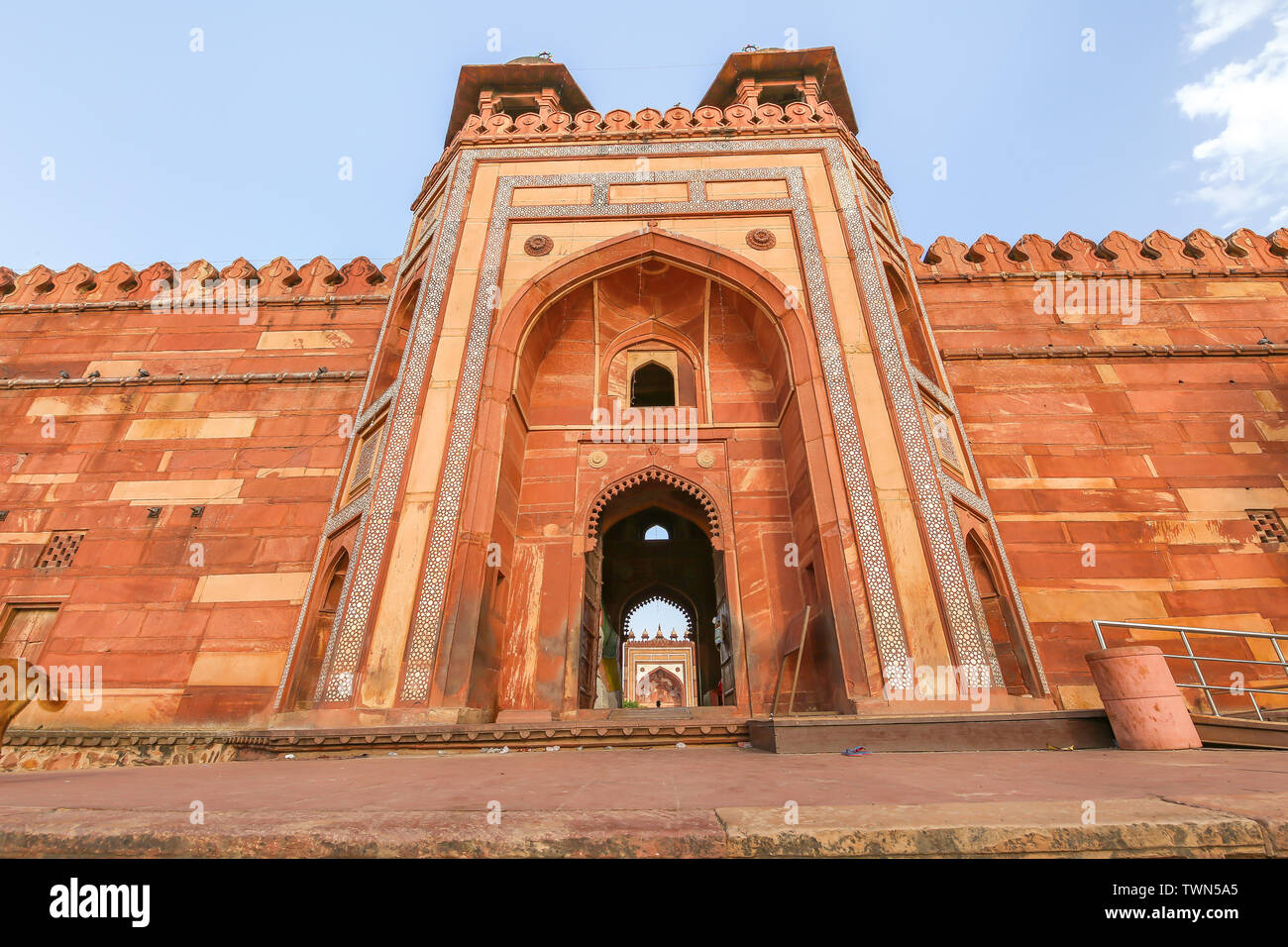
Source: Alamy — Fatehpur Sikri main entrance to fort built of red sandstone with ... · www.alamy.com
Material Trap: Statement 1 is correct - both Buland Darwaza and Khankah use white marble with red sandstone
Builder Confusion: Fatehpur Sikri was built by Akbar, not Shah Jahan (who built Taj Mahal)
Location Mix-up: Fatehpur Sikri is near Agra, not Delhi or Lucknow
Lucknow Nawabi Architecture
Art And Culture Bara Imambara Rumi Darwaza Lucknow Red sandstone
Lucknow Nawabi Architecture: Brick, Lime & Stucco (Not Stone & Marble)
Bara Imambara built by Asaf-ud-Daula (Nawab of Awadh) in 1784
Materials used: brick and lime, NOT red sandstone and marble
Stucco ornamentation (gajkari) used instead of expensive marble
Rumi Darwaza is the main entrance gate to Bara Imambara
Nawabi vs Mughal Materials
Nawabi architecture in Lucknow developed a distinct style using brick and lime construction instead of the expensive stone and marble preferred by Mughals. This was both economical and created employment during famines.
Lucknow Nawabi Monuments
Monument | Builder | Year | Materials | Special Features |
|---|---|---|---|---|
Bara Imambara | Asaf-ud-Daula | 1784 | Brick + lime | Largest vaulted hall without support beams |
Rumi Darwaza | Asaf-ud-Daula | 1784 | Brick + lime | Turkish gateway, intricate brickwork |
Chota Imambara | Muhammad Ali Shah | 1838 | Brick + lime | Also called Palace of Lights |
Hussainabad Clock Tower | Hussainabad Trust | 1881 | Brick | Tallest clock tower in India |
Nawabi Architectural Techniques
Gajkari - stucco ornamentation technique using lime plaster to create decorative patterns
Shell and mother-of-pearl inlay work to create shine resembling marble
Brick masonry expertise - complex geometric patterns without stone cutting
Employment generation - construction provided jobs during famines and economic hardships
Bara Imambara Complex
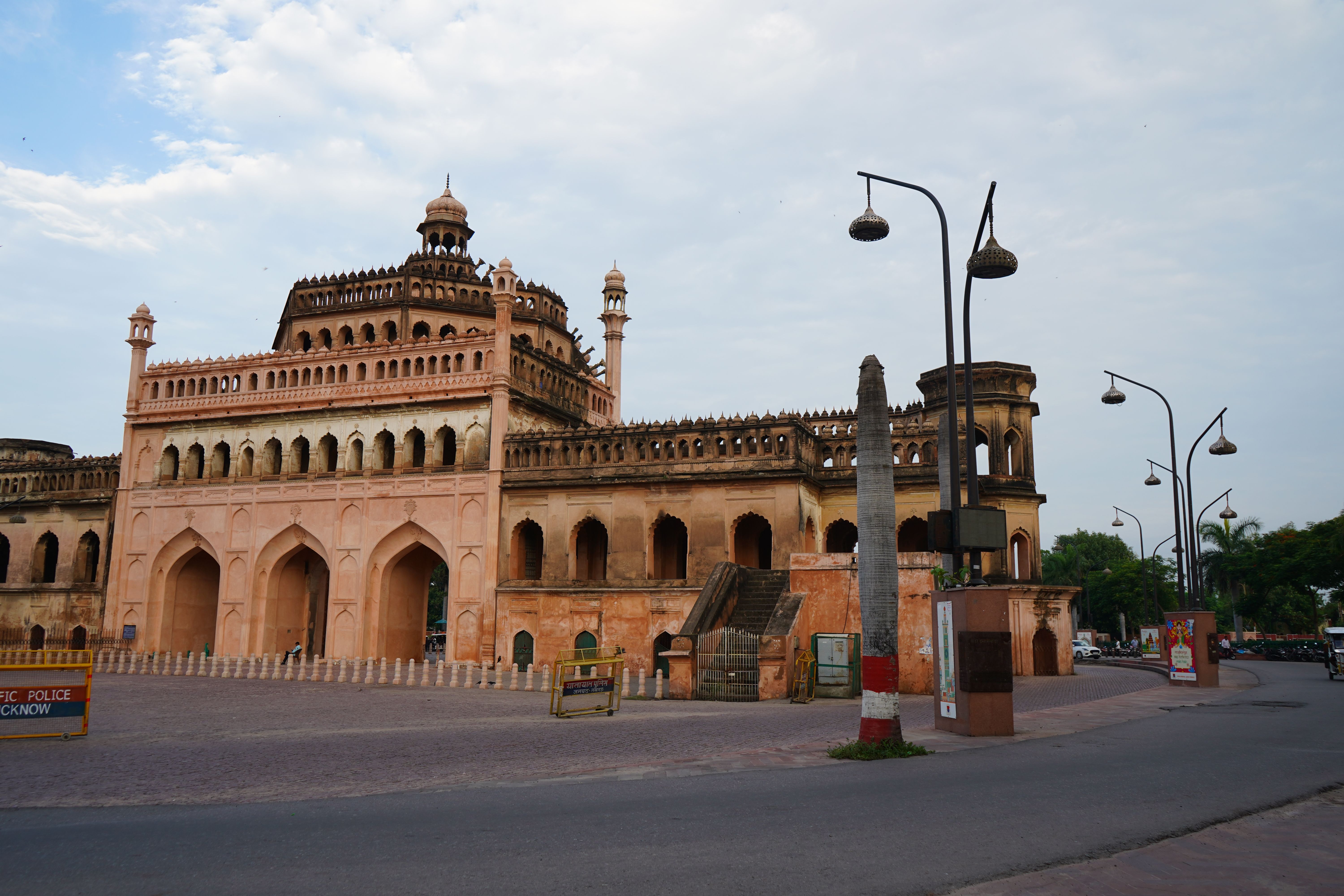
Source: Audiala — Rumi Darwaza, Lucknow: Visitor Guide 2026 | Audiala · audiala.com
Material Trap: Statement 2 is wrong - Lucknow monuments use brick and lime, NOT red sandstone and marble
Dynasty Confusion: Built by Nawabs of Awadh, not Mughals or Delhi Sultans
Purpose Mix-up: Imambara is a Shia Muslim congregation hall, not a tomb or palace
Mughal Architectural Materials
Art And Culture
Mughal Architecture: Evolution of Materials from Akbar to Shah Jahan
Akbar era: Red sandstone with white marble inlay (Fatehpur Sikri, Red Fort Delhi)
Shah Jahan era: Pure white marble dominance (Taj Mahal, Red Fort Delhi throne hall)
Pietra dura - precious stone inlay technique perfected by Mughals
Material Evolution Across Mughal Emperors
Emperor | Period | Primary Materials | Key Examples | Distinctive Feature |
|---|---|---|---|---|
Akbar | 1556-1605 | Red sandstone + white marble | Fatehpur Sikri, Agra Fort | Geometric patterns, calligraphy |
Jahangir | 1605-1627 | Red sandstone + marble | Tomb of Itimad-ud-Daulah | Introduction of pietra dura |
Shah Jahan | 1628-1658 | Pure white marble | Taj Mahal, Red Fort throne hall | Floral patterns, precious stones |
Aurangzeb | 1658-1707 | Brick + plaster | Bibi ka Maqbara | Economic constraints, simpler materials |
Mughal Material Techniques
# Mughal Materials
## Stone Work
- Red sandstone from Rajasthan
- White marble from Makrana
- Precision cutting
- Interlocking without mortar
## Decorative Techniques
- Pietra dura (stone inlay)
- Calligraphy (Quranic verses)
- Geometric patterns
- Floral motifs
## Structural Features
- Double dome
- Minarets
- Pointed arches
- Bulbous domesEra Confusion: Red sandstone + marble = Akbar era, Pure marble = Shah Jahan era
Regional Mix-up: Mughal materials differ from Deccan (basalt) and Nawabi (brick-lime) styles
Cost Factor: Later Mughals used cheaper materials due to economic decline
Regional Architectural Styles
Art And Culture
Regional Architectural Styles: Materials & Techniques Across Indian Regions
Mughal: Red sandstone + white marble (North India)
Deccan: Black basalt stone (Maharashtra, Karnataka)
Nawabi: Brick and lime with stucco work (Awadh region)
Gujarat: Local sandstone with intricate carving traditions
Regional Material Preferences
Region/Style | Primary Materials | Key Examples | Distinctive Features |
|---|---|---|---|
Mughal (North) | Red sandstone + white marble | Fatehpur Sikri, Taj Mahal | Pietra dura, geometric patterns |
Deccan (South) | Black basalt stone | Gol Gumbaz, Ibrahim Rauza | Large domes, minimal decoration |
Nawabi (Awadh) | Brick + lime + stucco | Bara Imambara, Rumi Darwaza | Gajkari work, employment focus |
Gujarat (West) | Yellow/red sandstone | Sarkhej Roza, Sidi Saiyyed Mosque | Jali work, lattice screens |
Bengal (East) | Brick + terracotta | Adina Mosque, Hazrat Pandua | Curved roofs, local motifs |
Why Materials Differed
Local availability - regions used stones/materials available nearby to reduce transport costs
Climate adaptation - thick walls in hot regions, sloped roofs in rainy areas
Economic factors - rich Mughal empire used expensive marble, provincial rulers used brick-lime
Cultural synthesis - local building traditions merged with Islamic architectural principles
Don't mix materials: Lucknow ≠ sandstone+marble, Deccan ≠ red sandstone, Mughal ≠ brick+lime
Time period matters: Same region may use different materials in different eras
Function affects materials: Tombs used expensive materials, everyday buildings used local cheap materials