The well-known painting "Bani Thani" belongs to the
Contents17
- ABundi school
- BJaipur school
- CKangra school
- DKishangarh school
Show answer
Answer: (D) Kishangarh school
Correct Answer: (d) Kishangarh school
'Bani Thani' is a famous Indian miniature painting from the Kishangarh school of painting (Rajasthan).
Key facts:
- It was painted by artist Nihal Chand.
- The subject 'Bani Thani' was a singer and poet in the court of King Sawant Singh of Kishangarh.
- She is often called the 'Indian Mona Lisa' because of her distinctive beauty and the painting's fame.
- The painting is known for its distinctive features: elongated eyes, thin pointed nose, and curved lips.
Why not the others?
- Bundi school — Known for its vibrant colors and depictions of hunting scenes.
- Jaipur school — Known for royal portraits and court scenes.
- Kangra school — Known for delicate depictions of Radha-Krishna themes (from Himachal Pradesh).
REMEMBER: Bani Thani = Kishangarh school = 'Indian Mona Lisa' = painted by Nihal Chand. Kishangarh is in Rajasthan.
Bani Thani is called the 'Indian Mona Lisa' and is one of the most famous miniature paintings in India, painted by Nihal Chand in the Kishangarh school.
Each Rajasthani painting school has distinct characteristics - Kishangarh is known for elongated features and romantic themes, while Bundi focuses on hunting scenes and Kangra specializes in Radha-Krishna depictions.
Bani Thani - The Indian Mona Lisa
Art And Culture Bani Thani
Bani Thani: Famous Kishangarh School Masterpiece
Bani Thani is a famous miniature painting from Kishangarh school in Rajasthan
Painted by artist Nihal Chand in the 18th century
Known as the 'Indian Mona Lisa' due to its fame and distinctive beauty
Subject was a singer and poet in King Sawant Singh's court
Historical Context
Bani Thani represents the golden age of Kishangarh painting under King Sawant Singh (18th century). The subject was both a court performer and the king's beloved, making this painting a masterpiece of both artistic skill and royal patronage.
Distinctive Features
Elongated almond-shaped eyes - the most recognizable feature
Thin, sharply pointed nose creating an elegant profile
Curved bow-shaped lips with subtle expression
Arched eyebrows that complement the eye shape
Delicate facial features representing idealized Rajasthani beauty
Visual Recognition
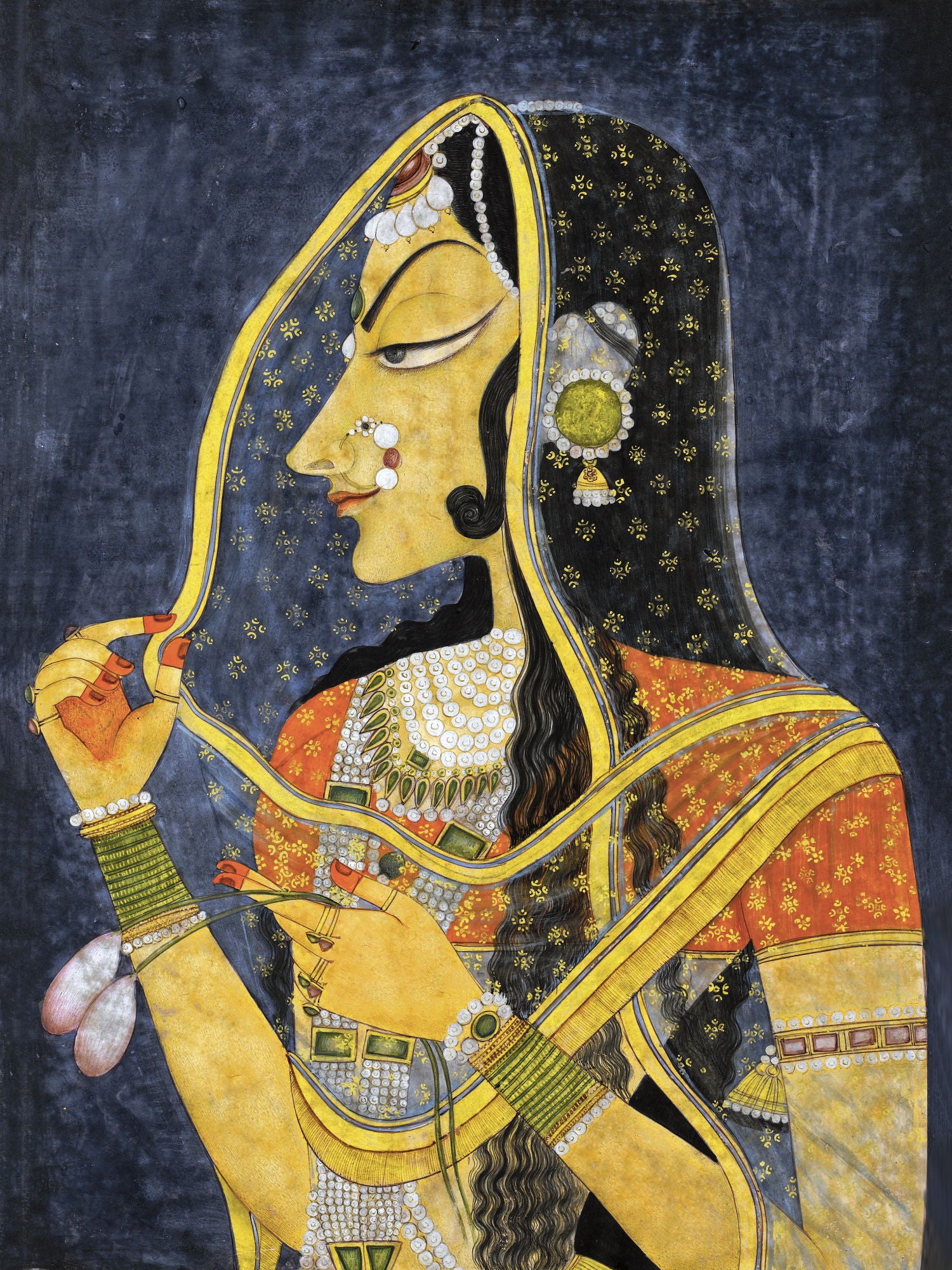
Source: Tallenge Store — Bani Thani by Nihâl Chand | Buy Posters, Frames, Canvas & Digital ... · www.tallengestore.com
Question Connection
This PYQ tests direct factual knowledge - Bani Thani belongs to Kishangarh school, not the other Rajasthani schools (Bundi, Jaipur) or Himachali school (Kangra). The association with Nihal Chand and the 'Indian Mona Lisa' nickname are additional recall anchors.
Don't confuse Kishangarh with other Rajasthani schools - Bani Thani is specifically Kishangarh
Kangra school is from Himachal Pradesh, not Rajasthan - different region entirely
Remember: Nihal Chand painted Bani Thani, not any other court painter
'Indian Mona Lisa' refers specifically to Bani Thani, not other famous miniatures
Kishangarh School of Painting
Art And Culture Kishangarh school
Kishangarh School: Distinctive Rajasthani Miniature Tradition
Kishangarh school developed in 18th century Rajasthan under King Sawant Singh
Famous for elongated facial features and idealized beauty
Nihal Chand was the master artist of this school
Origin & Patronage
Kishangarh school flourished under Raja Sawant Singh (18th century) in the princely state of Kishangarh, Rajasthan. The king himself was a devotee of Krishna, which influenced the school's themes and aesthetic sensibilities.
Characteristic Style
Elongated eyes and faces - creating an ethereal, idealized look
Sharp, pointed noses with delicate features
Radha-Krishna themes predominant due to royal patronage
Rich color palette with deep blues, reds, and golds
Poetic romanticism in composition and mood
Notable Features
Court paintings depicting royal life and celebrations
Religious themes especially Krishna Leela stories
Portrait painting reached high artistic standards
Landscape backgrounds often featuring gardens and palaces
Major Rajasthani Painting Schools
Art And Culture Bundi school Jaipur school
Rajasthani Schools: Bundi, Jaipur & Regional Variations
Bundi school known for hunting scenes and vibrant colors
Jaipur school famous for royal portraits and court scenes
Each school developed distinct regional characteristics under different royal patronage
Key Rajasthani Schools Comparison
School | Location | Specialization | Key Features | Famous Works |
|---|---|---|---|---|
Bundi | Bundi, Rajasthan | Hunting scenes, court life | Vibrant colors, dynamic compositions | Ragamala paintings |
Jaipur | Jaipur, Rajasthan | Royal portraits, court ceremonies | Refined technique, formal compositions | Mughal-influenced portraits |
Kishangarh | Kishangarh, Rajasthan | Idealized beauty, Radha-Krishna | Elongated features, poetic style | Bani Thani |
Mewar | Udaipur region | Historical chronicles, battles | Bold colors, narrative style | Akbar Nama illustrations |
Bundi School Specifics
Hunting expeditions - favorite subject matter showing royal hunts
Vibrant color combinations - especially greens, blues, and yellows
Court festivities depicted with great detail and energy
17th-18th centuries - peak period of artistic production
Jaipur School Specifics
Royal portraiture - formal portraits of Jaipur rulers
Mughal influence - refined technique and court etiquette themes
Ceremonial scenes - depicting court rituals and celebrations
18th-19th centuries - developed under later Rajput patronage
Kangra School of Painting
Art And Culture Kangra school
Kangra School: Premier Pahari Painting Tradition
Kangra school belongs to Pahari painting tradition from Himachal Pradesh
Famous for delicate Radha-Krishna depictions and lyrical romanticism
Peak period was 18th-19th centuries under Raja Sansar Chand
Geographic Context
Kangra school developed in the hill regions of Himachal Pradesh, making it distinct from Rajasthani desert traditions. This Pahari (hill) painting style reflects the lush green landscapes and cooler climate of the region.
Distinctive Characteristics
Radha-Krishna themes - especially the divine love story
Delicate facial features - soft, feminine beauty ideals
Lyrical compositions - poetic and romantic mood
Natural landscapes - featuring hills, rivers, and gardens
Soft color palette - pastels and gentle tones
Thematic Focus
Bhagavata Purana illustrations - Krishna's life stories
Gita Govinda - Jayadeva's poem on Radha-Krishna
Seasonal paintings - depicting different ragas and seasons
Court scenes of local hill rulers
Kangra is NOT in Rajasthan - it's in Himachal Pradesh (Pahari region)
Don't confuse Kangra's Radha-Krishna themes with Kishangarh's idealized portraiture
Pahari painting includes Kangra, Basohli, and other hill schools - not just one style