Consider the following pairs:
Contents17
Consider the following pairs:
| Country | Reason for being in the news | |
|---|---|---|
| 1. | Argentina | Worst economic crisis |
| 2. | Sudan | War between the country's regular and paramilitary forces |
| 3. | Turkey | Rescinded its membership of NATO |
How many of the pairs given above are correctly matched?
- AOnly one pair
- BOnly two pairs
- CAll three pairs
- DNone of the pairs
Show answer
Answer: (B) Only two pairs
Correct Answer: (b) Only two pairs are correct (Pairs 1 and 2).
Pair 1 — Argentina + worst economic crisis: ✓ CORRECT.
Argentina has been suffering severe inflation and economic turmoil.
Pair 2 — Sudan + war between regular army and paramilitary: ✓ CORRECT.
Fighting between the Sudanese Army (Gen. al-Burhan) and the Rapid Support Forces (RSF, led by Dagalo) has caused one of the worst humanitarian crises.
Pair 3 — Turkey + left NATO: ✗ WRONG.
Turkey has NOT left NATO.
While Turkey has been a difficult member and has clashed with other NATO countries, it remains a member.
There's no mechanism within NATO to expel a member.
Quick elimination: If you know Turkey is still in NATO (which is basic current affairs), you can immediately eliminate options that include Pair 3.
Argentina's inflation reached over 200% in 2023-2024, making it one of the world's worst economic crises currently.
Sudan's civil war between the army and RSF paramilitary started in April 2023, creating a major humanitarian crisis that dominated international news in 2023-24.
Turkey remains a NATO member despite tensions - there is no mechanism in NATO's charter to expel a member country.
Argentina Economic Crisis 2023-24
World Affairs (International Relations) Argentina economic crisis
Argentina's Economic Crisis: Hyperinflation & Currency Collapse
Argentina faces hyperinflation exceeding 100% annually in 2023-24
Peso devaluation and currency controls have created parallel exchange rates
Javier Milei won presidency in late 2023 promising radical economic reforms
Argentina has defaulted on debt 9 times in its history
Crisis Overview
Argentina is experiencing one of its worst economic crises in decades, with hyperinflation destroying purchasing power and the peso losing value rapidly against the dollar. This crisis has dominated international headlines in 2023-24.
Key Crisis Indicators
Indicator | 2023-24 Status | Impact |
|---|---|---|
Inflation Rate | Over 100% annually | Basic goods became unaffordable |
Peso Value | Severe devaluation | Multiple exchange rates exist |
Poverty Rate | Over 40% of population | Social unrest and protests |
Foreign Reserves | Critically low | Cannot service debt payments |
UPSC Context
This crisis makes Argentina a frequent current affairs topic for economic questions
Milei's election represents a shift toward libertarian economic policies in Latin America
Argentina's troubles contrast with Brazil's relative stability in the region
Don't confuse Argentina's crisis with Venezuela's longer-running hyperinflation
Argentina remains a G20 member despite economic troubles
The crisis is economic, not a civil war like Sudan
Sudan Civil Conflict 2023
World Affairs (International Relations) Sudan war regular and paramilitary forces
Sudan Civil War: Army vs Rapid Support Forces
Fighting between Sudanese Army and Rapid Support Forces (RSF) since April 2023
Led by Gen. al-Burhan (Army) vs Dagalo (RSF)
Over 5 million people displaced, creating humanitarian crisis
Fighting concentrated in Khartoum and Darfur regions
Conflict Background
Sudan's civil war erupted in April 2023 between the regular Sudanese Armed Forces and the Rapid Support Forces (RSF), a powerful paramilitary group. This conflict has created one of the world's worst humanitarian crises.
Key Actors
Force | Leader | Background | Control Areas |
|---|---|---|---|
Sudanese Army | Gen. Abdel Fattah al-Burhan | Regular military, de facto ruler | Government buildings, some cities |
Rapid Support Forces | Gen. Mohamed Dagalo | Paramilitary from Darfur militias | Parts of Khartoum, rural areas |
Humanitarian Impact
Over 5 million people have fled their homes since fighting began
International aid delivery severely disrupted due to ongoing violence
Regional spillover threatens stability in Chad, Egypt, and Ethiopia
Sudan Conflict Zones
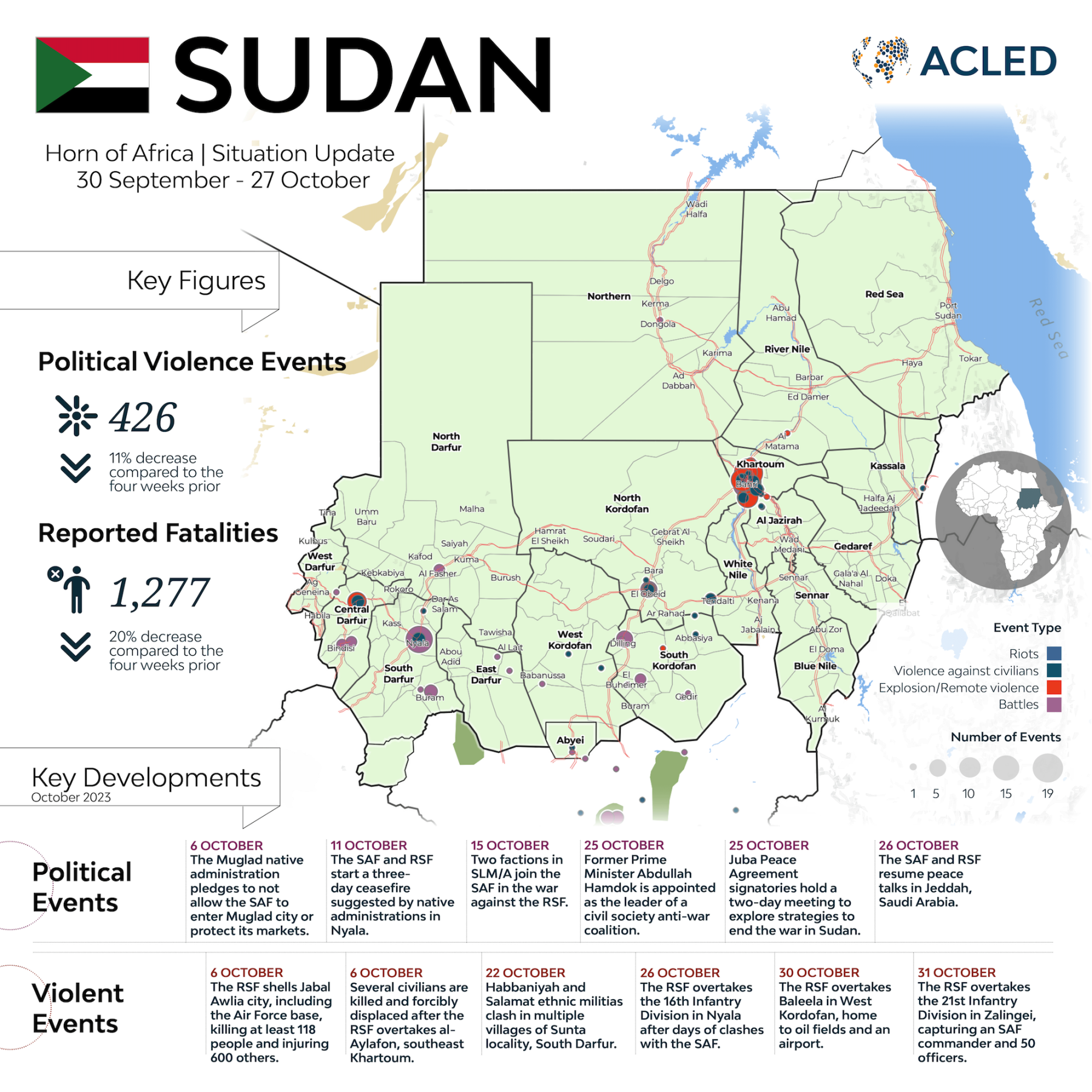
Source: ACLED — Sudan Situation Update: November 2023 | RSF Expands ... · acleddata.com
This is not a war with another country - it's between Sudan's own military forces
Don't confuse RSF with rebel groups - they were part of the government until the split
Sudan's conflict is separate from ongoing tensions in South Sudan
Turkey's NATO Membership
World Affairs (International Relations) Turkey NATO membership
Turkey in NATO: Tensions but Still a Member
Turkey remains a NATO member since 1952 - has NOT left
No mechanism exists in NATO charter to expel a member
Turkey has strained relations with other NATO members over various issues
Controls the Bosphorus Strait, making it strategically vital to NATO
Membership Status
Turkey has NOT left NATO and remains a full member since joining in 1952. While relations with other NATO countries have been tense, there is no legal mechanism for expelling a member from the alliance.
Turkey-NATO Relations
Aspect | Turkey's Position | NATO Response |
|---|---|---|
S-400 Purchase | Bought Russian air defense system | Suspended from F-35 program |
Syria Operations | Military actions against Kurdish groups | Criticism from allies |
Ukraine War | Opposes some Russian sanctions | Still provides aid to Ukraine |
Sweden NATO Bid | Initially blocked membership | Eventually agreed in 2024 |
Strategic Importance
Controls the Bosphorus and Dardanelles straits - key maritime chokepoints
Second-largest NATO military after the US in terms of personnel
Bridges Europe and Asia, providing access to Middle East and Central Asia
Major trap: Turkey has NOT left NATO despite frequent tensions
Don't confuse Turkey's EU membership issues with its NATO status
Turkey opposes some NATO positions but hasn't withdrawn from the alliance
NATO Membership & Structure
World Affairs (International Relations) NATO
NATO: Membership Rules & Collective Defense
No expulsion mechanism exists in NATO charter - members can only leave voluntarily
Article 5 requires collective defense - attack on one is attack on all
32 members as of 2024 after Finland and Sweden joined
Founded in 1949 as Cold War alliance against Soviet Union
Alliance Structure
NATO is a military alliance of Western nations based on collective defense. The organization has no mechanism to expel members - countries can only leave voluntarily, as no member has ever done.
NATO Expansion Phases
Phase | Year | New Members | Strategic Context |
|---|---|---|---|
Founding | 1949 | 12 Western nations | Cold War begins |
First Expansion | 1952 | Greece, Turkey | Mediterranean security |
Post-Cold War | 1999-2009 | Eastern Europe nations | EU integration era |
Recent | 2020-2024 | North Macedonia, Finland, Sweden | Response to Russia-Ukraine war |
Key Provisions
Article 5 invoked only once - after 9/11 attacks on the US
Members must spend 2% of GDP on defense (target, not mandatory)
Consensus decision-making - all members must agree on major actions
NATO cannot expel members - this is a key constitutional feature
Don't confuse NATO with EU membership - different organizations with different rules
Article 5 applies to attacks on member territory, not overseas operations