Consider the following statements : Statement-I : Sumed pipeline is a strategic route for Persian Gulf oil and natural gas shipments to Europe. Statement-II : Sumed pipeline connects the Red Sea with the Mediterranean Sea. Which one of the following is correct in respect of the above statements ?
Contents14
- ABoth Statement-I and Statement-II are correct and Statement-II explains Statement-I
- BBoth Statement-I and Statement-II are correct, but Statement-II does not explain Statement-I
- CStatement-I is correct, but Statement-II is incorrect
- DStatement-I is incorrect, but Statement-II is correct
Show answer
Answer: (A) Both Statement-I and Statement-II are correct and Statement-II explains Statement-I
Correct Answer: (a) Both statements are correct, and Statement-II explains Statement-I.
Statement I: The SUMED pipeline is a strategic route for Persian Gulf oil/gas shipments to Europe — ✓ CORRECT.
It handles about 12% of seaborne oil trade.
Statement II: The SUMED pipeline connects the Red Sea with the Mediterranean Sea — ✓ CORRECT.
It runs through Egypt.
Statement II explains Statement I because it's precisely this Red Sea–Mediterranean connection that makes the pipeline strategically important for getting Gulf oil to Europe without going all the way around Africa.
Key fact: SUMED stands for Suez-Mediterranean.
It has a capacity of 2.5 million barrels per day and serves as an alternative to the Suez Canal.
The SUMED pipeline carries about 12% of global seaborne oil trade, making it one of the world's most critical energy transit routes alongside the Suez Canal.
With ongoing Middle East tensions and Red Sea shipping disruptions in 2023-24, alternative energy transit routes like SUMED became highly relevant for global energy security.
UPSC is testing whether students understand how geography creates strategic importance - the Red Sea to Mediterranean connection is what makes this pipeline valuable for bypassing longer shipping routes.
SUMED Pipeline
World Affairs (International Relations) Sumed pipeline Persian Gulf oil Red Sea Mediterranean Sea
SUMED Pipeline: Egypt's Strategic Oil Route
SUMED stands for Suez-Mediterranean pipeline connecting Red Sea to Mediterranean
Handles 12% of seaborne oil trade with capacity of 2.5 million barrels per day
Strategic route for Persian Gulf oil shipments to Europe
Serves as alternative to Suez Canal for oil transport
What is SUMED
The SUMED Pipeline is Egypt's strategic oil transport infrastructure that creates a land bridge between the Red Sea and Mediterranean Sea. It allows Persian Gulf oil to reach European markets without ships having to navigate the entire Suez Canal or travel around Africa.
Key Specifications
Feature | Details |
|---|---|
Full Name | Suez-Mediterranean Pipeline |
Route | Red Sea to Mediterranean Sea through Egypt |
Capacity | 2.5 million barrels per day |
Global Share | 12% of seaborne oil trade |
Primary Users | Persian Gulf oil exporters to Europe |
Strategic Role | Alternative to Suez Canal navigation |
Pipeline Route
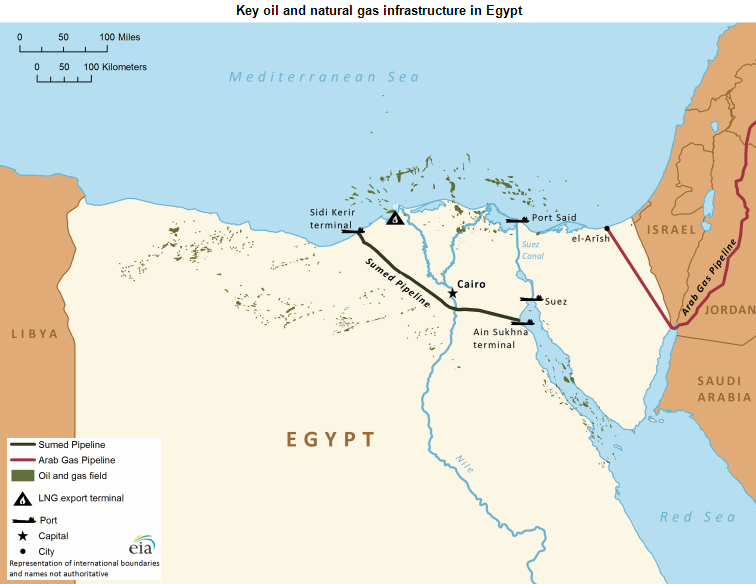
Source: Sleepy Classes — Solved] Consider the following statements: Statement-I: Sumed ... · sleepyclasses.com
Question Analysis
This PYQ tested the causal relationship between SUMED's geographic route (Red Sea-Mediterranean connection) and its strategic importance (Persian Gulf oil to Europe). Statement II directly explains why Statement I is true - the pipeline's value comes from its specific geographic positioning.
Trap: Confusing SUMED with Suez Canal - both are Egyptian, both connect same waters, but pipeline vs waterway
Trap: Thinking Statement II doesn't explain Statement I - the Red Sea-Mediterranean route IS why it's strategic for Gulf-Europe oil
Name confusion: SUMED = SUez-MEDiterranean, not just random letters
Global Strategic Oil Routes
World Affairs (International Relations) Persian Gulf oil Europe
Strategic Oil Transport Routes & Chokepoints
Strait of Hormuz handles 20% of global oil transit from Persian Gulf
Suez Canal and SUMED Pipeline are key Red Sea-Mediterranean links
Strait of Malacca connects Middle East oil to Asia-Pacific markets
Why Routes Matter
Strategic oil routes are chokepoints where significant portions of global energy trade pass through narrow geographic corridors. Disruption at these points can affect global oil prices and energy security for importing nations.
Major Oil Chokepoints
Route/Chokepoint | Connects | Global Oil Share | Strategic Importance |
|---|---|---|---|
Strait of Hormuz | Persian Gulf to Arabian Sea | ~20% | Iran can threaten closure |
Suez Canal | Red Sea to Mediterranean | ~12% | Egypt controls passage |
SUMED Pipeline | Red Sea to Mediterranean | ~12% | Land alternative to Suez |
Strait of Malacca | Indian Ocean to South China Sea | ~25% | Asia-Pacific oil imports |
Bab al-Mandab | Red Sea to Gulf of Aden | ~4% | Yemen conflict affects passage |
Persian Gulf Oil Flow
# Persian Gulf Oil Exports
## To Europe
- Via Suez Canal
- Via SUMED Pipeline
- Around Africa (longer route)
## To Asia
- Via Strait of Malacca
- Direct to India/China
- To Japan/South Korea
## Major Exporters
- Saudi Arabia
- UAE
- Iran
- Iraq
- KuwaitPercentage confusion: Strait of Hormuz (~20%) vs Suez Canal/SUMED (~12%) - don't mix up the numbers
Geographic mix-up: Bab al-Mandab is at Red Sea entrance, Strait of Hormuz is at Persian Gulf exit
Pipeline vs Canal: Both SUMED and Suez connect same waters but serve as alternatives to each other
Egypt's Strategic Geographic Position
Geography Red Sea Mediterranean Sea
Egypt as Global Energy Transit Hub
Egypt controls Suez Canal - shortest sea route between Europe and Asia
SUMED Pipeline provides land-based alternative for oil transport
Egypt earns significant transit revenues from both canal and pipeline
Geographic Advantage
Egypt's position as the land bridge between Africa and Asia, controlling the narrow connection between Red Sea and Mediterranean, makes it indispensable for global trade. This geographic chokepoint gives Egypt significant geopolitical leverage.
Egypt's Transit Infrastructure
Infrastructure | Type | Capacity/Feature | Revenue Source |
|---|---|---|---|
Suez Canal | Waterway | 193 km long, handles 12% global trade | Ship transit fees |
SUMED Pipeline | Oil pipeline | 2.5 million barrels/day | Oil transit fees |
Suez Canal Economic Zone | Industrial zone | Manufacturing & logistics hub | Investment & exports |
New Administrative Capital | Planned city | Government relocation project | Reduced Cairo congestion |
Strategic Location
Source: Sleepy Classes — Solved] Consider the following statements: Statement-I: Sumed ... · sleepyclasses.com
Geopolitical Implications
Revenue dependency: Egypt earns billions annually from Suez Canal transit fees
Strategic leverage: Can influence global trade by controlling passage rates or access
Security concerns: Regional conflicts (Yemen, Gaza) can affect transit safety
Competition: Other routes like Northern Sea Route (Arctic) may reduce Egypt's importance
Expansion projects: Egypt regularly upgrades canal capacity to handle larger ships