Which one of the following statements best reflects the issue with Senkaku Islands, sometimes mentioned in the news?
Contents10
- AIt is generally believed that they are artificial islands made by a country around South China Sea.
- BChina and Japan engage in maritime disputes over these islands in East China Sea.
- CA permanent American military base has been set up there to help Taiwan to increase its defence capabilities.
- DThrough International Court of Justice declared them as no man's land, some South-East Asian countries claim them.
Show answer
Answer: (B) China and Japan engage in maritime disputes over these islands in East China Sea.
The answer is (B) China and Japan dispute over these islands in the East China Sea.
The Senkaku Islands (called Diaoyu by China) are a group of uninhabited islands in the East China Sea.
Both Japan and China claim ownership:
- Japan's claim: Japan controlled them from 1895, considers them Japanese territory
- China's claim: China says it discovered them in the 14th century and they were taken during Japan's imperial expansion
This is a territorial/maritime dispute that regularly causes tensions between the two countries.
Why other options are wrong:
(A) They're natural islands, not artificial ones, and they're in the EAST China Sea, not South China Sea
(C) There's no permanent US military base there
(D) No ICJ ruling has been made about them
Don't confuse:
Senkaku = East China Sea (Japan-China dispute).
Spratly/Paracel = South China Sea (multi-country dispute).
The Senkaku Islands dispute involves competing territorial claims between Japan and China over uninhabited islands in the East China Sea, creating regular diplomatic tensions between Asia's two largest economies.
This territorial dispute gained renewed attention around 2020-2022 due to increased Chinese coast guard activities and military exercises in the region, making it a frequent current affairs topic.
UPSC tests whether students can distinguish East China Sea disputes (Japan-China over Senkaku) from South China Sea disputes (multiple countries over Spratly/Paracel islands).
Senkaku Islands Dispute
World Affairs (International Relations) Senkaku Islands East China Sea
Senkaku Islands: Japan-China Territorial Dispute in East China Sea
Senkaku Islands (Diaoyu to China) are disputed uninhabited islands in East China Sea
Japan vs China territorial dispute - Japan controls, China claims
Japan's claim: controlled since 1895, considers them Japanese territory
China's claim: discovered in 14th century, taken during Japanese imperial expansion
The Senkaku Islands are a group of uninhabited rocky islands in the East China Sea that have become a major flashpoint in Japan-China relations. Japan currently administers them but China disputes this control.
Competing Claims
Country | Name Used | Basis of Claim | Current Status |
|---|---|---|---|
Japan | Senkaku Islands | Controlled since 1895, incorporated into Okinawa Prefecture | Administrative control |
China | Diaoyu Islands | Discovered in 14th century, historical Chinese territory | Claims sovereignty |
Taiwan | Diaoyutai Islands | Part of Taiwan Province, supports Chinese claim | Claims sovereignty |
Location Map
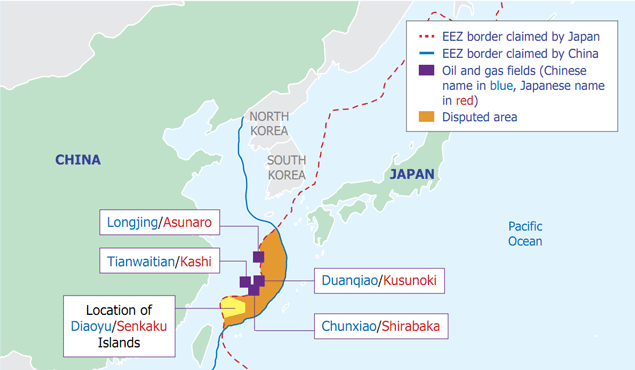
Source: gCaptain — Senkaku/Diaoyu Islands Dispute: China and Japan's Standoff · gcaptain.com
Why This Matters
Strategic location for maritime routes and potential undersea resources
Regular coast guard confrontations between Japan and China in surrounding waters
US-Japan alliance complicates the dispute - US treaty obligations to defend Japanese territory
Tensions often spike during periods of broader Japan-China diplomatic friction
Location trap: Senkaku = East China Sea, NOT South China Sea (where Spratly/Paracel disputes occur)
Parties trap: This is Japan vs China dispute, NOT a multi-country Southeast Asian dispute
Nature trap: These are natural uninhabited islands, NOT artificial islands
Legal status trap: No ICJ ruling has declared them 'no man's land'
Military trap: No permanent US base exists on these islands
East vs South China Sea Disputes
World Affairs (International Relations) East China Sea South China Sea
East China Sea vs South China Sea: Different Disputes, Different Players
East China Sea: Japan-China dispute over Senkaku/Diaoyu Islands
South China Sea: Multi-country dispute involving China, Philippines, Vietnam, Malaysia, Brunei
Artificial islands are in South China Sea (China's construction), not East China Sea
Key Differences
Aspect | East China Sea | South China Sea |
|---|---|---|
Main Dispute | Senkaku/Diaoyu Islands | Spratly & Paracel Islands |
Key Players | Japan vs China | China vs Philippines, Vietnam, Malaysia, Brunei |
Island Type | Natural uninhabited islands | Natural + artificial islands (China-built) |
US Role | Treaty ally of Japan | Freedom of navigation operations |
Regional Body | Bilateral Japan-China issue | ASEAN involvement |
Legal Cases | No ICJ cases | Philippines won 2016 arbitration vs China |
China's Different Strategies
East China Sea: Regular coast guard patrols, diplomatic pressure on Japan
South China Sea: Artificial island construction, military installations, 'Nine-Dash Line' claim
International law: China rejects arbitration in both seas but uses different tactics
US responses: Military alliance with Japan vs freedom of navigation operations in South China Sea
Never confuse locations: Senkaku = East, Spratly/Paracel = South China Sea
Artificial islands are China's strategy in South China Sea only
Bilateral vs multilateral: East China Sea is Japan-China issue, South China Sea involves multiple ASEAN countries
ICJ vs arbitration: No ICJ ruling on Senkaku; 2016 arbitration (not ICJ) ruled against China in South China Sea
China's Maritime Territorial Disputes
World Affairs (International Relations) China
China's Multiple Maritime Disputes: Strategic Pattern & Global Implications
China has active territorial disputes in East China Sea, South China Sea, and with India
Common pattern: Historical claims + modern strategic interests + rejection of international arbitration
Impacts regional security, trade routes, and China's relations with US allies
China's Territorial Disputes
# China's Territorial Claims
## East China Sea
- Senkaku/Diaoyu vs Japan
- Coast guard confrontations
- US-Japan alliance factor
## South China Sea
- Nine-Dash Line claim
- Artificial islands
- vs ASEAN countries
- 2016 arbitration loss
## Land Borders
- Aksai Chin vs India
- Arunachal Pradesh dispute
- Doklam with Bhutan
## Taiwan Strait
- One China policy
- Military pressure
- US arms sales issue
Strategic Implications
Trade routes: Disputes affect $3.4 trillion annual trade through South China Sea
Alliance systems: Strengthens Quad (India-Japan-Australia-US) cooperation against China
International law: China's rejection of arbitration challenges rules-based order
Regional arms race: Neighboring countries increase defense spending and seek US partnerships
Don't generalize: Each dispute has different legal basis, players, and US involvement level
Historical vs modern: China uses historical claims but disputes are driven by modern strategic interests
International law: China selectively accepts international law, rejects unfavorable arbitrations