Why is there a great concern about the ‘microbeads’ that are released into environment?
Contents19
- AThey are considered harmful to marine ecosystems.
- BThey are considered to cause skin cancer in children.
- CThey are small enough to be absorbed by crop plants in irrigated fields.
- DThey are often found to be used as food adulterants.
Show answer
Answer: (A) They are considered harmful to marine ecosystems.
The correct answer is (A) — They are considered harmful to marine ecosystems.
Microbeads are tiny plastic particles (less than 1 mm) found in products like face wash, toothpaste, and shampoo.
When washed down the drain, they end up in rivers and oceans.
Fish and marine creatures mistake them for food and eat them, which harms the entire marine food chain.
Many countries are now banning microbeads.
Tip:
- Microbeads = tiny plastics in cosmetics
- End up in oceans
- Harm marine life.
Microbeads are tiny plastic particles in cosmetics that pass through water treatment plants and accumulate in oceans, where marine animals mistake them for food.
Multiple countries including the US, UK, and Canada banned microbeads in cosmetics between 2015-2018, making this a significant environmental policy topic.
The question tests understanding of plastic pollution pathways - how everyday consumer products create marine contamination through drainage systems.
Microbeads: Definition & Sources
Environment microbeads
Microbeads: Tiny Plastic Pollutants in Daily Products
Microbeads are tiny plastic particles less than 1 mm in diameter used in cosmetics
Found in face wash, toothpaste, shampoo, and exfoliating scrubs
Primary concern is marine ecosystem harm, not human health effects
Made of polyethylene, polypropylene, or other non-biodegradable plastics
What Are Microbeads
Microbeads are synthetic plastic particles smaller than 1 mm added to personal care products as exfoliating agents. Unlike natural alternatives like crushed walnut shells, these plastic beads don't break down in the environment.
Common Products Containing Microbeads
Product Type | Purpose | Common Brands | Plastic Type |
|---|---|---|---|
Face wash | Exfoliation | Various commercial brands | Polyethylene |
Toothpaste | Cleaning/whitening | Certain whitening toothpastes | Polypropylene |
Body scrubs | Skin exfoliation | Exfoliating shower gels | Polyethylene |
Shampoo | Deep cleaning | Some clarifying shampoos | Various plastics |
Key Properties
Non-biodegradable — persist in environment for hundreds of years
Size range: 0.1 mm to 1 mm diameter — small enough to pass through water treatment filters
Buoyancy: Many float, allowing wide ocean distribution via currents
Chemical absorption: Can absorb toxic chemicals from surrounding water
Marine Ecosystem Impact of Microbeads
Environment marine ecosystems harmful
How Microbeads Harm Marine Life & Food Chains
Marine animals mistake microbeads for food leading to plastic ingestion
Causes bioaccumulation up the marine food chain
Can cause intestinal blockage and false satiation in marine life
Microbeads absorb toxins from seawater, concentrating pollutants
Path from Drain to Marine Food Chain
%%{init: {"flowchart": {"wrappingWidth": 460}}}%%
flowchart TD
  s1["`**Consumer Use**
Microbeads used in cosmetics during washing`"]
  s2["`**Down the Drain**
Washed down sink/shower drains with wastewater`"]
  s3["`**Treatment Plants**
Too small to be filtered out by most wastewater treatment facilities`"]
  s4["`**Water Bodies**
Enter rivers, lakes, and eventually oceans`"]
  s5["`**Marine Ingestion**
Fish, zooplankton, and marine animals mistake them for food`"]
  s6["`**Bioaccumulation**
Concentrate up the food chain as larger fish eat smaller ones`"]
  s1 --> s2
  s2 --> s3
  s3 --> s4
  s4 --> s5
  s5 --> s6
Specific Harms to Marine Life
Physical blockage — microbeads can block digestive systems of small fish and marine organisms
False satiation — animals feel full without getting nutrition, leading to malnutrition
Toxic chemical transfer — microbeads absorb persistent organic pollutants (POPs) and transfer them to marine life
Habitat degradation — accumulation on ocean floors affects benthic (bottom-dwelling) ecosystems
Marine Food Chain Impact
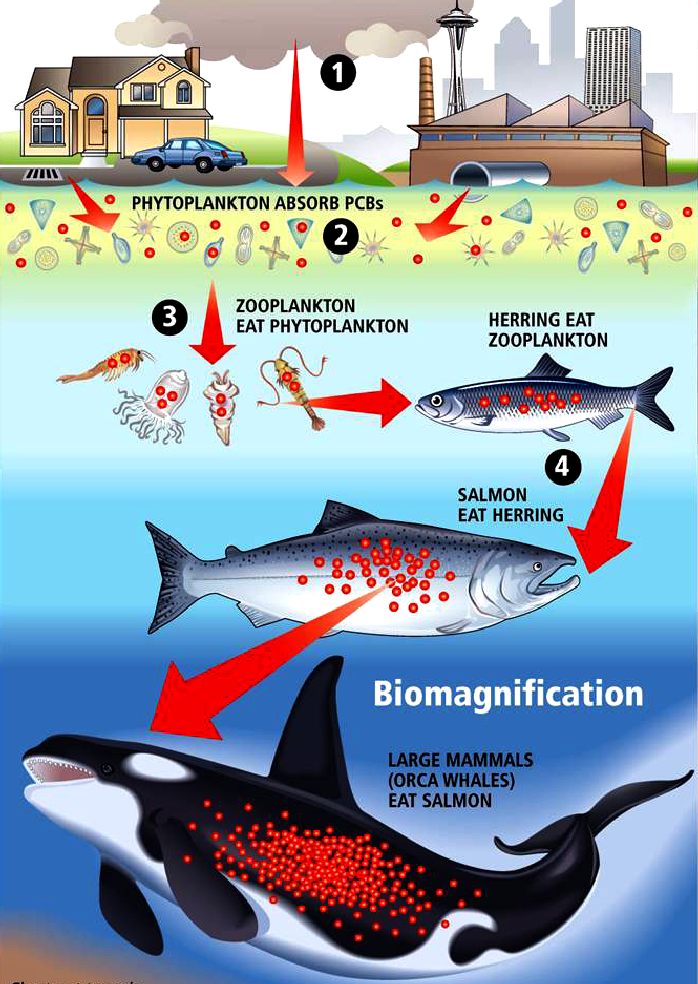
Source: Blue Growth — BIOMAGNIFICATION BIO ACCUMULATION CONCENTRATION · www.blue-growth.org
Global Microbead Regulations & Bans
Environment
International Response: Microbead Bans & Regulations
Many countries have banned microbeads in cosmetic products since 2015
India has no specific microbead ban but addresses plastic pollution broadly
United States banned microbeads in rinse-off cosmetics from 2017
European Union restricted microplastics in cosmetics
Major Microbead Bans Worldwide
Country/Region | Ban Year | Scope | Status |
|---|---|---|---|
United States | 2017 | Rinse-off cosmetics | Manufacturing ban implemented |
Canada | 2018 | Toiletries with microbeads | Sale and import prohibited |
United Kingdom | 2018 | Rinse-off cosmetics | Manufacturing and sale banned |
European Union | 2023 | Intentionally added microplastics | Broader restriction on microplastics |
South Korea | 2017 | Cosmetic products | Manufacturing restriction |
India's Position
No specific microbead legislation — India hasn't enacted dedicated microbead bans like Western countries
Broader plastic pollution focus — addresses plastic pollution through Plastic Waste Management Rules
Industry voluntary measures — some Indian cosmetic companies have voluntarily phased out microbeads
Growing awareness — environmental groups pushing for specific microbead regulations
Alternative Solutions
Natural exfoliants — crushed walnut shells, apricot kernels, pumice, salt
Biodegradable alternatives — jojoba beads, rice bran, oatmeal
Improved filtration — advanced wastewater treatment to catch microplastics
Consumer awareness — reading product labels to avoid microbead-containing products
Microplastics: Broader Environmental Context
Environment
Microplastics: The Bigger Picture Beyond Microbeads
Microplastics are plastic particles less than 5 mm — microbeads are one type
Two types: primary (manufactured small) and secondary (broken down from larger plastics)
Found in oceans, drinking water, food, and even human blood
Marine ecosystems most affected, but contamination is now global
Types of Microplastics
Type | Source | Size Range | Examples |
|---|---|---|---|
Primary microplastics | Manufactured as small particles | 0.1 mm - 5 mm | Microbeads, plastic pellets, synthetic textiles |
Secondary microplastics | Breakdown of larger plastic items | Variable sizes | Fragmented bottles, bags, fishing nets, car tires |
Global Contamination Scale
Ocean concentration — estimated 15-51 trillion microplastic particles in world's oceans
Drinking water — detected in tap water worldwide, including bottled water
Food chain entry — found in seafood, salt, honey, and agricultural products
Human exposure — microplastics detected in human blood, lungs, and placenta
Sources of Microplastics
# Microplastic Sources
## Personal Care
- Microbeads in cosmetics
- Synthetic clothing fibers
- Toothpaste particles
## Industrial
- Plastic pellet spills
- Manufacturing waste
- Tire wear particles
## Waste Breakdown
- Plastic bottle fragments
- Food packaging breakdown
- Fishing gear degradation
## Agricultural
- Plastic mulch films
- Irrigation system wear
- Fertilizer coatings
UPSC Exam Traps: Microbeads
Environment skin cancer crop plants food adulterants
Common UPSC Traps About Microbeads & Why They're Wrong
Primary concern is marine ecosystem harm, not direct human health effects
No evidence linking microbeads to skin cancer in children
Microbeads don't significantly accumulate in agricultural soils via irrigation
Not used as food adulterants — confusion with other plastic contamination
Trap B: Skin cancer sounds plausible since microbeads are in face products, but no scientific evidence links microbeads to skin cancer
Trap C: Students might think plastic particles could be absorbed by plants, but microbeads are too large and don't significantly enter agricultural systems
Trap D: Food adulteration is a real problem, but microbeads aren't deliberately added to food — confusion with microplastic contamination
Key insight: UPSC tests whether you know the primary environmental concern vs unproven health claims
Question Analysis
This question tests understanding of environmental vs health impacts. The correct answer (A) reflects the established scientific consensus and policy focus worldwide. Options B, C, and D either lack scientific evidence or confuse microbeads with other environmental issues.
Memory aid: Microbeads = Marine harm (both start with 'M')
Related UPSC Concepts
Stockholm Convention — addresses persistent organic pollutants, relevant to plastic pollution
Basel Convention — controls transboundary waste movement, includes plastic waste
MARPOL Convention — prevents marine pollution from ships, relevant to plastic debris
Plastic Waste Management Rules 2016 — India's regulatory framework for plastic pollution